

The 2024 data of the Philippine Statistics Authority showed that the BARMM had the lowest basic literacy rate among all regions in the country at 81 percent. Lanao del Sur ranked third among the region’s five provinces.
MARAWI CITY, Lanao del Sur — Affecting one’s education due to financial difficulties is a typical problem of poor communities in many parts of the country. But for families displaced after the Marawi Siege in 2017, having such a problem amid their continuing displacement hits differently.
There were many occasions that the children of Nurania Unte, 33, were not able to go to school due to financial constraints. Her family is now living in Hijrah village, Barangay Sultan Corobong, a remote temporary shelter in the Islamic City of Marawi.
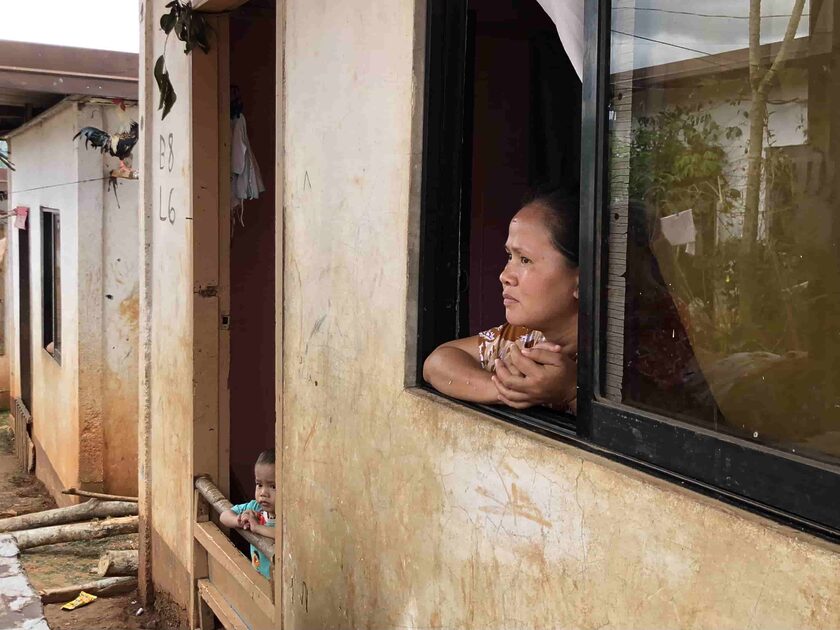
Nurania Unte, an internally displaced person, watches people outside her house in Hijrah village, Barangay Sultan Corobog, one of the remote temporary shelters in Marawi City. Photo by Franck Dick Rosete/Bulatlat
Her husband’s average salary in a week, ranging from P2,500 to P4,000 (approximately US$39 to $62), for working as a construction worker remains insufficient to meet their daily needs. Since it is a project-based work, there are days when the family breadwinner is jobless.
To ensure school attendance, Unte’s three children, in many instances, were forced to walk for more or less 30 minutes from their temporary shelter to the nearest Dulay Elementary School as they cannot afford the P20 fare.
“Almost all families here have the same problem,” she told Bulatlat in Filipino.
Before the five-month Marawi Siege, Unte used to live in Barangay Papandayan. The village was not part of the 24 barangays classified as most affected areas (MAA). But the lack of financial capacity to repair their house left her family with no choice but to bear the dire situation in the shelter.
Barangay Sultan Corobong, previously part of Barangay Dulay Proper, is one of the newly created villages in Marawi, following the reported increase in the population in certain areas after the siege.
The community in Hijrah village, home of reported around 1,000 internally displaced persons (IDPs), needs free transportation as the reported cost of a back-and-forth fare stood at P240 (US$3.75) going to the city proper. “The residents here don’t have stable jobs,” Nasser Dimaampo Bongcaran, the temporary shelter president, said in Filipino.
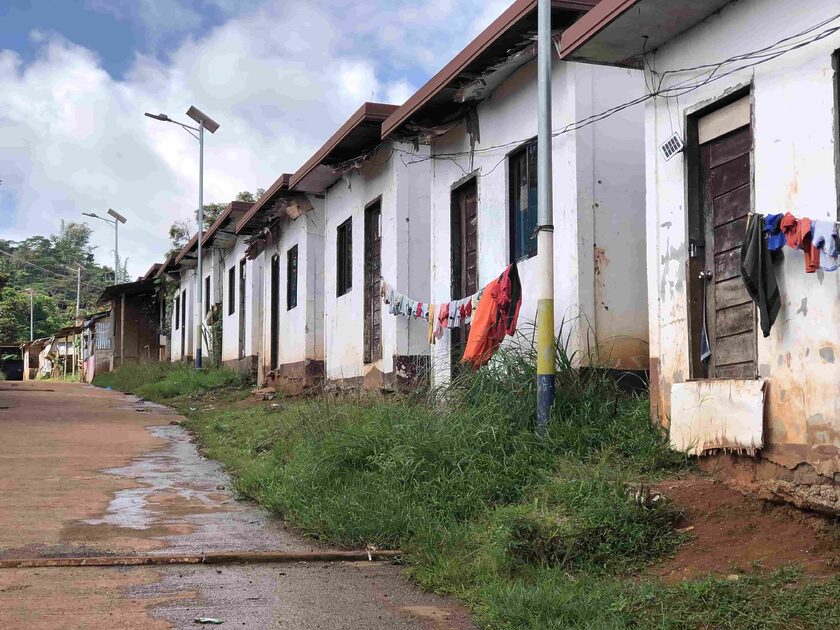
Photo shows some of the temporary housing units in Hijrah village, Barangay Sultan, Corobong, Marawi City. Photo by Franck Dick Rosete/Bulatlat
Jelilah Casarigan, mother of seven, recalled the days that her eldest daughter ended up making the sacrifice by not being able to go to school to prioritize other siblings, and she cries every time it happens.
“My child is diligent in her studies,” Casarigan, who lives in the Bakwit village, a temporary shelter in Barangay Pindolonan, Saguiaran, Lanao del Sur, told Bulatlat in Filipino. “Sometimes we struggle with our finances because my [construction worker] husband does not always have a job.”
The 2025 data of the Philippine Statistics Authority (PSA) showed that Lanao del Sur registered the second highest unemployment rate among five provinces in the Bangsamoro Autonomous Region in Muslim Mindanao (BARMM) at 7.99 percent, which translates to 44,000 unemployed individuals.
https://public.flourish.studio/visualisation/30904271/visualisation.json?ref=embed-script
Unlike the IDPs in Hiraj village, families residing in the Bakwit village, on top of the utility bills, have started paying P500 (approximately $8) for monthly rent just this year, following the eviction notice they had received from the landowner.
Read:Displaced Marawi residents face eviction from temporary shelter
The Casarigan family was awarded a permanent shelter in Saguiaran town, a few kilometers away from Marawi City, but they have yet to transfer since there was no electricity and water connections yet.
Same struggles
Families in permanent shelters have been dealing with the same struggles. Ibralyn Macaraguit, mother of six, gives P70 ($1.09) to one of her children studying high school a day, of which P60 ($0.98) serves as the back-and-forth fare.
The lack of local transportation also gives them headaches, leaving her child to go on foot for more or less 30 minutes from Racman Pimping Maniri Dumarpa (RPMD) National Science High School in Barangay Papandayan going to their house in Darussalam village, a permanent shelter located in Barangay Dulay Proper.
The same with Unte and Casarigan, there were many instances that Macaraguit’s children were unable to go to school—twice a week sometimes—due to financial hardships.
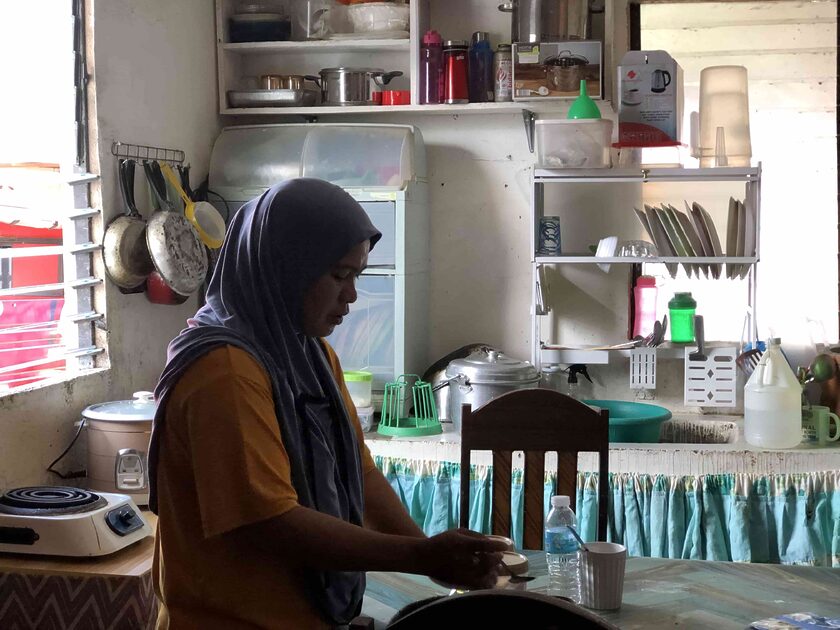
Ibralyn Macaraguit, an internally displaced person (IDP) living in Darussalam village, a permanent shelter in Barangay Dulay Proper, Marawi City, prepares a hot drink for his son. Photo by Franck Dick Rosete/Bulatlat
Macaraguit’s husband only makes a daily average income of P500 ($8) as a tricycle driver. For them, this is insufficient for a family of five. She tried to sell snacks within the community to have extra income but it is not sustainable in a place where its people are also financially struggling.
Their situation, she said, is far different prior to the war, recounting moments when the market—where they would sell fish—was just a few steps away from their house in Barangay Datu Naga, one of the villages classified as MAA and one of the four barangays where many of their residents were permanently displaced.
She told Bulatlat that their house prior to the siege was located around the area now where a ferris wheel was built.
The ferris wheel was installed along with other infrastructure projects, such as the four-hectare Sarimanok Sports Stadium, the Marawi Convention Center, the School of Living Tradition building, the Lake Lanao Promenade, and Peace Memorial Park, to name a few, as part of the government’s so-called rehabilitation efforts.
Aside from Datu Naga, many residents from barangays Sabala Manao, Datu sa Dansalan, and Dansalan, whose land titles sit on the “reclamation area” owned by the government—which were highly contested by residents—are no longer able to return because of these government infrastructure.
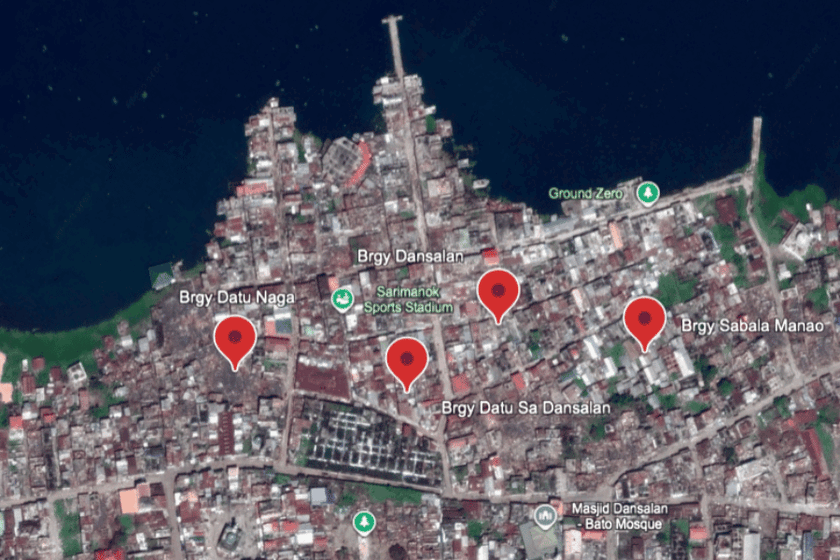
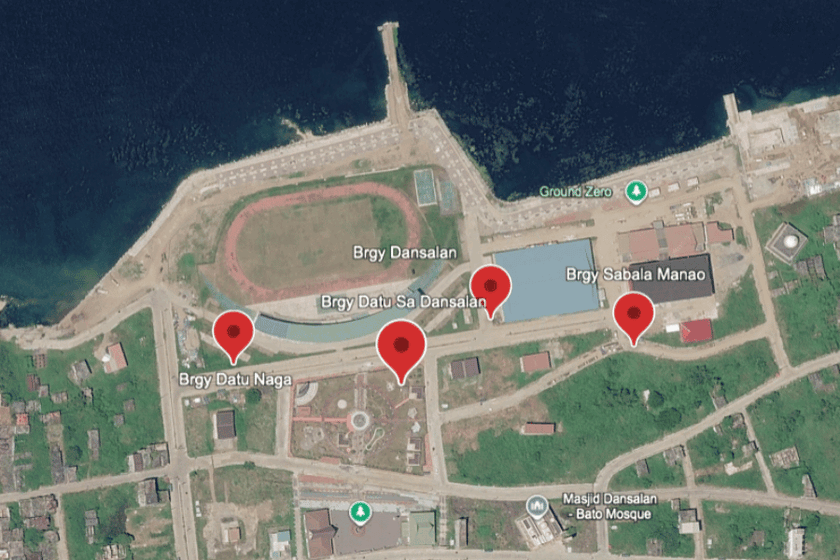
Photos show pre-siege (left) and post-siege (right) satellite images covering barangays Sabala Manao, Dansalan, Datu sa Dansalan, and Datu Naga in Marawi City. Screengrab from Google Earth
In Norsalam village in Barangay Patani, the so-called farthest permanent shelter in Marawi City, several housing units seemed unoccupied. In fact, some of them were almost covered by vegetation.
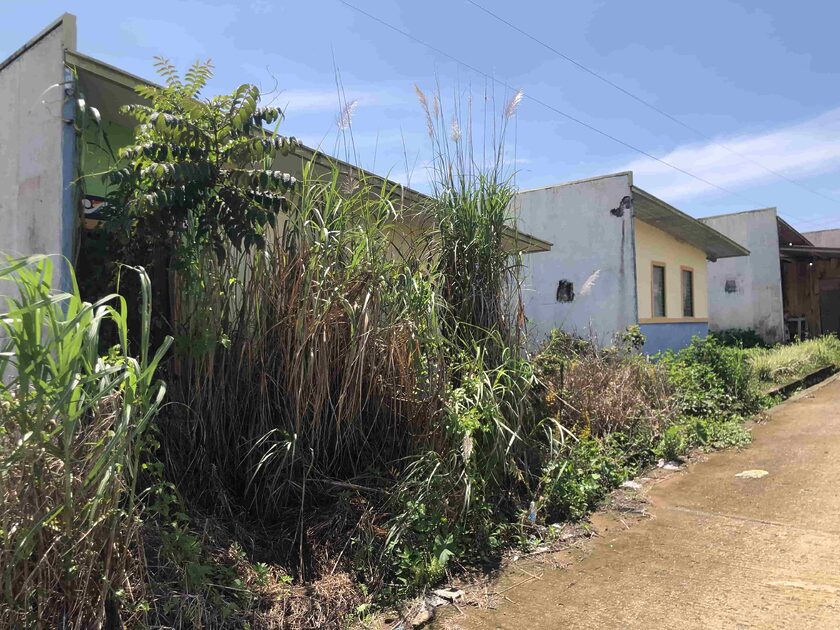
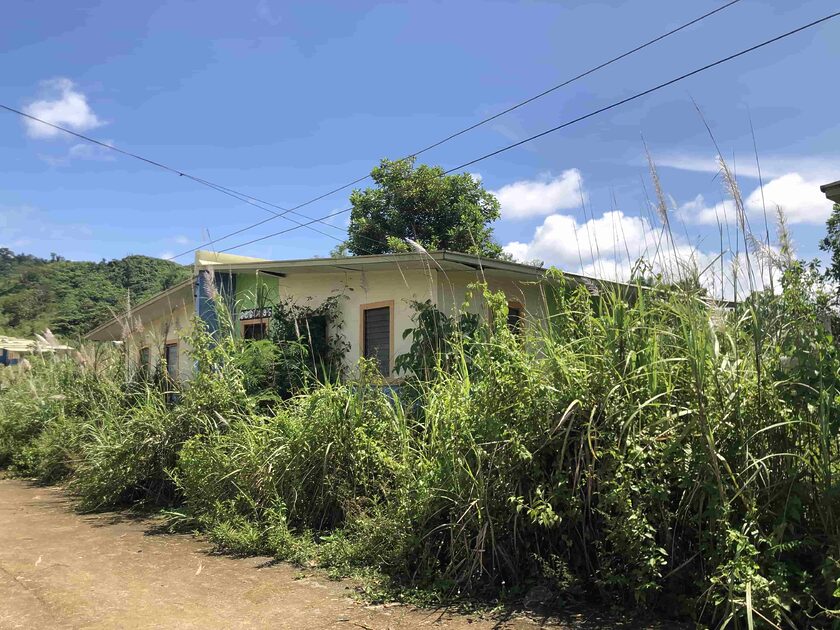
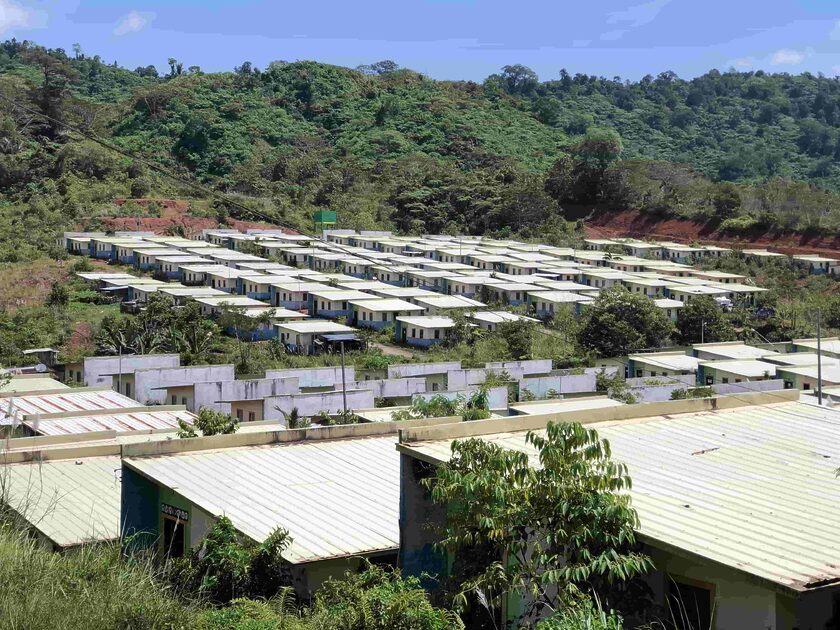
Photos show several housing units in Norsalam village, Barangay Patani, Marawi City, (bottom) and housing units in the same village almost covered by vegetation (top). Photo by Franck Dick Rosete/Bulatlat
According to the Reclaiming Marawi Movement (RMM), a group of IDPs campaigning for their return, several beneficiaries opted not to live in the said village due to its remote location, where residents spend more or less P200 ($3.12) for transportation.
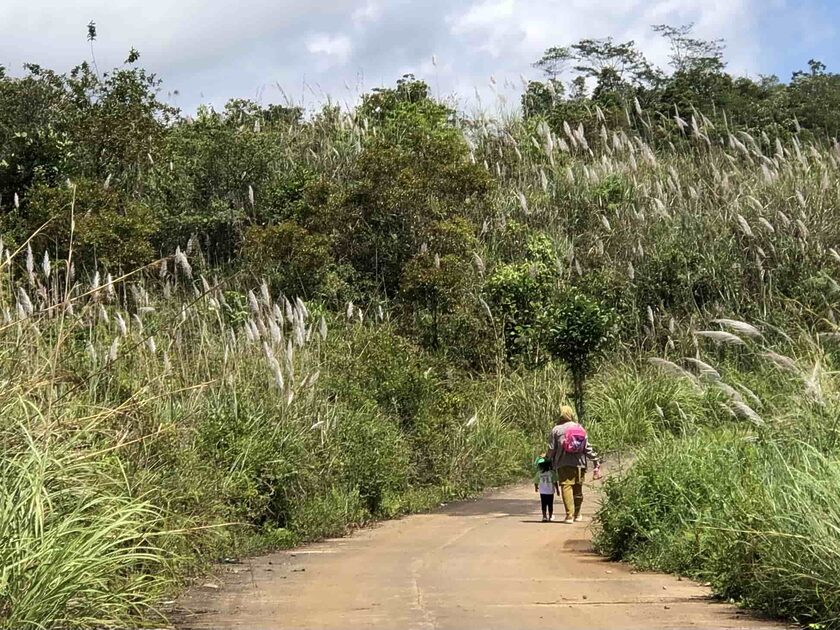
A mother, together with her child, bears the heat and walks along the road going to Norsalam village in Barangay Patani, Marawi City. Photo by Franck Dick Rosete/Bulatlat
Effects of absenteeism, displacement
According to the result of the 2022 Programme for International Student Assessment (PISA), the Philippines had the highest rate of long-term absenteeism compared to all participating nations.
PISA, which is run by the Organisation for Economic Co-operation and Development (OECD), is an international assessment which measures the ability of students aged 15 years old to use their reading, mathematics, and science knowledge and skills to meet real-life challenges.
The 2022 assessment revealed that 30.3 percent of 15-year-old-students in the country in that year had reported that they had experienced in their studying journey having been absent from school for three consecutive months, of whom 19.3 percent had experienced twice or more.
Several factors of long-term absenteeism in the country were cited. These included students who had been affected by calamities and had to work, as well as their difficulties in paying school fees and in transportation.
A June 2026 report released by OECD titled “Every Day Counts: Understanding, Preventing, and Responding to School Attendance Problems” indicated that absences of students weaken their academic performance, as it reduces access to instruction, feedback, assessment, and peer learning.
Read:18 million ‘functionally illiterate’ grads linked to public education woes
The report added that absences in primary education are linked to weaker development of foundation skills, while absences can be harmful during lower secondary education because they coincide with important academic and developmental transitions.
The 2024 PSA data showed that the BARMM had the lowest basic literacy rate among all regions in the country at 81 percent, or 3,601 out of 4,446 children aged five and over. Lanao del Sur ranked third among the region’s five provinces.
https://public.flourish.studio/visualisation/30899236/visualisation.json?ref=embed-script
The repercussions of displacement in terms of mental health and stability, on the other hand, can affect children’s ability to learn, according to a 2019 research conducted by the Internal Displacement Monitoring Centre (IDMC), the world’s leading source of data and analysis on internal displacement.
Waiting for compensation
For Macaraguit, the monetary compensation for Marawi Siege victims would benefit them, especially for her children’s education. More than three years since she filed her claim in July 2023, she told Bulatlat in an interview on October 20 that she has yet to receive compensation.
“We should be the priority because we are the ones who can no longer return,” she said in the vernacular, expressing her frustrations.
Read:Group opposes Marawi Siege compensation planned changes
Section 29 of the Implementing Rules and Regulations (IRR) of the Marawi Siege Victims Compensation Act provides that lawful owners of residential, cultural, and commercial structures, as well as other properties owned by renters and sharers in 24 barangays under MAA and eight barangays classified as other affected areas (OAA) that were destroyed by the war are eligible to receive compensation from the government.
The family of Casarigan only received P28,000 ($437) in compensation, a share given by a relative since their damaged house in Barangay Marinaut was owned by his grandfather. Unte, meanwhile, is not eligible for the program.
According to the Marawi Compensation Board (MCB), the government body that awards monetary compensation, a total of P3.112 billion ($48,611) in compensation were awarded for the first half of this year, way higher compared to the P1.922 billion ($30,023) awarded in the entire calendar year 2025.
Overall, since 2023, a total of P6.154 billion ($96,129) in compensation were awarded cumulatively to 3,699 claimants, as of June 2026.
In its 2025 annual report, MCB explained the difference between total claims and total claimants, saying there were claimants who have multiple claims.
Bulatlat reached out to the board on November 1 through email to get the exact total resolved claims as of June 2026, but there has been no response as of this writing. As of last year, however, a total of 3,187 claims had been resolved since 2023, amounting to P3.044 billion ($47,549). This is around 22 percent of the estimated total claims to be resolved by 2028—MCB’s final year.
Thirty-six percent of the 100 paid claimants interviewed by MCB in 2025 said that they used the compensation for house repair, of whom 21 percent had reportedly returned to their homes.
Some respondents also said that they used the compensation for their livelihood and their children’s educational needs.
https://public.flourish.studio/visualisation/30763343/visualisation.json?ref=embed-script
Since they were permanently displaced, Macaraguit plans to use the compensation for business capital. She wants to reclaim their life before the war while living in a permanent shelter.
Incomplete recovery
On October 20, the Special Committee on Marawi Recovery, Reconstruction, and Rehabilitation presented its report before the Bangsamoro Transition Authority Parliament. Overall findings reportedly showed progress in the rehabilitation in terms of housing, infrastructure, and utilities, among others. But Marawi recovery remains incomplete.
Citing the July 2026 data of the National Housing Authority (NHA), Member of Parliament Said Shiek, then-committee chairperson, reported 1,712 completed permanent housing units, of which 1,598 were already awarded to the family-beneficiaries.
The NHA-built permanent shelters were on top of the permanent housing units turned over by the United Nations Human Settlements Programme (UN-Habitat) and the BARMM’s Marawi Rehabilitation Program (MRP).
Read:After 9 years, Marawi displaced families have yet to return to their homes
The panel has no available data pertaining to the total current occupants in temporary and permanent shelters. BARMM’s MRP, meanwhile, has recorded 83,223 displaced persons as of August 2026, but it clarified that the data does not represent the full extent of the current displacement.
One of the recommendations provided by the committee was to fully operationalize the Rights of Internally Displaced Persons of the Bangsamoro Autonomous Region Act of 2024 in achieving “durable solutions” for IDPs.
Under the law, a durable solution is achieved when displaced families resume their normal lives and no longer need specific assistance in relation to their displacement. The BARMM government and the local government concerned have the primary duties to help IDPs to have sustainable integration either to their original homes, to their shelters, or to other parts of the country.
Read:Displaced Marawi survivors still long for justice
At present, dilapidated shelters, limited access to water supply, lack of livelihood, unreceived compensation, and problems in transportation have been plaguing families living in temporary and permanent shelters.
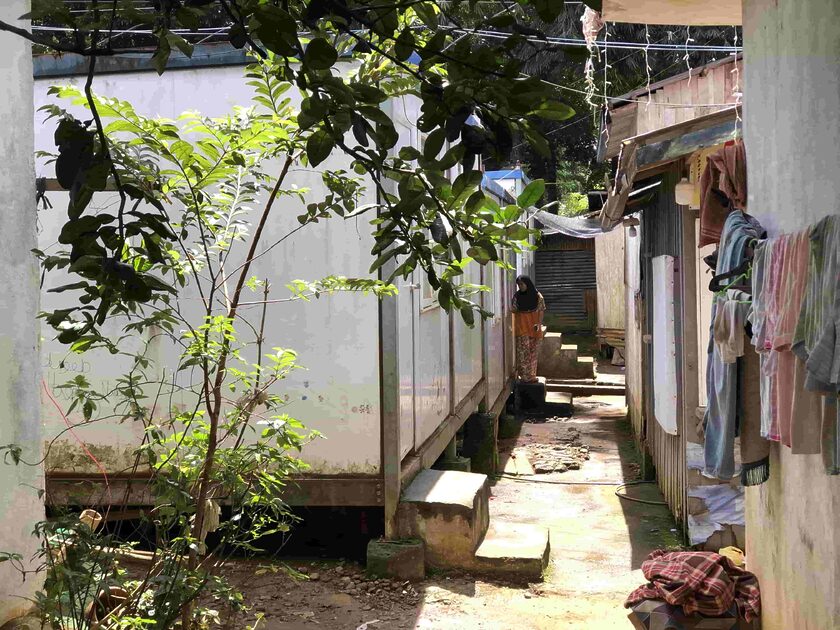
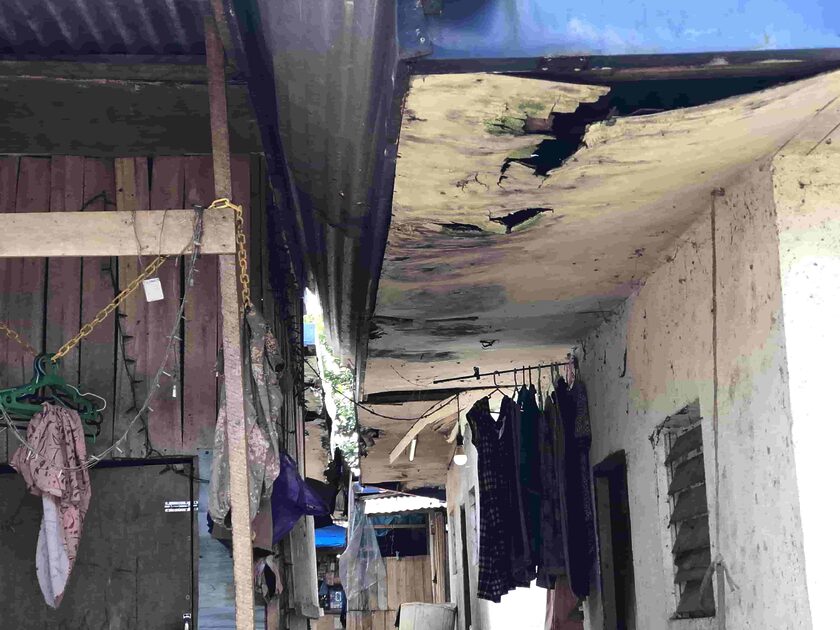
Photos show dilapidated portions of some temporary shelters in the Bakwit village, Barangay Pindolonan, Saguiaran, Lanao del Sur. Photo by Franck Dick Rosete/Bulatlat
On October 17, the ninth year of the “liberation” of Marawi City from the ISIS-inspired Maute Group was commemorated. But for Moro Consensus Group, a Bangsamoro-based civil society organization, there was no genuine liberation while many Meranaws have remained exiled. (DAA, RVO)
Bulatlat produced this story through a grant under the Public Journalism Grant Project of the International Media Support (IMS) in partnership with Asia Society Philippines (ASPH).
The post Amid continuing displacement, Marawi students face educational barriers appeared first on Bulatlat.
From Bulatlat via This RSS Feed.