

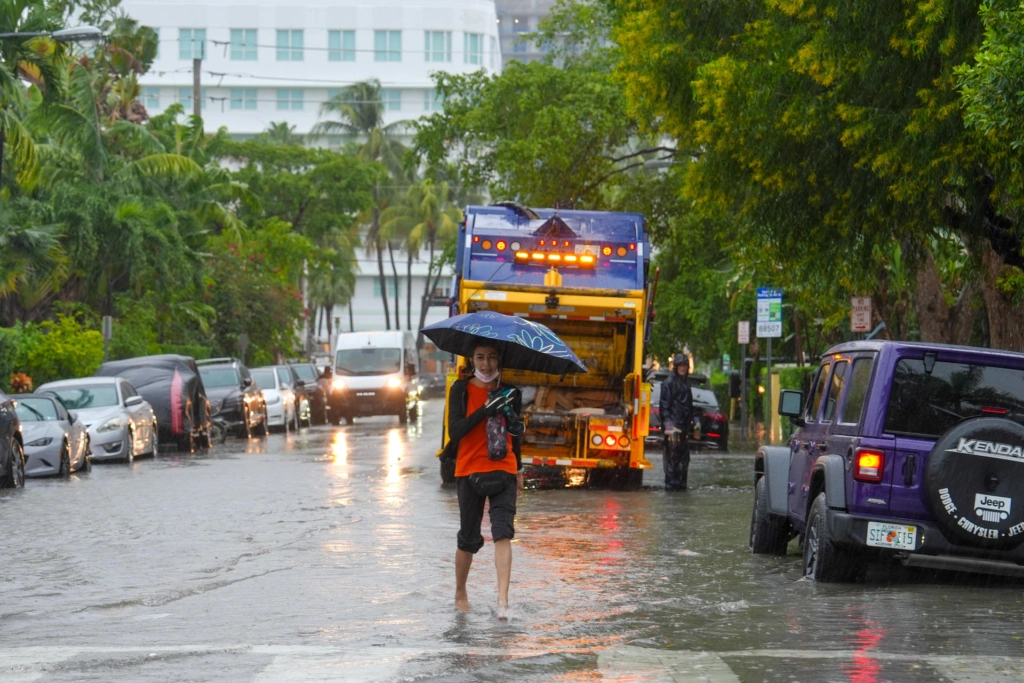
A storm system moves north after triggering widespread flooding, rescues and record river levels across the state.
A storm system that dumped historic rainfall on Florida’s Atlantic coast is moving north, threatening to disrupt Thanksgiving travel across the eastern United States as additional storms are forecast to hit both coasts in the coming days.
RELATED: Florida Relocates 18 Polling Stations Due to Flooding
The system has brought rainfall and wind gusts of 20 to 40 mph to the Carolinas, with forecasts warning of coastal erosion, rough seas, localized flooding and airport delays as it advances toward North Carolina.
Rain is expected to spread across the Mid-Atlantic on Sunday, potentially disrupting morning flights in the Washington area before reaching Philadelphia and New York later in the day. The system could also slow traffic along major routes, including Interstate 95, before moving away from New England early Monday.
🇺🇸 Fuertes lluvias colapsaron calles, dejaron a conductores varados y obligaron a cerrar escuelas el jueves en ambos condados. El Servicio Meteorológico Nacional reportó más de 381 mm de lluvia en zonas del oeste de Broward y extendió la alerta por inundaciones hasta el viernes.… pic.twitter.com/935ozCRVzH
— teleSUR TV (@teleSURtv) November 20, 2026
Text Reads: 🇺🇸 Heavy rains flooded streets, left drivers stranded and forced schools to close on Thursday in both counties. The National Weather Service reported more than 381 mm of rain in parts of western Broward and extended the flood warning until Friday.
📍Local authorities declared a state of emergency to coordinate the response.
Further disruptions are forecast throughout Thanksgiving week, with additional storm systems expected to affect both U.S. coasts.
On the West Coast, a storm is expected to move in between Monday night and Tuesday, bringing heavy rain and mountain snowfall from western Washington to Northern California, including the San Francisco Bay Area. Another system could arrive on Thursday.
On the East Coast, forecasters are also monitoring the possible development of a stronger storm that could move north between Wednesday and Thanksgiving Day, bringing heavy rain and strong winds to the Mid-Atlantic and Northeast, including New York City.
Meanwhile, rainfall has eased along Florida’s Atlantic coast after days of severe flooding that prompted numerous water rescues and pushed rivers to record levels.
Daytona Beach recorded nearly 17 inches of rain since Monday, exceeding the area’s average rainfall for the entire autumn season. In Volusia County, emergency crews carried out about 20 rescues, while approximately 100 homes were flooded in Edgewater.
Further south, Brevard County reported more than 100 rescues from flooded homes. The St. Johns River also overflowed near Cocoa, rising above a record level set more than 70 years ago. Its slow drainage could leave some areas underwater for weeks.
In Palm Bay, a collapsed bridge forced authorities to evacuate residents from approximately 65 homes in the Palm Bay Estates mobile home park by boat. In Rockledge, officials went door to door urging residents to consider precautionary evacuations. Several families in Melbourne, meanwhile, saw their homes flooded for the second time in just two weeks.
In response to persistent rainfall and saturated ground conditions, Florida Gov. Ron DeSantis expanded the state’s emergency declaration to cover 21 counties.
The emergency was initially declared on Nov. 2 under Executive Order 26-227 and expanded on Nov. 4 through Executive Order 26-228. A further expansion, issued on Nov. 18 under Executive Order 26-232, added seven counties: Broward, Duval, Flagler, Miami-Dade, Monroe, Putnam and St. Johns.
The latest expansion followed extreme rainfall in Broward County on Nov. 17, when Fort Lauderdale, Davie and Hollywood recorded more than 10 inches of rain within 12 hours. The state subsequently activated additional assistance mechanisms and special water-management measures in southern Florida.
With more severe weather forecast along both coasts, U.S. transportation networks face further disruptions during one of the busiest travel periods of the year, while flood-hit Florida communities continue to contend with the aftermath of the storms.
From teleSUR English via This RSS Feed.