

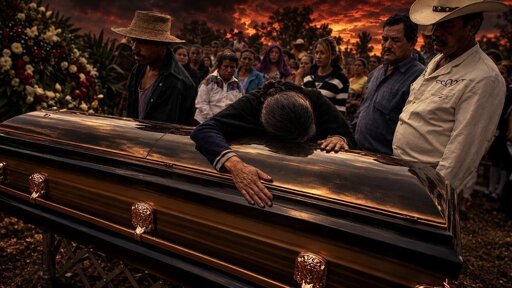
This article by Luis Eugenio Parés Sevilla appears in the November 2026 issue of Let’s Talk About Migration (Hablemos de Migración), a magazine on migration issues published by the Frente Amplio de Mexicanos y Migrantes. Read and download the full November issue.

The lives Mexico was supposed to protect.
From San Fernando to Ciudad Juárez: memory, routes, and pending responsibilities.
Mexico is a territory of transit, but also of death. Two massacres of migrants, separated by thirteen years, reveal a disturbing pattern: the State responds with laws and promises, but the structure that produces the deaths remains intact.
In August 2010, 72 migrants were murdered in San Fernando, Tamaulipas. On March 27, 2023, another 40 died in a fire at a National Migration Institute (INM) facility in Ciudad Juárez. These are different cases: one a massacre attributed to Los Zetas, the other involving deaths in a fire while in state custody. Both raise the question of who was responsible for protecting them and what safeguards exist to prevent another tragedy.
Yes, there were institutional changes. In 2013, a Forensic Commission was created with the participation of authorities, independent specialists, and family organizations to identify victims of the San Fernando massacre and other massacres. Mechanisms were also established for reporting crimes and seeking information from abroad. However, the Foundation for Justice continued to report nine unidentified victims out of the 72 and unanswered questions about potential state responsibility. The convictions of members of the criminal group do not complete the investigation.
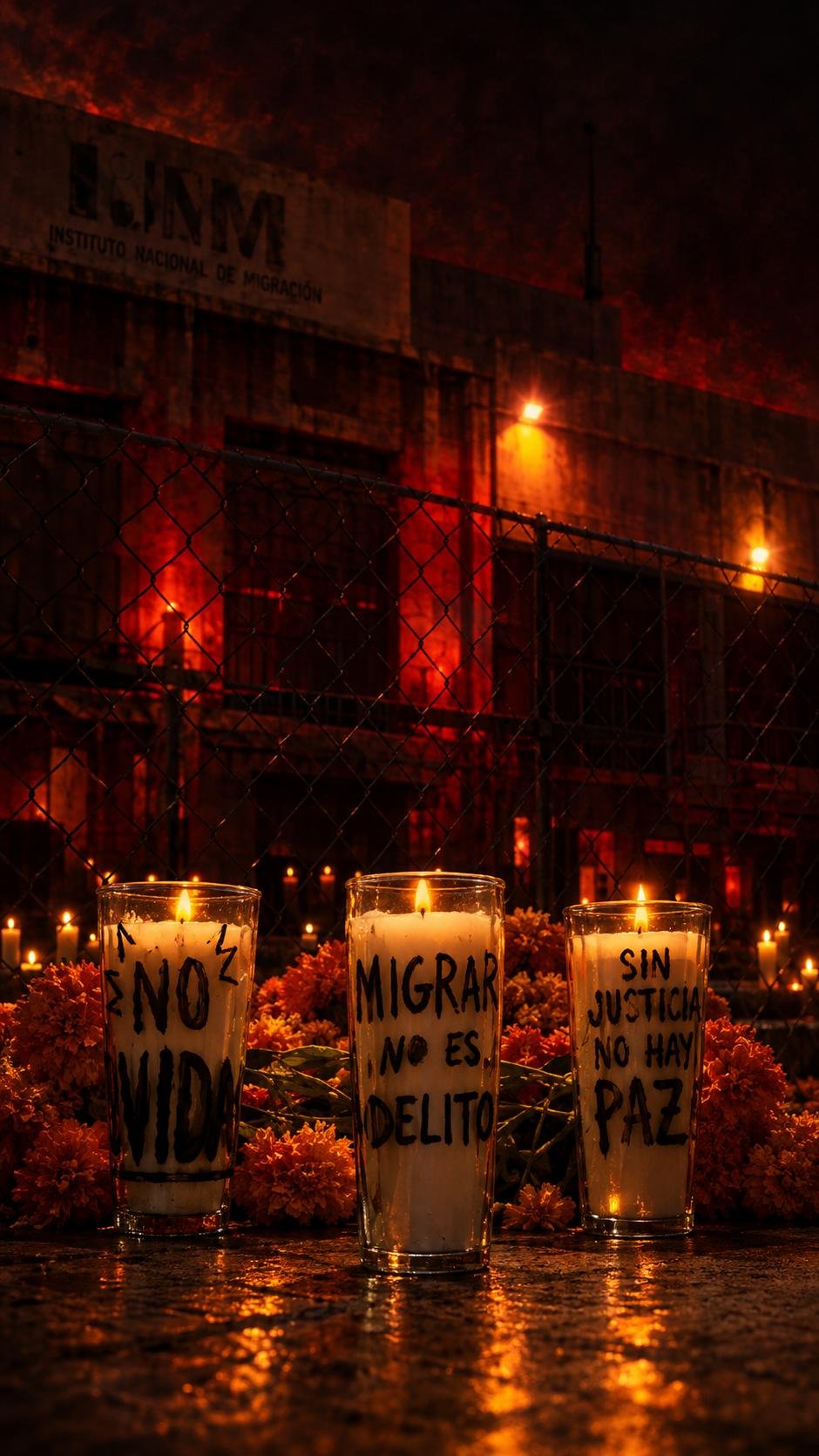
Illustration: Let’s Talk About Migration, November 2026
After Ciudad Juárez, the National Migration Institute (INM) temporarily suspended operations at 33 detention centers and announced civil protection upgrades. The National Human Rights Commission (CNDH) documented serious violations due to acts and omissions by its personnel. But inspecting buildings alone does not solve the problem of a detention system: effective evacuation, independent oversight, and clear accountability are also needed. On October 13, 2026, a judge dismissed the case against former commissioner Francisco Garduño, considering the conditions for suspending the proceedings to have been met; representatives of the victims announced they would appeal. That ruling does not clarify all the responsibilities for the fire.
The contrast is key. San Fernando produced laws, but it has not produced truth or full justice. Ciudad Juárez, on the other hand, did not even produce a real reform of the National Migration Institute (INM); the promised replacement of the institute remained just talk. The immigration detention centers, far from becoming spaces of protection, operated in fact as prisons under a policy of containment and militarization.
Fifteen years later, the equation repeats itself: some perpetrators are punished, but institutional responsibility is diluted. The families continue searching, the nameless bodies continue waiting, and the central question remains unanswered: who is responsible when the State is the custodian and death occurs under its watch?
Meanwhile, the caravans are changing. In October 2026, groups of families from Honduras, Guatemala, El Salvador, and Nicaragua were documented; some were seeking to settle and work in Mexico. Traveling together allows for sharing aid and gaining visibility, but it doesn’t guarantee safety. Documentation delays also fuel these movements. The response must link regularization and international protection, depending on the case, with safe transportation, prevention of extortion, and funding for shelters. The assistance provided by churches and organizations needs sustained public support.
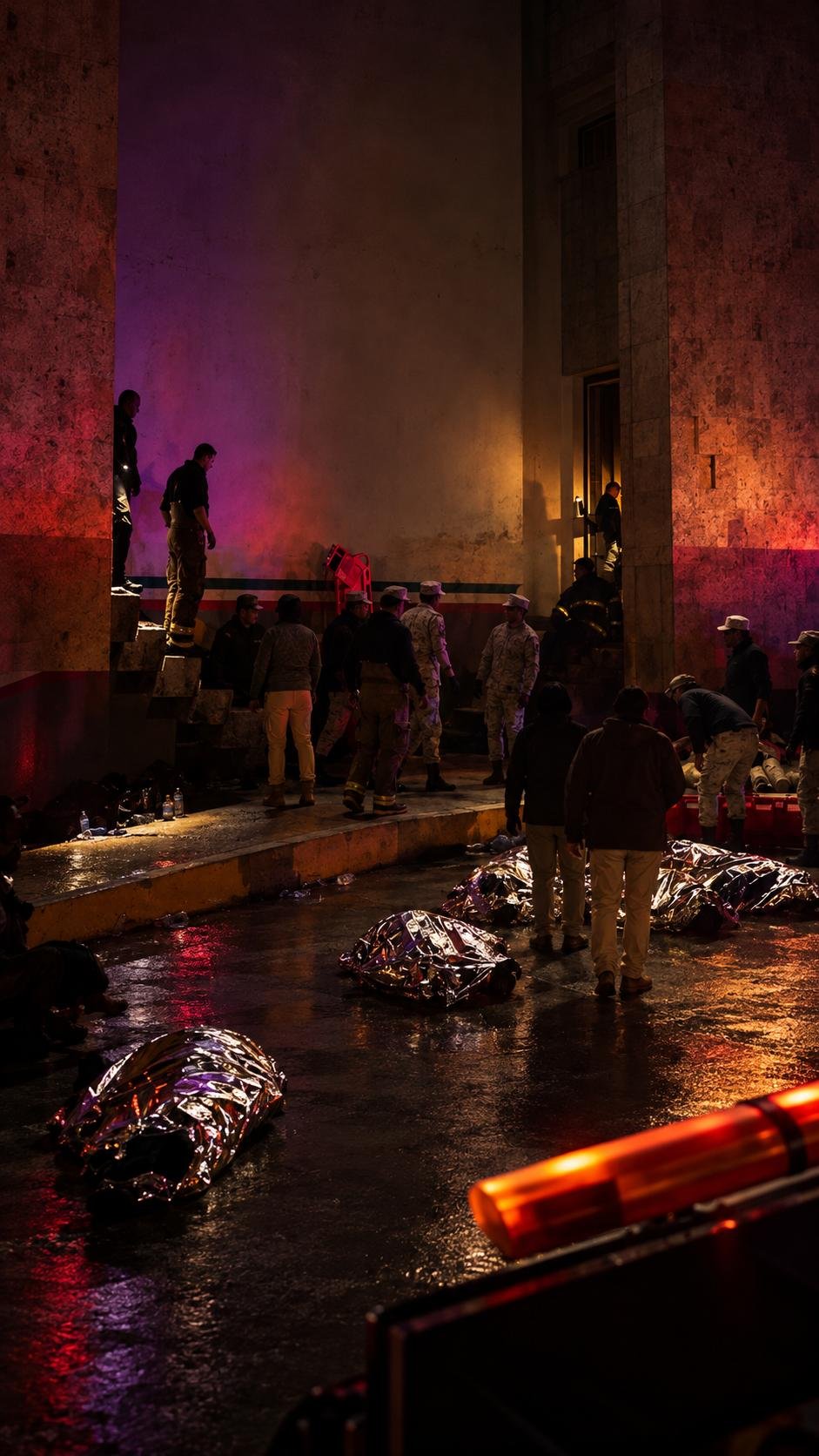
Illustration: Let’s Talk About Migration, November 2026
Returning to Mexico demands a similar responsibility. “México te Abraza” (Mexico Embraces You) offers repatriated Mexican nationals’ documentation, housing, transportation, healthcare, and job placement. Its evaluation must go beyond simply providing services: how many people retain employment, find housing, and receive psychological support months later? Federal, state, and municipal governments need to coordinate follow-up. Foreign nationals deported to Mexico require differentiated protection and documentation services.
The disappearance traces a geography that crosses Darién, Mexico, the Rio Grande, Sonora, the Caribbean, the Mediterranean, and the Atlantic toward the Canary Islands. The trail can be lost in a jungle, a kidnapping, a shipwreck, or among disconnected institutional records. In Mexico, search commissions, prosecutors’ offices, forensic services, and consulates must coordinate; internationally, equivalent cooperation is needed. The IOM warns that restricting regular routes displaces migration toward more dangerous paths.
How many more tragedies does Mexico need to stop managing migrant suffering and take responsibility? No apology can replace justice, and no compensation guarantees that no one will die in detention again. We demand an investigation into the entire chain of responsibility, that those responsible be punished, and that a protection policy be funded that includes timely documentation, safe transit, dignified shelters, and immediate search and rescue operations.
Remembering involves identifying, investigating, repairing, and preventing. Success cannot be measured solely by how many people were contained or returned; it must include how many were able to reach their destination, remain in the country, or return alive and with their rights intact. No family should have to travel to another country to demonstrate that the life of the person they are searching for matters.
Dignity is not demonstrated with speeches, it is guaranteed with decisions, budget and accountability.
-

Mexico City Will Open Free Medical Clinics in 600 Neighborhoods
November 22, 2026
The plan starts January 1, 2027, with free medicines, lab tests and mental health care, reaching a third of the capital’s neighborhoods.
-
Analysis | Let’s Talk About Migration | Migrant Justice
Migration Should Not Be a Death Sentence: From San Fernando to Ciudad Juárez
November 22, 2026November 11, 2026
From the San Fernando massacre to the Ciudad Juárez fire, an analysis of Mexico’s unmet responsibility to protect migrants in its territory and custody.
-

Mexican Cooperation Agency Opens Its First Overseas Branch in Havana
November 21, 2026
More than 25,000 Cuban farmers receive Mexican funding, supplies and training to grow food amid an intensified US blockade.
The post Migration Should Not Be a Death Sentence: From San Fernando to Ciudad Juárez appeared first on Mexico Solidarity Media.
From Mexico Solidarity Media via This RSS Feed.