

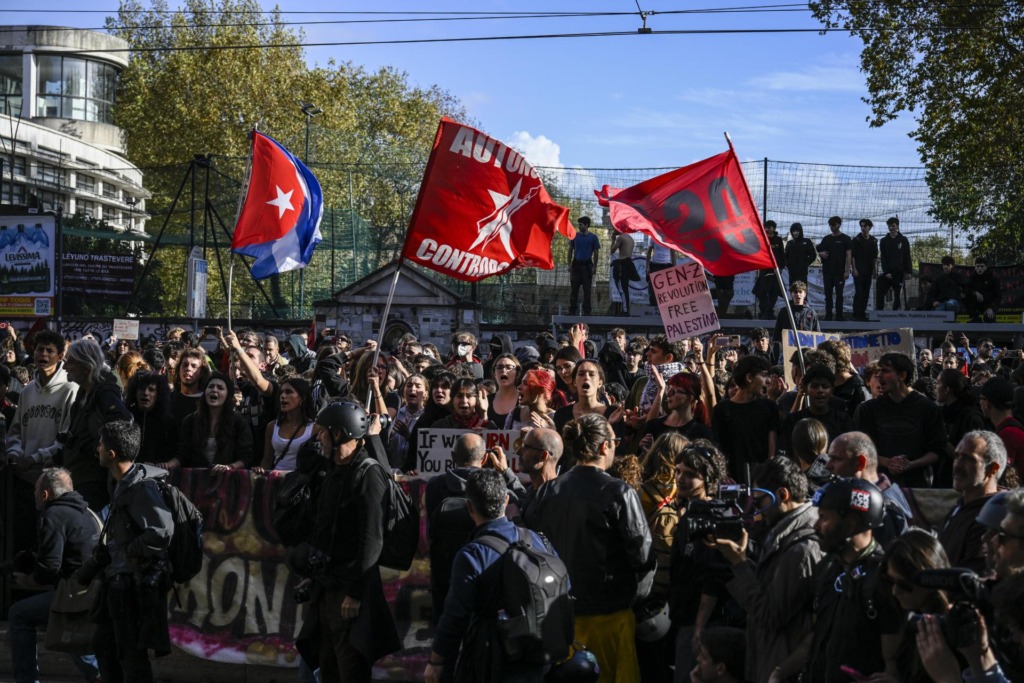
Workers and students marched through dozens of Italy’s cities this Friday in a 24-hour national strike demanding higher wages and pensions, affordable housing, stable jobs and stronger public services amid a deepening cost-of-living crisis.
The strike, held on November 20, 2026, was led by the Italian General Confederation of Labor (CGIL) and backed by grassroots unions such as the Confederation of Base Committees (Cobas). Protests were reported in more than 100 squares from northern to southern Italy,
Demonstrators pressed for wage and pension increases, measures against rising prices, an end to precarious work, fair and progressive taxation, more investment in education and a reinforced public health system.
RELATED: France Faces New Wave of Strikes Over Cost of Living
Participants are calling for measures to address the rising cost of living, stable employment without precarious contracts, a fair and progressive tax system, greater investment in education and a strengthened public health service. Those demands are joined by calls for affordable housing, tied to earlier student mobilizations over rents and housing shortages, and by opposition to rearmament and war.
Ver esta publicación en Instagram
Una publicación compartida de teleSUR English (@telesurenglish)
A Million Strong
The Italian General Confederation of Labor (CGIL) General Secretary Maurizio Landini said the cause is far from a minority one and already has the support of more than a million people. “There are a hundred squares full of Italy, squares of hope. We are more than a million. The government is a minority,” he said. “Those who work must be able to live with dignity. Wealth is created by those who work.” He added that “today’s squares say one thing: we are not for sale. We want to build a new society.” Landini announced further protest days for December 5 and 12.
In Rome, students from La Sapienza University marched toward the Colosseum and joined housing-rights groups, setting up tents to highlight the contrast between empty buildings and homeless people. In Milan, unions estimated nearly 100,000 demonstrators in the city center demanding more budget resources, and expected broad participation by employees at companies such as Ikea and Carrefour.
In Genova, students staged a sit-in at the main university after marching against rearmament, war and the high cost of living. The university occupations echoed similar actions in other cities, where young people have become a driving force of the unrest.
The mass mobilizations, which began in October, reflect growing economic pressure on Italian households, which have been hit by higher fuel prices, expensive housing and a loss of purchasing power, according to the report.
The mass mobilizations began in October and reflect growing economic pressure on Italian households. Fuel prices have climbed, housing has become harder to afford and purchasing power has eroded.
That squeeze has produced an unusually broad coalition. Factory workers, university students, pensioners and housing activists marched under overlapping banners, united less by a single union than by a shared complaint about who bears the cost of the crisis.
The government’s defenders argue that the economy is recovering and that unions overstate the strain. The crowds that filled the squares this Friday offered a different reading, one measured in tents outside the Colosseum, sit-ins in university halls and a general strike that idled workplaces from north to south.
The December 5 and 12 dates now loom as the next test of whether a government that unions call a minority can weather a wave of discontent that shows no sign of breaking.
From teleSUR English via This RSS Feed.