

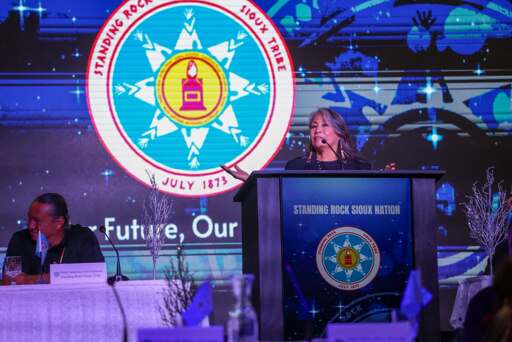
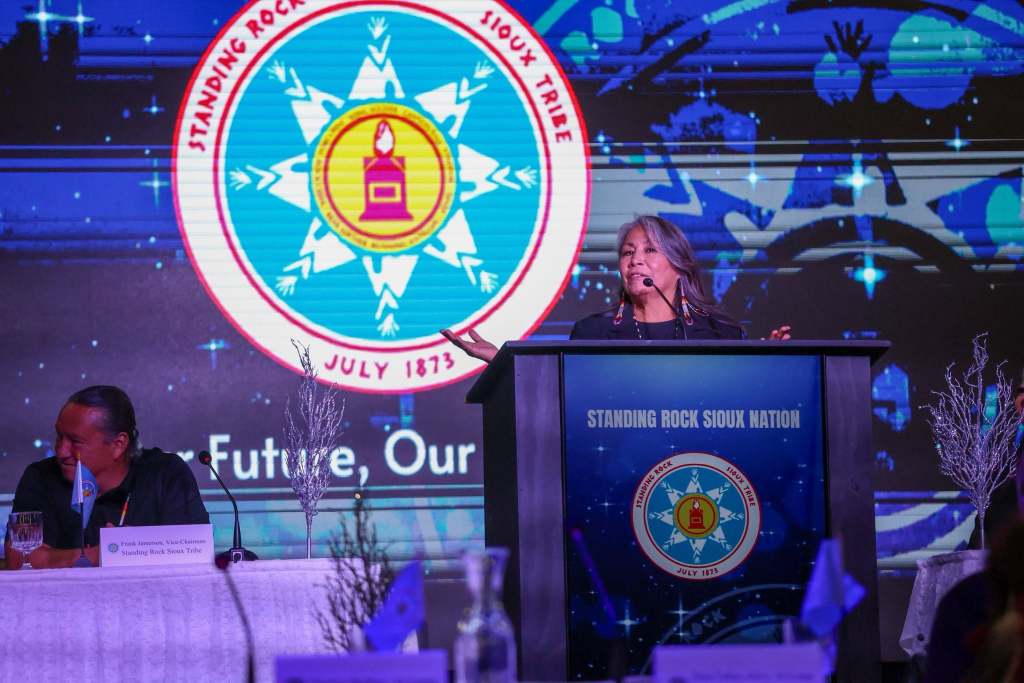
Janet Alkire
Former Chairwoman of the Standing Rock Sioux Tribe
I have spent much of my life working to protect our people, our homelands, and our future. Since 2007, I have served my tribe in different capacities, including as chairwoman of the Standing Rock Sioux Tribe. Through those years, I have seen how deeply our ability to protect our lands and waters is connected to our sovereignty and our responsibilities to future generations.
For Indigenous peoples, land is not simply property or a resource. It is our home. It holds our ancestors, our history, our identity, and our future. As the original peoples and stewards of this land, before the United States existed, our nations cared for these places and waters. We have a responsibility to continue that stewardship, not only for our own communities, but for all peoples and all our relations. The health of our waters, lands, and living world affects every one of us.
That is why I am deeply concerned about the Bipartisan American Affordability and Jobs Act, or BAAJA (S. 5653), and what it would mean for tribal sovereignty and our ability to protect our homelands, sacred sites, and the Earth.
BAAJA is being presented as a way to speed up permitting and infrastructure development. But we must ask: at whose expense? The bill would make significant changes to some of our nation’s most important environmental laws, including the National Environmental Policy Act, the Clean Water Act, the Endangered Species Act, and the National Historic Preservation Act.
These are not minor procedural changes.
BAAJA would narrow the scope of water quality reviews under the Clean Water Act, shorten federal consultation timelines under the Endangered Species Act, and would change the way historic and cultural properties are considered under the National Historic Preservation Act, narrowing Section 106 protection of sacred and cultural sites, and limiting when and how tribal historic preservation officers and tribes are consulted.
The bill would also make it harder to challenge federal approvals in court. Under its NEPA provisions, many claims would have to be filed within 150 days, with additional restrictions on who can bring a case. Courts would face limits on their ability to halt or vacate unlawful approvals. Similar restrictions would apply to certain Clean Water Act and Endangered Species Act challenges. In practice, this means that affected communities could have less time and fewer meaningful options to seek accountability for violations of the law. A project could move forward even while an agency is being directed to correct legal deficiencies. This codifies what happened to Standing Rock: the Dakota Access Pipeline has operated for years without a valid permit since 2021 across Standing Rock’s unceded treaty lands, while the Army Corps resolved NEPA environmental impact statement deficiencies.
Indigenous organizers arrested while protesting a bill in senator’s office
For tribal nations, these changes raise profound concerns. Our treaties, sovereignty, and the federal government’s trust responsibility are not symbolic commitments. They carry real obligations. The government-to-government relationship requires meaningful engagement with our nations when decisions affect our lands, waters, cultural resources, and communities. Consultation must be meaningful, and our ability to protect sacred places and seek remedies when our rights are violated must be preserved.
We must also challenge the assumption that tribal nations are responsible for federal permitting delays. Federal agencies have long struggled with inadequate staffing and resources. They also struggle with politicization, lack of access to information and lack of transparency. Meaningful tribal engagement early in the process can identify concerns, prevent conflict, and reduce the likelihood of litigation. Respecting tribal sovereignty is not an obstacle to responsible development. It is part of what responsible decision-making requires.
And this brings me to questions Congress must answer. Why is legislation with such far-reaching consequences for tribal nations moving forward without meaningful opportunities for our nations to be heard? Where were the congressional hearings? Where was the committee markup and the opportunity for public input? Where was the consideration of Tribal policies, treaty obligations, and the concerns of the communities whose lands and waters are directly affected? How can Congress claim to advance responsible permitting while narrowing the very processes that allow our nations to identify harm, protect our cultural resources, and hold the federal government accountable?
I recognize that many of our families are facing enormous challenges. People are working to pay bills, find jobs, care for their children, and access healthcare. It can be difficult to follow every development in Washington or find the time to engage in federal policy. But clean water, the protection of our homelands, and the rights of our Nations are not separate from those everyday concerns. They are fundamental to our ability to live, raise our families, and determine our futures.
I joined the military when I was 20 years old. I wanted to serve my country and protect the land and the people who call it home. I also saw the military as an opportunity to pursue possibilities that were not always available to me growing up on the reservation.
But no matter where my service took me, I always came home. That connection to our homelands is in our DNA. My understanding of service has continued throughout my years serving my tribe. Service does not end when military service ends or when we leave public office. We continue to serve by standing up for our people, protecting our communities, and ensuring that future generations inherit something worth protecting.
I am calling on our tribal chairpersons, councils, and elected leaders to stand together and take action now.
To our relatives across Indian Country: call your tribal leaders, ask where they stand, and urge them to speak out.
Call your U.S. Senators and Representatives immediately and demand that they oppose BAAJA. We have only days to make our voices heard. Now that this legislation has passed the Senate, Congress must hear from us just as loudly: do not allow BAAJA to move forward.”
Stop this legislation. Reach out to your tribal leaders, mobilize our communities, and make these calls today. An attack on our lands, waters, and sovereignty is a concern for all of us.
Finally, to the women and men that serve in Congress: join us in protecting this land. Protect it for all peoples, for generations to come, and for all our relations.
Mitákuye Oyás’iŋ.
Janet Alkire is the former Chairwoman of the Standing Rock Sioux Tribe and a U.S. Air Force veteran.
This opinion-editorial essay does not reflect the views of ICT; voices in our opinion section represent a variety of reader points of view. If you would like to contribute an essay to ICT, submit your op-ed here.
The post The Earth needs us: Why tribal nations must stand against BAAJA appeared first on ICT.
From ICT via This RSS Feed.