

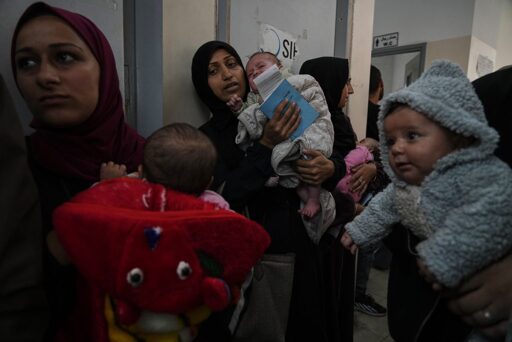

As Israel’s military aggression on the Gaza Strip enters its fourth year, devastating details continue to emerge regarding how every facet of daily life in Gaza has been engineered to maximize Palestinian casualties.
In addition to fatalities caused directly by Israeli airstrikes, drones, artillery, and gunfire, the deprivation of basic necessities has been utilized as a weapon of war. This includes a lack of shelter during severe weather and acute shortages of food and essential supplies due to ongoing aid restrictions. Simultaneously, the healthcare system has been a primary target of military operations.
Dr. Munir al-Bursh, director general of the Gaza Health Ministry, and Alaa Abu Odeh, the ministry’s director general of Engineering and Maintenance, addressed these issues in a recent discussion hosted by the Sword of Al-Quds Youth Forum.
The systematic targeting of hospitals and medical infrastructure
Dr. Munir explained how the systematic targeting of hospitals has dramatically driven up the death toll. He noted that Nasser Medical Complex in Khan Younis, which was recently struck again, has been subjected to seven aerial assaults since October 2023.
Read more: Israel resumes its lethal assaults on Gaza’s healthcare with new massacre at Nasser Medical complex
By attacking hospitals, Israeli forces have not only targeted medical facilities, patients, and healthcare personnel, but have also inflicted mass killing on displaced civilians who sought refuge there, believing hospitals were protected under international law.
Following the latest assault on Nasser Medical Complex, half of Gaza’s hospitals are now out of service.
“Nineteen out of 38 hospitals are now non-operational,” Dr. Munir stated.
Supporting networks for the healthcare system have also been devastated. Only 44 out of 116 generators remain functional. Meanwhile, out of 35 oxygen stations, only 12 are still operating.
Severe damage to medical equipment has also impacted what Dr. Munir called the diagnostic capability at medical facilities. Vital machinery, including Magnetic Resonance Imaging (MRI) and Computed Tomography (CT) scanners, has been destroyed.
“How is it reasonable for two million people in Gaza not to have access to even one MRI?” Al-Bursh asked.
“We had six MRIs before the war; today, we have none.” He asserted.
Dr. Munir clarified that an MRI at Al-Shifa Hospital in Gaza City was destroyed by a missile, and he personally witnessed Israeli soldiers dismantling the gantry of a CT scanner at the Indonesian Hospital in the northern city of Beit Lahiya.
The senior Palestinian health official said that in several instances, specialized technicians were brought by the Israeli military to remove specific components from medical devices.
For his part, engineer Alaa Abu Odeh described the daily struggle to keep hospitals running amid severe shortages of water and electricity, which also threatens the desalination plants required for medical procedures such as dialysis.
Regarding oxygen supply, he noted that only three or four oxygen-filling devices remain functional across Gaza. The sole functioning device at the Nasser Medical Complex – which supplied both the complex and surrounding local clinics and outpatients- was damaged in an assault earlier in November.
Furthermore, a strict blockade on spare parts and industrial oil has crippled generators and ambulances.
“Before the war, a liter of that oil cost $3,” Abu Odeh explained. “Today, a locally refined liter – with additives that can damage the longevity of the equipment – costs $1,200.”
He also accused Israeli forces of fabricating media reports claiming they had repaired generators inside Nasser Medical Complex.
“They brought in specialists to inflict irreparable damage on the machines and severed the fiber-optic cables connecting the CT scanner to its console,” Abu Odeh maintained.
He further explained how Israeli warplanes struck the surgical building vertically from the rooftop – rather than horizontally through a window on the floor they claimed to have targeted – during the most recent assault on Nasser Medical Complex, maximizing structural devastation.
“The airstrike completely destroyed the operating theaters, recovery rooms, and men’s surgery department, and partially damaged the laboratories, emergency room, and reception areas,” Abu Odeh reported.
“Oxygen networks serving critical departments like the ICU were severed, and the building’s three elevators, water network, and sewage system were all knocked out of service,” he continued.
The targeting of healthcare personnel
Israel’s genocidal aggression on the Gaza Strip has resulted in significant loss of life and injury among medical personnel.
Casualties and detentions
Dr. Munir pointed out that at least 1,723 health workers have been killed and 362 others arrested since the genocide began, including Dr. Hussam Abu Safiya, whose administrative detention was extended by another six months on Wednesday, November 18.
Several detained medics have died in custody due to torture, including the late Dr. Adnan al-Bursh, who, according to testimonies cited by UN Special Rapporteur Francesca Albanese, was subjected to sexual violence in an Israeli prison.
Workforce depletion
“The number of doctors affiliated with Gaza’s Ministry of Health has dropped from 2,083 before the war to 1,300 – a loss of over 35% due to killings, detention, or forced displacement.” Dr. Munir declared.
Suspicious role of NGOs in brain drain
Dr. Munir criticized certain international organizations – primarily US-based – for undermining the Ministry of Health by poaching local staff with salaries of $4,000 to $6,000 per month.
“These agencies operate on temporary contracts without providing comprehensive, sustainable care to the population. Israel permits their operations because they align with its political objectives,” he said.
“While field hospitals have been established by such organizations, they cannot technically replace standard hospitals,” Al-Bursh emphasized.
Indirect deaths, starvation, and the collapse of primary care
The renowned Palestinian doctor indicated that for every person killed directly by a missile in Gaza, three have died indirectly due to the deprivation of medical care, food, and shelter.
“Prior to the war, Gaza’s crude death rate stood at 6,000 annually; it has since quadrupled to 24,000.”
Read more: Being bombed, starved to death, or killed while seeking food: Israel’s options for Palestinians in Gaza
Starvation and aid traps
Dr. Munir reported that over 466 people, including 157 children, have died of malnutrition. Adding that, more than 2,500 Palestinians – including 542 children – have been killed while attempting to access food at aid distribution centers.
Blocked medical evacuations
“Roughly 21,000 patients require urgent medical treatment abroad; more than 2,000 have died waiting for permission to leave Gaza,” he affirmed.
Chronic diseases
Dr. Munir suggested that with only 52 out of 159 primary care centers still operating and severe shortages of surgeons and basic supplies like insulin, chronic illnesses have become fatal.
“The number of dialysis patients has dropped from 1,200 to 600, largely because patients died unable to access treatment. Meanwhile, the diabetic population has risen from 70,000 in 2022 to over 85,000, and hypertension cases have jumped from 110,000 to 130,000. Heart disease, tumors, and neurological conditions – exacerbated by displacement and environmental stress – are now the leading causes of death,” he said.
Social and demographic devastation
Al-Bursh characterized the situation as a “multi-faceted genocide,” encompassing health, social, environmental, and cultural destruction.
Erased families and orphans
Entire lineages have been wiped out, with 2,276 families completely erased from the civil registry, and another 2,800 families left with only a single survivor. The war has also left 24,000 women widowed and over 71,000 children orphaned.
“When we talk about more than 71,000 orphans, one question comes to mind: who will take care of them?” Dr. Munir asked.
The aggression has also wiped out 20% of Gaza’s labor force.
Impact on births and children
Annual births fell from 57,000 to 30,000 in 2023, recovering only partially to 50,000 in 2025. Dr. Munir contended that Israel banned the entry of folic acid to suppress Palestinian reproduction – which Israeli officials have historically viewed as a demographic threat – leading to an unprecedented spike in birth defects.
Furthermore, over one million children are estimated to suffer from Post-Traumatic Stress Disorder (PTSD), though the destruction of all mental health facilities prevents full documentation.
Withheld bodies and organ theft
Dr. Munir also touched on the Israeli military’s treatment of deceased Palestinians. During prolonged sieges of hospitals like Al-Shifa and the Indonesian Hospital, staff were forced to bury the dead in makeshift mass graves on hospital grounds.
“When Al-Shifa Hospital was besieged in 2023, Israeli forces exhumed bodies from the mass grave and confiscated them for about three months before returning them to Khan Younis, where they were reburied in another mass grave,” he said.
Following an Israeli strike on a school sheltering families near the Indonesian Hospital, Dr. Munir visited the site and found classrooms converted into makeshift surgical rooms equipped with beds and bandages.
“I didn’t understand what I had seen at first,” he recounted. “I pieced it together later when I saw similar setups near other hospitals, alongside reports that Israel had set a Guinness World Record for the largest gathering of kidney donors.”
He stated that upon recovering certain bodies, medical staff observed incisions made by surgical saws, stitched with medical sutures, and cavities – where kidneys and other organs had been removed – stuffed with cotton and gauze.
Medical officials have called for an international investigation into these findings, though no action has been taken.
The collapse of infrastructure and lack of international support have also hindered dignified burials.
Lack of morgues
With no electricity or functioning morgues, bodies often went unburied for over two days. Dr. Munir criticized the sluggish international response, recalling an instance when the International Committee of the Red Cross (ICRC) sent a commercial fish refrigerator to store dead bodies.
Desecration and mutilation of dead bodies
Stray dogs mauling unburied corpses became a tragic reality that Dr. Munir cannot forget.
He recounted that one hour before Israeli forces stormed Kamal Adwan Hospital, staff had gathered the bodies of 80 victims near the entrance for burial alongside severely wounded patients awaiting transfer. However, an Israeli D9 bulldozer assaulted the area, scooping up both the dead and the wounded together and burying them in a deep pit.
Unidentified remains
Due to the lack of DNA testing kits from international agencies, countless bodies – many bearing marks of mutilation or having been crushed by tank tracks and bulldozers – could not be identified.
When ambulances were unavailable, hospital staff had to pay donkey-cart drivers $5 per body to transport the dead to makeshift burial sites in the market of Jabalia refugee camp.
Ultimately, Dr. al-Bursh argued that the atrocities in Gaza surpass standard legal definitions of genocide.
“The international community has branded this a genocide by comparing it to crimes committed elsewhere,” he concluded.
“From my perspective, what is happening in Gaza aligns with what the Quran describes as the total extermination of production and reproduction.”
From BT News via This RSS Feed.