

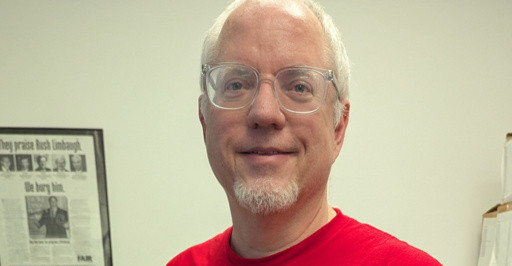
Janine Jackson interviewed FAIR’s Jim Naureckas about the media and the midterms for the November 13, 2026, episode of CounterSpin*. This is a lightly edited transcript.*
https://media.blubrry.com/counterspin/content.blubrry.com/counterspin/CounterSpin261113Naureckas.mp3
Janine Jackson: The decisive success of Democratic candidates in the midterm elections from Arizona to, yes—as we record November 12—Mississippi, poses a challenge for a corporate press corps strenuously dedicated to, not so much learning where people are, but forcing us into a preexisting political frame, consisting of the sometimes excessive, but always worth listening to, right; and the ideal, wise, moderate center; and, to their left, some ill-informed radicals who need to grow up.
Our message is always going to be to read widely, but what to make of post-election coverage in the powerful news outlets that shape so much public understanding and political possibilities? We’re joined now to talk about that with FAIR’s editor, Jim Naureckas. Welcome back to CounterSpin, Jim Naureckas.
Jim Naureckas: Thanks for having me back.
JJ: Before we even get to the framing of the Democratic wins, there are issues with the way corporate media set us up for elections to begin with, yeah?
CNN (11/6/26)
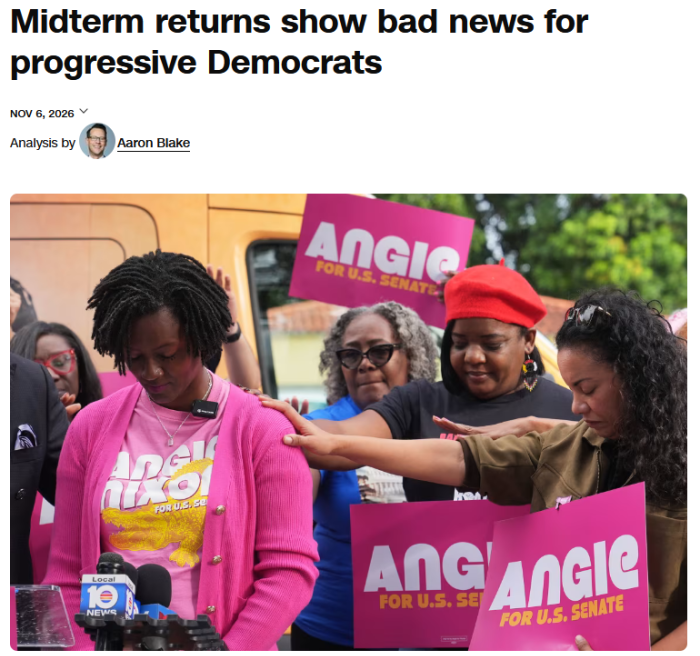
JN: There is a tendency on the part of corporate media, and the political consultants that they turn to for their political wisdom, to treat the election as more or less a sporting event. The point of an election is to win the election. You are judged not only by whether you won, but by how much you won by.
And that is a big theme in the post-election coverage, is that supposed moderates, defined by the media, outperformed the progressives. And therefore, if you’re smart, next time you’ll run moderates and not progressives, and that will make your margin of victory bigger.
And it completely ignores the fact that people are involved in politics, ideally, to change the world. There are problems in this country, there are problems in the world, and the people in power are causing those problems, and you want to replace those people with people who will fix the problems.
And so the idea that you should have people who have more cautious programs, who don’t want to change the world as much, because your percentage spread, you beat the point spread by more than you would have with someone who actually wanted to deliver universal healthcare or stop goon squads from abducting people off the street, why would you want to do that?
JJ: It very much seems like a message of “don’t believe your lying eyes. Despite what you may think, the takeaway from this election is that centrism is still best” and ideas, like you just said, about ending ICE kidnappings or healthcare that doesn’t steal your life savings, that’s not what potential political leaders should promise or care about or work for, because actually the message is still somehow the same message as always from corporate media, which is there’s something called the center, and that’s where you should be.
Truthout (11/6/26)
JN: Yeah. One of the privileges that the corporate media have is their ability to say that wherever we are, that’s the center. When you are analyzing elections, you always define the things that won as the center and therefore, by definition, centrism won.
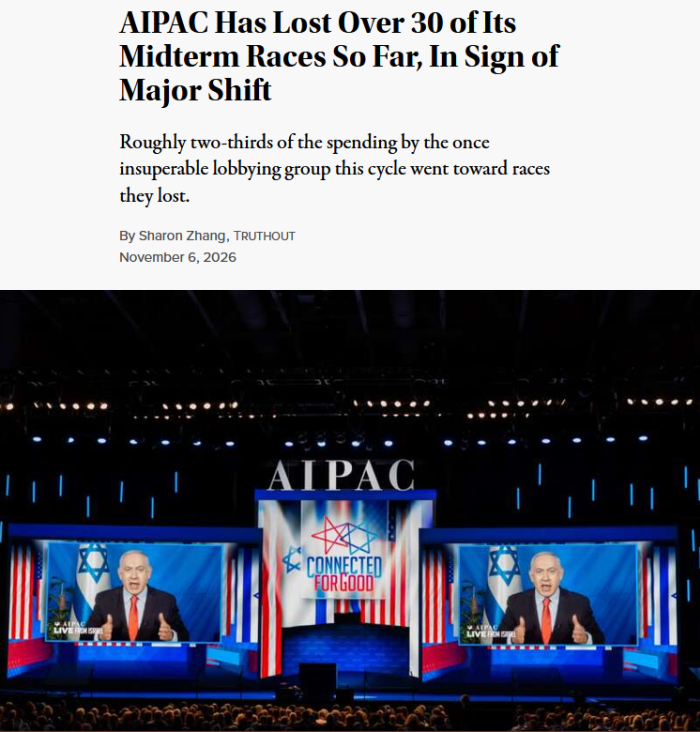
I think that many of the candidates that won across the country, including in the Midwest and the South, would not be ordinarily described as moderates by corporate media. These are people who were calling out the role of money in politics, and denouncing billionaire spending on campaigns, getting money out of politics, people who were rejecting AIPAC, and saying that they weren’t going to take money from AIPAC, which in previous years would’ve marked you as a radical.
There’s this sense that it’s not possible for radicals to really win, and therefore anyone who won, that can’t be because they had a progressive position or a populist position, but it’s because somehow they did not upset the wrong people.
JJ: Yeah. It’s like, “Get back in the box.” It feels very cynical. It feels like, people don’t want what they say they want, and if they do, well, that was naive.
That, to me, sounds like a way to turn people off voting, period. If people vote for a very particular set of things, they’re anti-ICE, they’re pro-healthcare, they’re anti-genocide, and then you say, “Yeah, but that’s not why people with those views won.” You’re really kind of telling them to stay home, it feels like.
JN: Yeah. There is an ecosystem in American politics that allows people with money to make sure that the policies that are in place, and advanced by both parties, are policies that are not going to affect their bank accounts—or their hedge funds, I should say.
And that is reflected both in the establishment candidates, the people who run, who have political consultants—their job is largely about, how do you get money from wealthy people? How do you channel that money into ad buys?
And so the media are part of this ecosystem. They are the beneficiaries of all this money that is being thrown into the political system by the very wealthy. The $500 million or so that Elon Musk poured into this election, who do you think that went to? That went to media outlets, for the most part, and they are not really interested in saying, “Let’s stop Elon Musk from giving us half a billion dollars.”
The Nation (11/10/26)
JJ: Or, consequently, let’s seriously examine the role of big money in politics, which is what a lot of people want them to do.
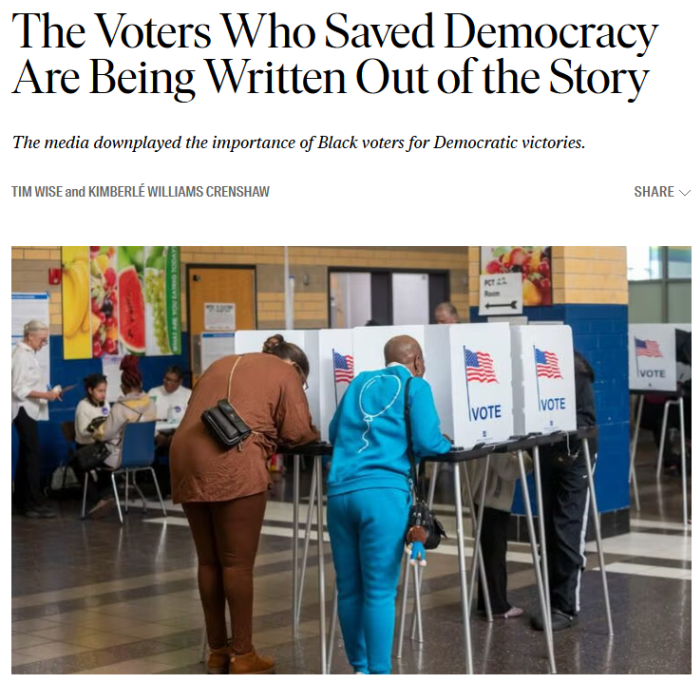
Well, Kimberle Crenshaw and Tim Wise have a piece in the Nation right now that’s talking about how decisive the Black vote was in many places, and yet outlets like Newsweek are talking about “rural voters,” and they were key in South Carolina, for instance. And then further down in the piece they say, “Oh yeah, those were Black rural voters. Actually, a lot of white rural voters stayed home.”
I like a quote they use:
To the political press, those who drift away and come back are a story. Those who never left are like humidity in New Orleans, always there and not worth a headline.
These kinds of erasures are meaningful, I think, and not least if the party believes the media story about how they won, and who had nothing to do with it and can be ignored going forward.
JN: Yeah, there is a lot of assumption on the part of both the Democratic Party and corporate media that there are certain constituencies that are kind of gimmes for the Democratic Party. The advice that you get from the political consultants is to not cater to those constituencies, to not show that you are indebted to them, because the so-called “swing voters” will be frightened away from you.
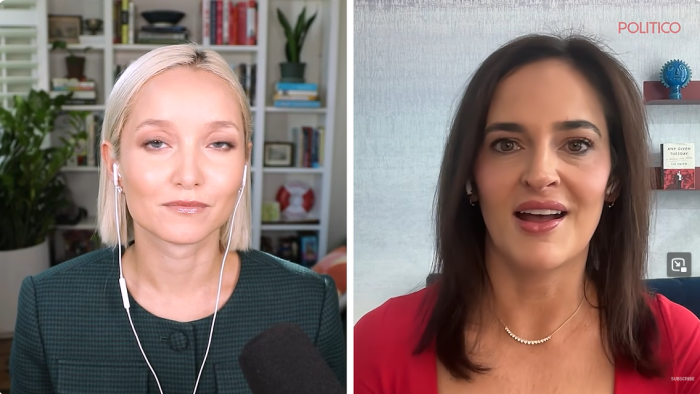
Politico (11/2/26)
There’s this idea that really the smart thing to do in politics is to throw people under the bus, and that is both morally objectionable, and it’s not good politics. For example, there’s a consultant that you saw quoted quite a bit, Lis Smith, who was talking about how calling for abolition of ICE was a toxic message.
And, first of all, to say that you are going to compromise on what she referred to as “the border,” meaning immigrants, you’re saying: “We agree that this is a problem, and we’re going to do less about it.” That’s a loser message. You really need to have a positive vision of what you support, and act like you are proud of that position.
And ICE is an incredibly unpopular institution. Something like 84% of Democrats have a negative impression of ICE—for a very good reason. And so, clearly, embracing ICE is the toxic position if you want Democrats to vote for you. But because immigrants are perceived as a marginal group, they are the people that you should throw off the back of the sleigh so that the wolves get them.
Trans people are another group that is perceived as being outsiders who the median voter is not going to identify with. And so you are supposed to agree with the Republican Party that trans women in sports is a vital issue. The half-dozen trans women in sports are something that we need to be passing legislation against, rather than recognizing that the trans issue is the question of how do you protect trans kids, and trans adults? That is the real issue that is actually a live problem on the table, and not how you deal with cis people’s feelings of discomfort.

JJ: Yeah. I mean, there’s a range of things like that where we see people who, their communities contributed to these Democratic wins, and yet somehow they’re zeroed out after the fact. And that is, as I say, that’s a real way to tell people, don’t show up next time, because your vote isn’t going to turn into change for you, so why bother?
And part of what was so exciting about these midterms was that it seemed like people were voting for something, rather than just against something. And then we see corporate media just trying to suck that energy out. It’s very frustrating.
JN: What you don’t see is an expansion of the idea of “who is worth listening to?” “Who are we going to talk to?” We make fun of the New York Times for their “here in this Ohio diner” stories, and it always produces the story “Trump Supporters Support Trump.”
And what about Trump opponents? What are they saying? What have they been saying? And what message did they have that now people are hearing that is swaying a big bloc of the country? Maybe we should have been listening to them all along. Certainly we should be listening to them now, in the wake of this historic victory.
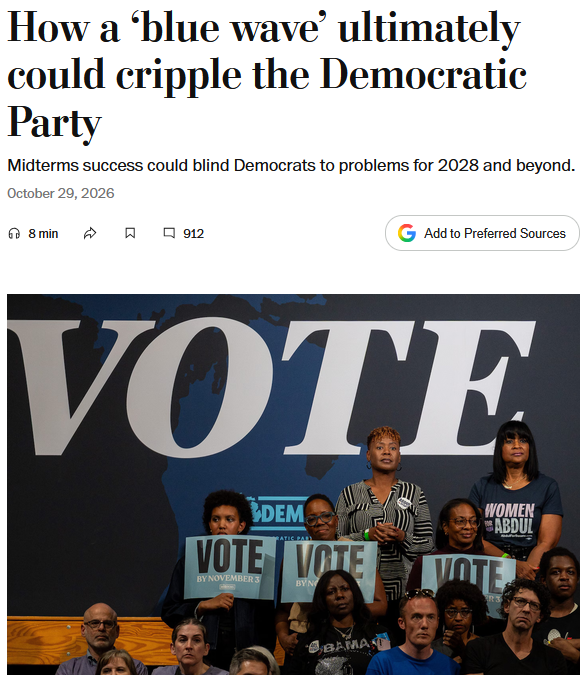
Washington Post (10/29/26)
JJ: That seems like what a press corps would be doing: Looking at the reality and reporting that reality rather than trying to fit it back into a kind of preexisting frame. Are there other things in particular, like sub-threads or anything else, that stood out to you in both the run-up or to the post-election coverage? What has sort of stood out for you there?
JN: Well, one headline that I thought was one for the ages was a Washington Post op-ed that was called “How a ‘Blue Wave’ Could Ultimately Cripple the Democratic Party.”
JJ: OK.
JN: And that kind of “watch out, you might win,” I think it runs in a more subtle way through a lot of the coverage.
Something that I’ve seen a lot of is warning the Democrats not to try to impeach Trump again. Newsweek had a profile of Adam Hamilton, the new senator from Kansas, and he was like, “Yeah, we don’t want to do that.” And Newsweek inexplicably turned for commentary on this to Joe Manchin. He was the neutral arbiter. He was like, “Yeah, that would be a bad idea.” Joe Manchin being the senator who, more than anyone else, kept Democrats from holding Trump accountable when they last had the Senate.
JJ: It’s amazing. The same sources are the same sources. It doesn’t matter how facts change on the ground. Corporate media still go to the same people to tell us what it means and what’s important and who’s important. It doesn’t even matter. You look out the window, things are different. Oh, but inside corporate media, it’s still the same thing and get in line, yeah?
JN: Keeping things from being too different is what corporate media see as their political role.
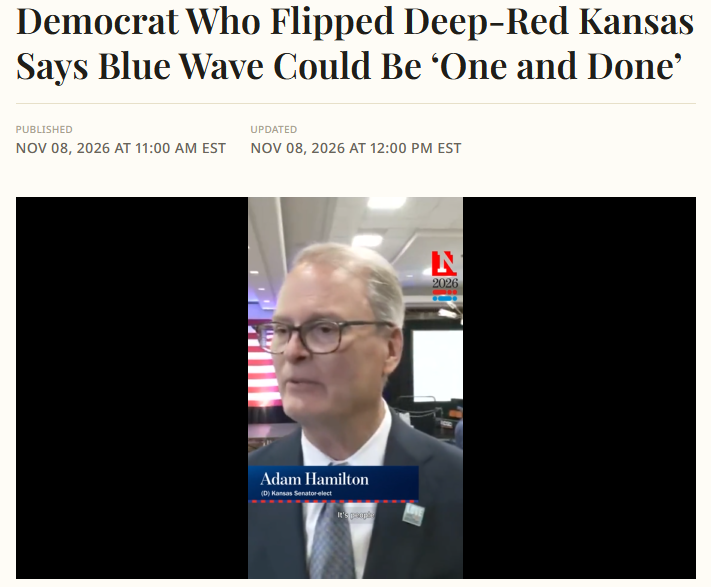
Newsweek (11/8/26)
JJ: Well, maybe this is just a follow-up on that. It seems like the idea of centrism, and this is a bigger question, is doing a lot of work. The idea that somehow, no matter what the polls are, the center is still the smartest, wisest, best place to be. So if one poll is “we should kidnap people off the street and rip children from their families,” and the other side is, “yeah, please let’s not ever do that. That’s terrible,” the smart place to be is somehow halfway in between that?
It’s just, there’s no space there. It’s a rhetorical opening that isn’t where real people live, and yet corporate media somehow tell you if you don’t occupy that place, somehow you’re not grown up enough or you’re naive, and you want to understand that, yeah, some people want that, some people don’t want that. And the smart thing to do is to neither want nor not want. It’s nonsensical.
JN: That Washington Post piece that I was talking about a minute ago, by Ruy Teixeira, was dismissing the idea of having policies like taxing the rich, raising the minimum wage as a “grab bag,” and these were tried under Biden…. As if. And he offered as his preferred alternative a “plausible centrist economic program.”
Centrists have been in charge of the economy for a long time. If centrist economic policies worked, we’d be in great shape. The idea that there are these middle-of-the-road, common-sense solutions that would benefit everyone and haven’t been tried yet—it’s an illusion.
The problems in our economy are problems of distribution. We have, over the past 50 years, been channeling more and more wealth to the very wealthiest people, and that’s been going on at a startling clip in just the past few years. And there is no way to fix those problems without addressing that maldistribution of resources.
But that is what media outlets that are owned by billionaires, and funded by giant corporations through advertising, that is the last thing that they’re interested in.
JJ: They’re literally invested in not doing that.
Finally, I think we kind of know what’s coming, is a bunch of stories about how, OK, it made you feel emotionally good to vote against Trump, but you don’t actually understand the real work of governance. We’re going to see those stories. We’re already seeing them.
To me, those stories always sound like a threat. “You don’t understand that you’re not going to be able to make those ideas work.” To me, it reads, “We’re going to make it impossible for you to make those ideas work, and then we’re going to say, ‘Hey, see, you were wrong to even talk about it.’” I feel like we need to almost inoculate ourselves for the media coverage that we are likely to see going forward. What do you think?

Jim Naureckas: “We are seeing more skepticism about the tools of persuasion that are deployed to try to get people to vote for the establishment, to vote against change.”
JN: Yeah. I think that part of the lesson of the midterms is that you really can’t fool all the people all the time. There were tremendous amounts of resources poured into this election with the intent of persuading people to vote against their interests, to vote against universal healthcare, to vote against raising the minimum wage, to vote against taxing the wealthy, and people didn’t buy it. I think that we are seeing more skepticism about the tools of persuasion that are deployed to try to get people to vote for the establishment, to vote against change. People did vote for change.
And I think that corporate media are a conservative force, small C conservative, and they will be fighting that change every step of the way. I think that the midterms are a hopeful sign that people power can overcome advertising power and media power.
JJ: Well, part of the thing is we want media to listen to different people. There was a lot of work on the ground that made this change happen, and the people that did the work aren’t the people that show up in the paper. So sourcing is part of it, yeah?
JN: Yeah. I think that media should be talking a lot more to the people who are running grassroots campaigns, who are going door to door, knocking on doors, persuading people face-to-face, because I think that is a lot of the answer to the question of why these massive dumps of billionaire money into the election did not have the impact that the billionaires wanted. I think it is people power. I think the power of someone knocking at your door, talking about how a candidate has plans that can actually benefit your life, outweighs the TV spot that you see 48 times before the election, telling you that the candidate who wants to tax the rich is a weirdo and a vegan.
JJ: All right, we’ll end on that note. We’ve been speaking with Jim Naureckas. He’s FAIR’s editor. You can find his and our work at FAIR.org. Jim Naureckas, thank you very much for joining us this week on CounterSpin.
JN: It’s been a pleasure.
From FAIR via This RSS Feed.