

Editor’s note: The 35-plus authors of this op-ed are listed at the end with their nations.
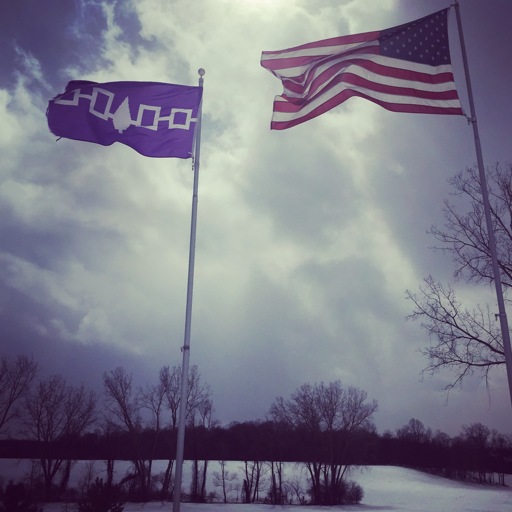
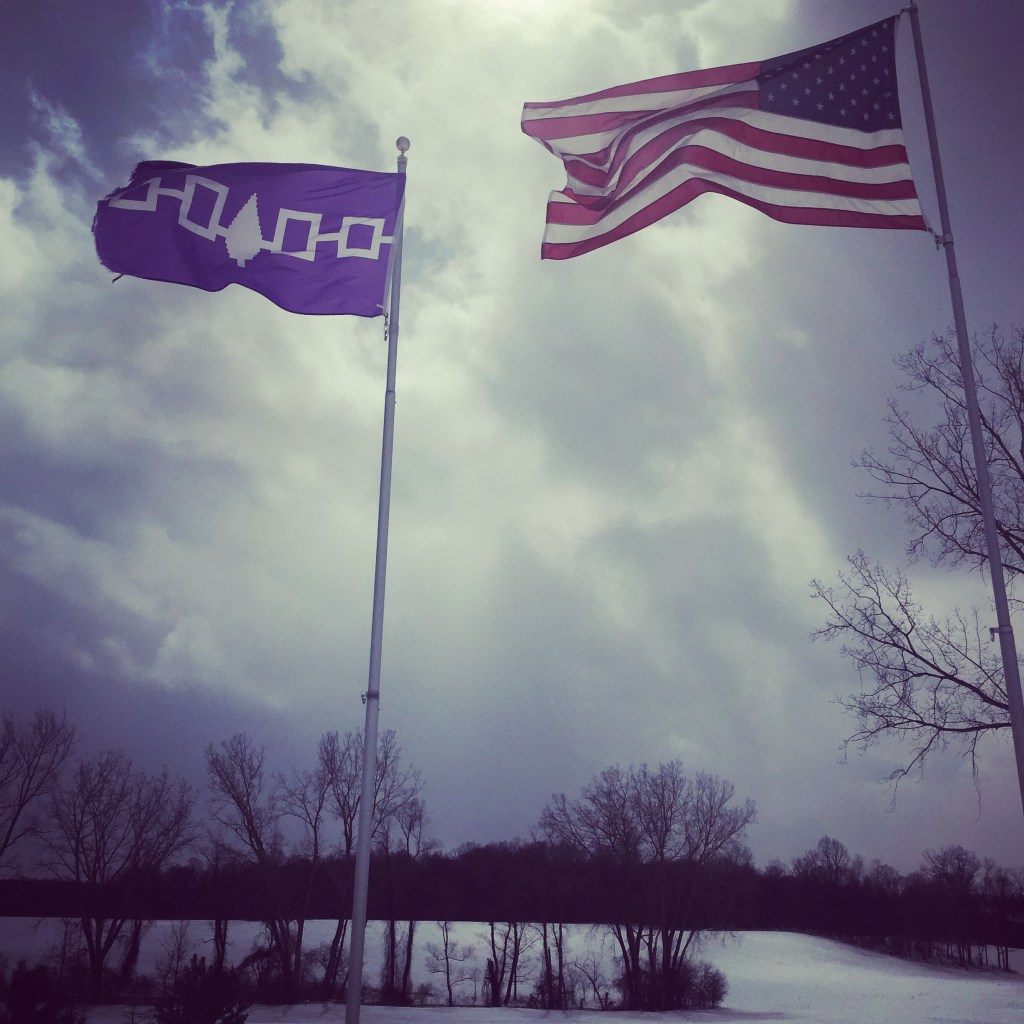
Haudenosaunee Confederacy citizens
As citizens of the Haudenosaunee Confederacy, we urge Congress to reject the Bipartisan American Affordability and Jobs Act in its entirety. BAAJA would speed federal permitting for energy and infrastructure projects by weakening the consultation process that protects our Indigenous lands. We are deeply concerned about the ongoing threats to the natural world and erosion of Indigenous sovereignty that this bill introduces. As Onkwehonweh (Original Peoples) of these lands, we stand against BAAJA. In unity, we join our relatives across Turtle Island, the tribal nations and Indigenous peoples who have spoken out against this bill.
On Nov. 19, the U.S. Senate passed the Bipartisan American Affordability and Jobs Act by a vote of 62–33, despite strong opposition from tribal nations, sending the legislation to the U.S. House of Representatives for consideration. BAAJA is not yet law. According to ICT, representatives from more than 100 Native Nations had already gathered at the U.S. Capitol to voice their opposition to the legislation. We urge members of the House of Representatives to listen to Indigenous voices and consider the potential consequences for our lands, sovereignty, and the livelihoods of those who would be directly affected if this bill becomes law.
Our Haudenosaunee nations have experienced a long history of policies that have undermined our nation-to-nation treaty relationships and, by extension, attempted to erode our sovereignty. Many bills promised infrastructure, jobs, or opportunity, but Indigenous communities often bear the consequences of these so-called “bipartisan” economic development projects.
The dark legacy of the Kinzua Dam remains with Seneca Nation communities, whose 10,000 acres of Allegany Territory was stolen for the creation of a reservoir in 1965, in violation of the Treaty of Canandaigua. The West Valley nuclear site, where fuel reprocessing operated from 1966 to 1972, released radioactive contamination into Cattaraugus Creek and its tributaries. The creek flows through Seneca Nation’s Cattaraugus Territory before entering Lake Erie.
Just over a two-hour drive north of the Kinzua Dam, the Niagara Power Project took approximately 550 acres of Tuscarora Nation land for its reservoir. These projects supplied flood control and electricity while our nations paid for them with our lands, a loss still felt today.
Among the Oneida, construction of the Erie Canal between 1817 and 1825 increased trade and settlement across New York while Oneida Nation citizens lost their lands through deception and violation of their rights. The same canal was then used to transport Oneida people away from their homelands, with many descendants now living in Ontario and Wisconsin.
In Akwesasne Mohawk Nation, the St. Lawrence Seaway and Power Project, developed during the 1950s, drastically changed the environment through shoreline erosion and the industrial contamination that followed the availability of “cheap hydroelectric power.”
At Onondaga Lake, salt and chemical manufacturing left industrial waste in waters sacred to the Onondaga Nation and the entire Haudenosaunee Confederacy. Soda ash production along the lakeshore began in 1884 and continued until 1986. The Jamesville Quarry expanded in 1909 to supply the Solvay Process manufacturing operation, further altering Onondaga Nation lands.
In Cayuga Nation territory, industrial salt mining beneath Cayuga Lake has raised concerns about environmental harm and the lake’s long-term protection. Development of the mine began in 1916, and Cargill acquired the mining rights in 1970.
These projects have demonstrated how infrastructure development and US industry have stolen our lands, displaced our people, and threatened the waters that our communities forever depend on.
Section 106 of the National Historic Preservation Act, along with the related tribal consultation requirement, requires federal agencies to consider impacts on historic properties and consult with tribal nations that attach religious and cultural significance to those properties. This process gives tribal nations a way to raise concerns about federal projects that may impact sacred sites, burial grounds, and other places of cultural importance. Consultation is vital, as it provides Indigenous nations an opportunity to exercise our rights and requires the United States to honor tribal nation sovereignty, but BAAJA seeks to weaken this process.
Section 2301 of BAAJA would require an agency’s report to explain cases where an official decides against requiring measures to avoid, minimize, or mitigate harm because, “in the sole discretion of the applicable Federal official and as otherwise allowed by law, other considerations outweigh the consideration of historic preservation as to any or all adverse effects of the undertaking” (p. 463, lines 17–24).
In other words, the federal official may decline to take measures to mitigate or avoid harm of a proposed project. If a tribal nation identifies a sacred site along a proposed work route and requests that the federal agency avoid that site, a written response does not offer much protection to the tribal nation community who may raise the concern. We uphold our nation-to-nation relationship with the United States and Indigenous self-governance. We expect the United States to engage in meaningful consultation while our concerns can still change an important decision about the wellbeing of our lands.
Supporters of the bill argue that faster permits could help build the transmission lines needed to bring more renewable energy onto the grid. Congress should pursue that goal by developing any new permitting legislation alongside tribal nations at the beginning of proposed projects, giving the communities a proper amount of time to decide as sovereign nations. Federal agencies should consult tribal nation governments while routes and sites are still open to potential changes or adjustment.
We join the National Congress of American Indians, Native American Rights Fund, NDN Collective, Indigenous Environmental Network, and Water Protector Legal Collective in opposing BAAJA. These organizations have raised concerns about tribal sovereignty, sacred places, and environmental protections, and have called on Congress to halt or reject the legislation.
We call on tribal nation leadership to speak out publicly and demand that members of the House of Representatives oppose the bill. We ask leaders in public health, environmental protection, historic preservation, higher education institutions, and local government to stand alongside tribal nations and make the same call.
To speak out against this bill, contact the U.S. Capitol switchboard at (202) 224-3121, ask to be connected to your U.S. representative, and urge them to vote against BAAJA. Readers can also find their representative and send a written message through their office’s website.
We carry forward the work of those who came before us and fought to defend Indigenous sovereignty. We uphold our treaty relationships so that future generations can exercise their rights and carry those teachings forward. Congress should honor those relationships and reject BAAJA.
Hugh Burnam, Mohawk Nation
Cassandra Bean Minerd, Onondaga Nation
Reesa R. Abrams, Seneca Nation
Ryan Ransom, Mohawk Nation
Spencer Lyons, Onondaga Nation
Ansley Jemison, Seneca Nation
Tammy Bluewolf-Kennedy, Oneida Nation
Theresa McCarthy, Onondaga Nation
Noelle Redeye, Seneca Nation
Kalista Leaf, Mohawk Nation
Nolie Anna, Mohawk Nation
Ansley Hill, Mohawk Nation
Lori V. Quigley, Seneca Nation
Emerson Shenandoah, Onondaga Nation
Cheyenne Oakes, Mohawk Nation
Isaac White Jr., Mohawk Nation
Yanenowi Logan, Seneca Nation
Tesha Rourke, Mohawk Nation
Logan Booth, Seneca Nation
Kanyʌhtowa·nʌ Cheyenne Reuben-Thomas, Oneida Nation
Clorissa Printup, Tuscarora Nation
Cailey King, Mohawk Nation
Danielle S. Smith, Onondaga Nation
Michael Smoke, Mohawk Nation
Brianna Carrier, Mohawk Nation
Nicole Smoke, Mohawk Nation
Scott M. Stevens, Mohawk Nation
Jade Jackson, Mohawk Nation
Aubrie Heron, Seneca Nation
Morgan Huff, Seneca Nation
Mac Schmidt, Onondaga Nation
Cayde Lazore, Mohawk Nation
Jake Cook, Mohawk Nation
Walker Cook, Mohawk Nation
Fantasy Jimerson-Kenjockety, Seneca Nation
Darrin White, Onondaga Nation
Special Acknowledgement to Kaliya Wachacha, Eastern Band of the Cherokee Indians, for supporting this article.
This opinion-editorial essay does not reflect the views of ICT; voices in our opinion section represent a variety of reader points of view. If you would like to contribute an essay to ICT, submit your op-ed here.
The post Haudenosaunee citizens urge Congress to reject BAAJA: Threats to our lands and sovereignty often came through ‘bipartisan’ legislation for economic gain appeared first on ICT.
From ICT via This RSS Feed.