

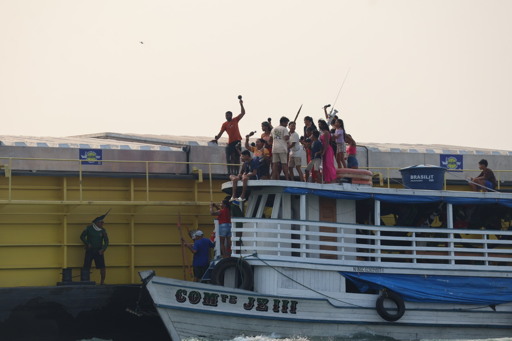
Hundreds of Indigenous protesters on several small boats and canoes stopped and boarded barges carrying soybeans and fuel on Brazil’s Tapajós River in the eastern Amazon. The demonstrations on Nov. 14 and 15 were to demand protection for the river amid industrial expansion and legal recognition of Indigenous territories in the region. The two-day demonstration near Santarém, in Pará state, drew more than 650 protesters. “Our children need this river, just as we need this river,” Jackson Tapajós, executive secretary of the Tupinambá Indigenous Council who participated in the protest, told Mongabay by phone. Smoke in the air from nearby forest fires was so thick that protesters could not see the barges approach until they were close, he said. Indigenous women negotiated with armed security guards after approaching the fuel barge on Nov. 14, explaining that the group was peacefully protesting. The guards allowed them to board but stayed with them, Tapajós told Mongabay. “We managed to talk to some of these guards … but they were by our side the whole time, the whole time with their guns, so that creates a lot of tension,” Tapajós said. The Tapajós River is an export artery for the region, carrying large amounts of soybeans and corn from Brazil’s agricultural heartland to ports on the Amazon River, which ultimately connect to international trade routes via the Atlantic. According to the Ministry of Ports and Airports, 16.8 million metric tons of cargo was moved through the waterway in 2025, up 14.3% from 2024.…This article was originally published on Mongabay
From Conservation news via This RSS Feed.