

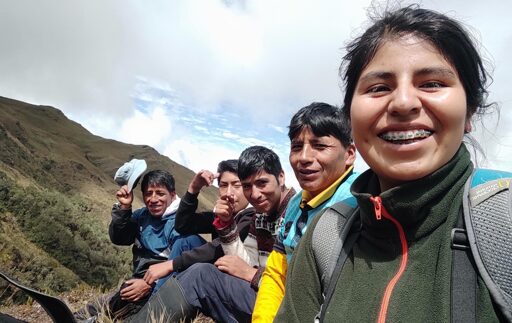
Maribel Pacco grins as she recalls the first time she saw an Andean bear close-up in the wild. At the forest edge, a mother and her cubs browsed on bromeliads while the volunteer ranger watched for hours in awe. “I’m not a biologist, but at that moment, I decided to become a conservationist,” she says. Today, Pacco leads a camera-trap project to estimate bear numbers and movements in Pumataki, a private community-owned reserve in the buffer zone of Manu National Park, in southeastern Peru. With the help of her Indigenous Quechua community of Pillco Grande, the project has generated some of the first local records of Andean bears (Tremarctos ornatus) in Pumataki. So far, they have identified 10 individual Andean bears, distinguishable by the unique pattern of facial markings. Though modest and only 3 years old, information gathered from the camera traps helps inform a Quechua-language environmental education program for youth and is shared at community meetings to highlight the area’s biodiversity. “In the last few years, I’ve seen a lot more involvement of women in Andean bear conservation which is fantastic to see,” said Rebecca Zug, a professor of biology at the Universidad San Francisco de Quito, who is not involved in the project. “There is also so much more power in Indigenous communities building conservation from within and learning about their own biodiversity from someone like Maribel than in having an outside voice come in.” For now, limited funding has forced the project to scale back some of…This article was originally published on Mongabay
From Conservation news via This RSS Feed.