

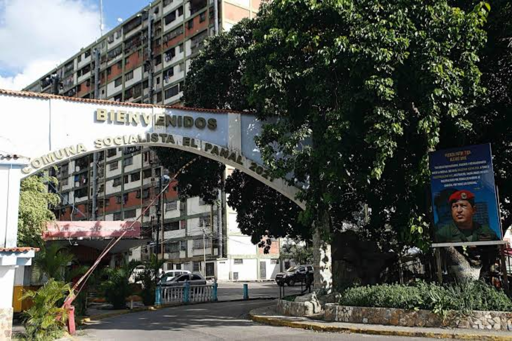
This is the full transcript of the conversation between Robert Longa, the leader of the El Panal commune, and a New Yorker reporter.
In light of The New Yorker’s problematic framing of the situation in Venezuela in a recent article, the Alexis Vive Patriotic Force and El Panal Socialist Commune are publishing the transcript of their conversation with Robert Longa, spokesperson for both organizations.
The New Yorker article offers an interpretation of recent events in Venezuela and the stances of various political figures. The situation is marked by U.S. military aggression and its consequences. The conversation with Robert Longa is part of a broader narrative, and we want the truth from the El Panal commune to be known.
During the conversation, Longa is explicit. He asserts the innocence of President Nicolás Maduro, expresses his support for Acting President Delcy Rodríguez, denounces imperialist aggression, and reaffirms his commitment to the Bolivarian Revolution. He also explains why our political focus is on popular organization, building communal power, and producing and reproducing life. Longa’s rejection of foquismo and adventurism does not mean abandoning the struggle; rather, it means defending a mass strategy grounded in the people’s ability to organize and govern themselves.
We believe it is important that these words be read in their entirety. That is why we are publishing the entire conversation—so Robert Longa’s own words speak for themselves.
Question: Is there productive capacity in the communes?
Robert Longa: [In this country] There is capacity, because from Commander Chávez, through President Nicolás Maduro and Acting President Delcy Rodríguez, the communal movement, the social, popular movement, has been strengthened, and has strengthened its productive forces, its means of production. The revolution has given us the training to take on the means of production.
Of course there is capacity! But we have to be pragmatic about it: here goods are produced for the people.
We have to do what Chávez called “conquering the technical means of survival.”
Question: Do you have anything to say about the accusations of narcoterrorism against the government? You mentioned earlier that you understood the gringos were using the excuse of narcoterrorism to justify military action in the country.
Robert Longa: The gringos did indeed use the staged setup. Indeed, the establishment led by its current president [Donald Trump]—and by the Republicans—ran a campaign like the campaign they ran against Iraq with the alleged chemical weapons. Here in Latin America, the excuse has been drug trafficking—as at one time it was communism—to depose governments. In the Venezuelan case, they used the lie to kidnap the legitimate and constitutional president of the Bolivarian Republic of Venezuela.
Question: You also mentioned that, as a precaution, some young marijuana users here had been expelled from the area of the Commune [El Panal]. Is that true?
Robert Longa: In our neighborhoods, drugs have been a tool to silence and demobilize the popular movement. They used it during the Fourth Republic to try to stupefy the youth.
In the face of this situation, the social movement has long employed preventive and deterrent measures to eliminate practices that are contrary to life and human beings. To this end, prevention and education campaigns have been set up, and those who do not join in are required to leave the commune if they persist in such practices.
Question: You don’t like the US presence, I imagine, but you said that, nevertheless, this is not the moment for armed conflict.
Robert Longa: That’s true. We don’t like it at all. But there’s something else that’s also true. The enemy has always wanted to create a sense of confrontation between the government and the so-called “focos,” or vanguard groups that are isolated from the community and popular sentiment. The enemy wants to create internal warfare. That would play into the enemy’s warmongering policy.
This is not the moment to plan an armed conflict.
We are lovers of peace, and we believe that popular political construction has nothing to do with vanguardism, nor with foquismo, nor with playing into the hands of those who make war their triangle of operations—killing children, driving genocide. We are not going to fall into the enemies’ game. Our approach is to organize the people and raise awareness. The weapons we are wielding are the weapons of the production of life. This has been the policy of our national government, from President Chávez through to President Nicolás Maduro and Acting President Delcy Rodríguez. Chavismo is a policy of peace, a diplomacy of peace which confronts warmongering. In the face of war, as a popular movement, we were not going to play into the hands of an adventurist foquista thesis by talking about an armed struggle in the 21st century. Our idea was to organize the peoples and raise awareness: our struggle is a mass struggle, not a vanguardist one.
Question: Nevertheless, faced with the possibility of armed conflict, you and your comrades planned to make the commune self-sufficient, didn’t you? You have launched initiatives or enterprises in sectors such as textiles, tourism, and livestock.
Robert Longa: Thanks to the Bolivarian Revolution and the projects promoted by Chávez, as well as the Popular Consultations promoted by our government today, we have strengthened our production units in various fields: textiles, animal protein production, legume production, baking, and the tourism route that is now being promoted. The architecture of the tourism route is part of what we call the “crossed economy”: a market economic policy that allows us to accumulate capital to strengthen the entire communal economy tactically and strategically. In other words, through a Communal Economic Planning District [El Panal’s planning body], we accumulate capital from the economic initiatives we have, and in this way, we develop the entire productive policy of our commune.
The weapons we use to resolve our differences are ideas and production. Using the surplus from the Economic District and our communal bank, we are developing our health system and strengthening our education, sports, cultural, and social systems. This distances us from anachronistic and foreign visions that promote warmongering.
We are wielding the weapons of production and ideas. We use them in the meat-processing plant, the textile factory, the bakery, the livestock farm, the pig farm, and other production units. We are developing a sustainable economic policy to strengthen a local power project, which is ultimately the policy of our national government.
The Concrete Action Agenda (ACA), for example, is a government policy that solves problems faced by people in the territory.
Question: The Southern Urban Pig Farm is located on a hill on the outskirts of Caracas. The meat-processing plant is in a peri-urban area. You said that the pig farm was the first step toward a new future.
Robert Longa: Yes. We started with a microeconomy, or a small-scale economy. For example, in the past, when we sold meat, we depended on the producers who brought it to us.
Today, we are bringing together the entire production chain to fulfill the three phases of the process: primary production, secondary production (where raw materials are transformed), and marketing. We are doing this under two theses: the crossed economy thesis, in which a grill or a fried pig can be sold based on market logic, and the vice-supply stores thesis, or the Bodega Plan, which is not based on market logic. As far as meat is concerned, we work with the Ministry of Industry and Commerce, with the support of the Worker President [Maduro] and the Acting President, on the latter. There, meat is sold to the community at solidarity prices.
I want to make something very clear. We have been with the Bolivarian Revolution since the time of our president, Hugo Rafael Chávez Frías. We support a Bolivarian ideal adapted to our time and place. We support our worker president, Nicolás Maduro. He is innocent. We support our Acting President, Delcy Rodríguez, who we believe is doing an excellent job during these difficult times.
Question: And about the commune?
Robert Longa: The commune is not a finished geography. It is like John Lennon’s “Imagine,” something radically Marxist.
Although we define ourselves as Marxists and Leninists, that does not mean we have a dogmatic and orthodox vision. We use a method called dialectical analysis to understand reality and build the commune.
What does the first law of dialectics say? That everything is in motion. We interpret the reality we live in and the commune in this way.
Cira Pascual Marquina: Building International Solidarity From a Venezuelan Commune
Our use of Marxist theoretical tools for socio-economic analysis does not mean we are locked into a dogmatic, orthodox logic.
We cite Michel Foucault and employ his concept of the toolbox. That is somewhat eclectic. Sometimes, we combine various theories in our practical exercises, too. Ultimately, the usefulness of models is revealed through practice. I believe dogmas are harmful to processes, but theory is necessary.
Question: Does the government continue to support communal proposals?
Robert Longa: The president has defined a policy of peace. I remember Chávez saying that he had spoken with Jimmy Carter and Gustavo Cisneros, a representative of the bourgeoisie. In fact, President Chávez said that if he had to speak with the devil himself in hell to ensure the peace and tranquility of the Venezuelan people, he would do it. As Chávez said on February 4: “The objectives here in Caracas have not been achieved, and it is time to avoid bloodshed.” That is the same stance as our president’s. The president recognizes that there are significant differences and antagonisms, but he believes that through diplomacy, agreements can be reached without losing dignity.
In this policy of peace, all of Venezuela’s communes receive support through what has been defined as participatory and protagonist democracy, a concept that contrasts with representative democracy. All communes receive participatory budgets through Popular Consultations.
Through the Assembly of Citizens, the communes are called upon to propose seven projects to solve sewage and potable water problems, promote walkways and productive projects, and incorporate the youth sector. The project with the most votes in each commune is financed by the National Government through the Federal Government Council. The next project is financed by the Mayor’s Office. After receiving the resources, the communes manage themselves.
Now, according to what a bank says, the communes can submit other projects that may be eligible for financing, such as the Workers’ Digital Bank or any other competent entity of our revolutionary government. The idea is to empower the people.
The Chavista thesis is that the more power given to the people, the more poverty is combated. As Dussel said, it’s about being able to obey or command by obeying.
Question: The 23 de Enero neighborhood is home to more than 100,000 people. You have a life here. Tell me about the organization.
Robert Longa: Alexis Vive is a social movement folded into the commune. We are a group of men and women who claim the martyrdom of Alexis González Rebete, assassinated on April 11, 2002. Our higher instance is the commune. In other words, Alexis Vive is a social movement dissolving into a mass organization. Alexis Vive exists to promote the commune in this historical moment. We broke with the vanguardist foquista scheme long ago.
We then moved on to the development of mass work. We don’t believe in vanguardism or foquismo. We also don’t believe that armed apparatuses will lead popular transformations. However, we do believe in legitimate popular self-defense and the right of peoples to rebel. Nevertheless, we don’t believe in a foquista or vanguardist stance that is isolated from historical moments.
Question: I think that’s all for now. Anything else?
Robert Longa: Long live the Fatherland! Long live Chávez! Long live President Nicolás Maduro! Long live President Delcy Rodríguez and our Captain Diosdado Cabello!
Long live the people of Venezuela! Long live the communes! We will win!
Down with fascism! Down with Zionism!
(The Assembly Media) by El Panal Commune
From Orinoco Tribune via This RSS Feed.
You must log in or register to comment.