

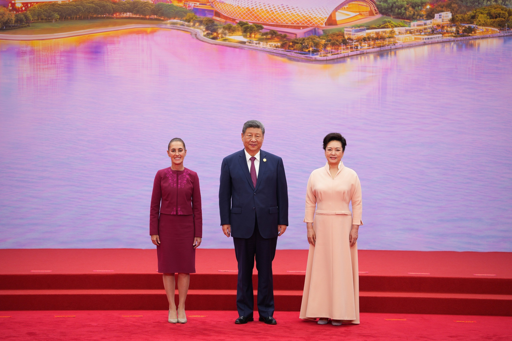
This article by La Jornada Editorial Board originally appeared in the November 19, 2026 edition of La Jornada, Mexico’s premier left wing daily newspaper.
President Claudia Sheinbaum Pardo’s presence at the Asia-Pacific Economic Cooperation (APEC) summit in Shenzhen, China, has meant a relaunch of bilateral ties at the highest level, thanks to her meeting with her counterpart Xi Jinping and the many working meetings held by her and her team. In this regard, the size and seniority of the delegation that traveled to the Pearl River Bay reflect the importance the federal government places on the forum and on relations with Beijing: there are Secretaries Marcelo Ebrard Casaubón (Economy), Roberto Velasco Álvarez (Foreign Affairs), David Kershenobich Stalnikowitz (Health), Alicia Bárcena Ibarra (Environment), Luz Elena González Escobar (Energy), Rosaura Ruiz Gutiérrez (Science, Humanities, Technology and Innovation), and Josefina Rodríguez Zamora (Tourism), as well as several undersecretaries.
The officials did not go there to pose for photographs; each is responsible for an area in which the National Palace seeks to build or strengthen cooperation with the Asian giant that benefits Mexico. Because of President Sheinbaum’s visit to the People’s Hospital in Nanshan District, health was the most discussed aspect of the trip. The hospital’s name could be misleading because of the association of the term “people’s” with underfunded institutions used exclusively by lower-income groups, but Nanshan Hospital is the opposite of that image: it has the world’s most advanced medical equipment, artificial intelligence assists with diagnoses and prescriptions, and robots deliver drugs to patients. Far from a blind futurism in which digitalization serves as a commercial lure, this center is part of a public health system in which the most advanced technology is combined with traditional medicine. This is the model of interest to bring to our country, because it shows how prevention, modernity and the knowledge of Indigenous peoples complement one another.
It was also agreed to explore opportunities for collaboration in technological development, artificial intelligence, academic and scientific exchanges, clean energy, water management, river cleanup and combating sargassum, as well as the possible participation of Chinese companies in railway projects and the manufacturing of small vehicles, all within the framework of Plan México. As already mentioned in this space, agriculture played a central role, both because of the potential of Chinese machinery to modernize Mexico’s countryside and because closing the trade deficit gap with agricultural products is seen as beneficial. In his keynote address to summit guests, President Xi referred several times to his government’s interest in increasing imports of “quality products,” opening the door to Mexican agricultural exports of high value, such as avocados and tequila.
Bringing these projects to fruition depends on follow-up between officials on both sides, but merely proposing them is promising for Mexico: as it strengthens its relationship with the world’s second economic power –and the first in growing areas of science and technology– our country will have more and better tools for its development and, no less importantly, to resist the pressures, extortion, abuses and outrages that characterize Washington, our neighbor and unavoidable trading partner.
-

Analysis | Let’s Talk About Migration
Gaza: The Fragile Anatomy of a Human and International Crisis
November 20, 2026November 11, 2026
An overview of the Gaza crisis: casualties, mass displacement, famine, destroyed infrastructure and the international legal cases against Israel.
-
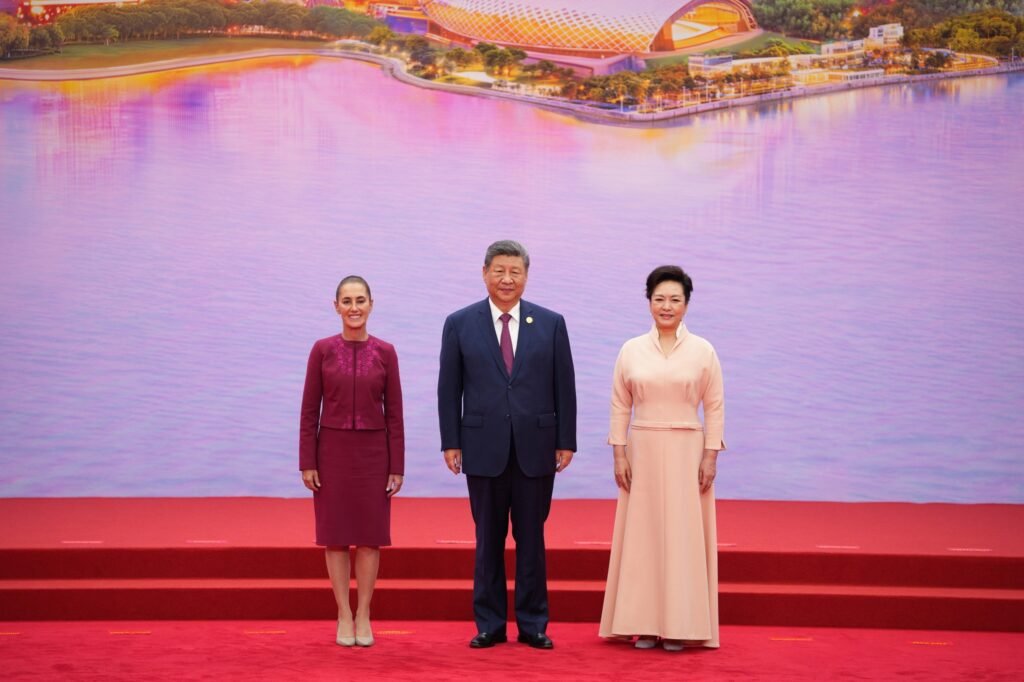
Mexico-China: Hope
November 20, 2026
Closer ties with China can help Mexico “resist the pressures, extortion, abuses and outrages that characterize Washington,” argues La Jornada.
-
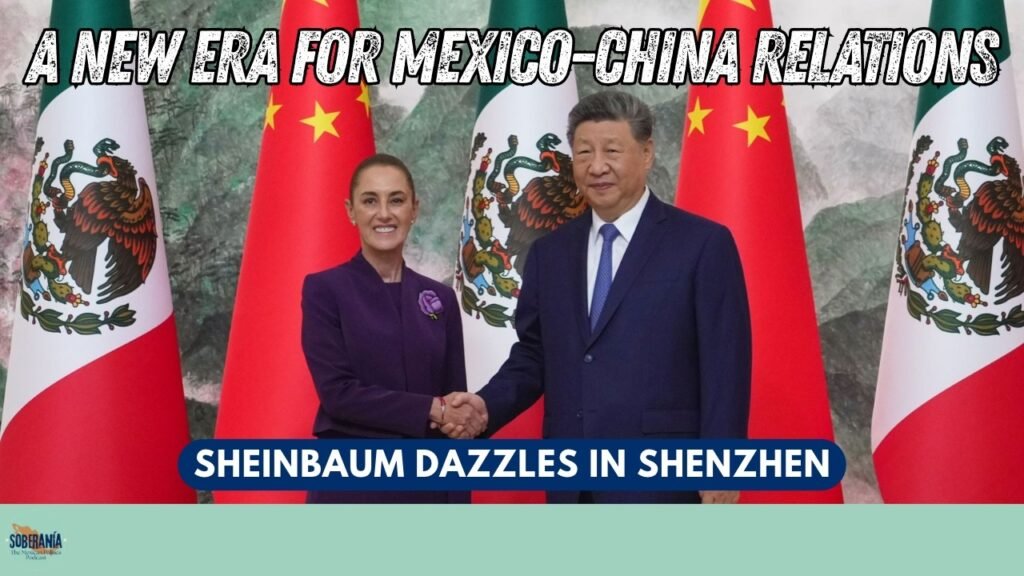
Sheinbaum Dazzles in Shenzhen – Soberanía 132
November 19, 2026
Sheinbaum’s APEC trip to Shenzhen and a new era in Mexico-China relations, 17.3 million Mexicans lifted out of poverty, and a takedown of The Baffler’s take on Mexico’s “militarization.”
The post Mexico-China: Hope appeared first on Mexico Solidarity Media.
From Mexico Solidarity Media via This RSS Feed.