

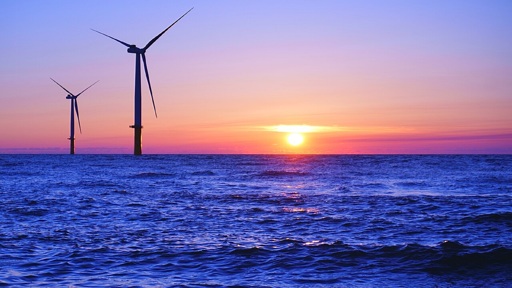
Japan has “tremendous potential” for offshore wind power, according to the national government and experts. But achieving that potential means overcoming major hurdles. While commercial-scale projects began coming online in recent years, the country still needs to address challenges that include refining its public-private partnerships, a buildout of related industries (such as turbine production), and involving local communities. However, tapping into offshore wind as a primary sustainable domestic energy source is critical to Japan, with the country’s energy self-sufficiency rate standing at just 16.4% in fiscal year 2024. The country’s first commercial offshore wind farms came online in Akita prefecture, at the ports of Noshiro and Akita, in 2022 and 2023 respectively. These wind farms, along with others that have come online since, currently generate 0.5 gigawatts of electricity, with capacity for a total of 5.7 GW by March 2031 if projects currently in the pipeline proceed as planned. But the nascent industry remains in its infancy. “Japan’s offshore wind power policy is currently at a very important turning point,” notes a team of experts from the Renewable Energy Institute (REI), a Japanese think tank. A fixed-bottom offshore wind turbine at Japan’s Akita Port in 2022. Image by 掬茶 via Wikimedia Commons (CC BY-SA 4.0). Offshore wind milestones and millstones The government stands fully committed to offshore wind: Recent milestones include the passage of legislation in 2025 opening up Japan’s exclusive economic zone (EEZ) to wind farm development. The nation’s EEZ, the maritime zone extending up to 200 nautical miles…This article was originally published on Mongabay
From Conservation news via This RSS Feed.