

Pauly Denetclaw
ICT
Before I am a journalist, I am a Diné asdzáá.
A proud New Mexican, raised and shaped by the mesas I climbed, the empty arroyos I explored, and the many days I spent under cottonwood trees as a child. I know cactus needles and fresh prickly pears well. The smell of rain on wet sagebrush and dry clay dirt is still my favorite smell.
I grew up in Naʼnízhoozhí, Gallup, New Mexico — a small town two hours east of Albuquerque on I-40. Many people in the country have driven through my small town, and I know because countless coastal friends from either side of the country have messaged me on social media to tell me.
I was educated in New Mexico public schools where many of my teachers looked like me or my family. I was taught the Navajo language and history. I eventually went on to graduate from a New Mexico public university.
For all these reasons and more, New Mexico politics remains deeply personal to me, despite living out of the state for five years. It’s important to me that children in New Mexico grow up safe, with the social safety nets their families need, and with a strong public education system. I want students to be able to access higher education if they choose to.
The funding that pays for all of this is decided by the state legislature… and the governor’s office.
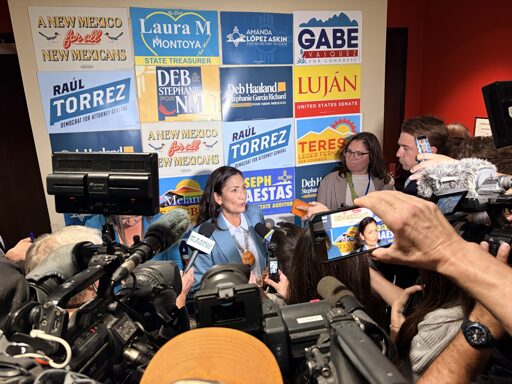
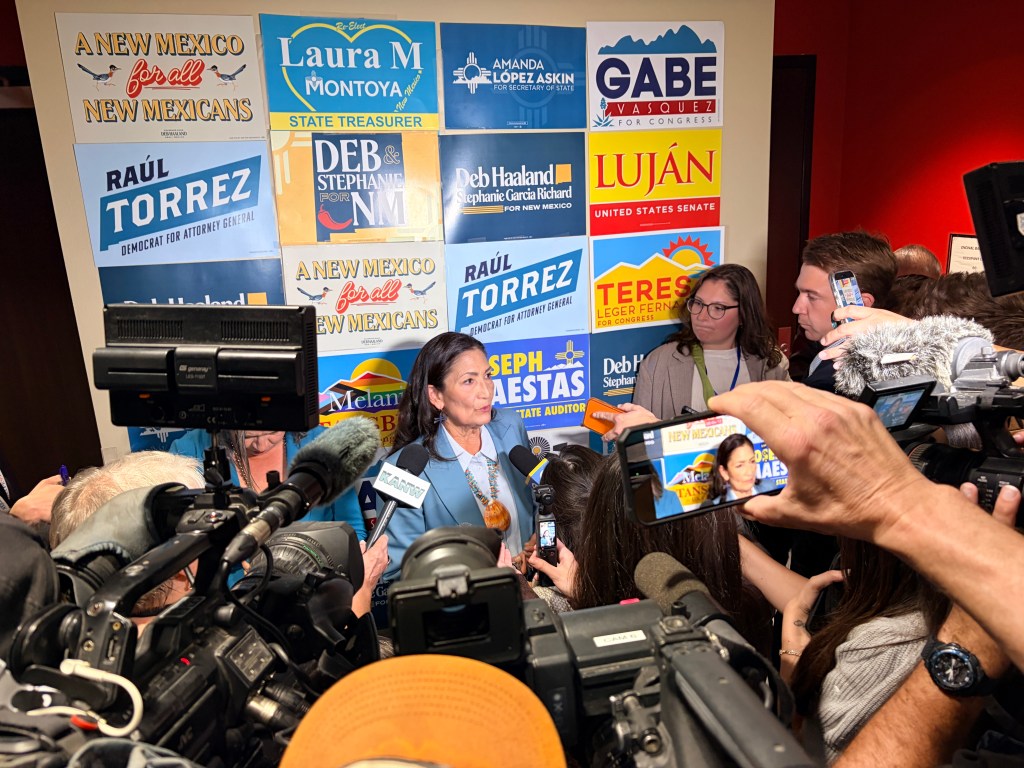
I was there on election night at the New Mexico Democratic Watch Party on Nov. 3. I was in the room when Deb Haaland became governor-elect and gave her acceptance speech. I’ve watched history made many times, but this one felt so close to my heart as a Diné asdzáá. I truly never thought a Native American woman could be elected as governor in New Mexico. (There’s a lot of racism that still exists in New Mexico that I don’t want to get into but what I can say is, I know some people didn’t vote for Haaland based solely on her being Native American.)
I got to share this historic moment with two journalism colleagues, Aliyah Chavez, Pueblos of Santo Domingo and Jemez, and Shaun Griswold, Pueblos of Laguna, Jemez and Zuni. I don’t share this often but my grandmother was Zuni Pueblo and spent most of her childhood there. At around 10, she moved back to her Navajo mother’s community in Manuelito, New Mexico. My grandmother’s memory is still deeply cherished by relatives in Zuni.
There was something so special about three Native American journalists from New Mexico, born and raised, covering this historic moment.
I will never forget Aliyah Chavez, a reporter for KOAT, asking Haaland the first question during the press conference. She commanded that space, her question cutting through the barrage of questions from other journalists. I told myself that I would go next and try to ask my question. I was slow to the draw.
I asked the third question during the press conference, how would she work with tribal leaders. Haaland replied that they would be consulted before decisions are made. A few other questions were asked before Shaun Griswold, a reporter for Buffalo Fire, was called by name to ask the final question of the evening.
It was in that moment under bright camera lights, other reporters pressed to my back, a dozen arms outstretched holding microphones or iPhones, that it finally sank in, how moving this moment was. Indigenous journalists born and raised in New Mexico reporting on the first Native American elected as governor of New Mexico, and the first Native American woman elected as a governor ever.
The post REPORTER’S NOTEBOOK: Covering the first Native woman governor as a Native journalist appeared first on ICT.
From ICT via This RSS Feed.