

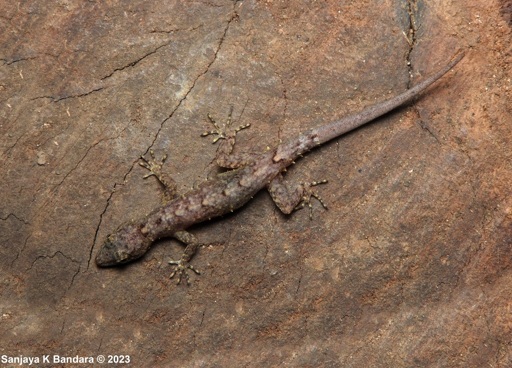
More than a quarter of the world’s land reptiles depend on rocky habitats, yet these areas are often overlooked in conservation efforts, according to a recent study. For cold-blooded lizards, snakes, and worm lizards (legless lizards), rocks often provide warmth for basking, shelter from predators, and places to hunt, socialize, and breed. However, the number of reptile species globally that use rocky habitats like cliffs, outcrops, or karst systems, and how threatened they are, still remains uncertain, researchers write in the study. To fill the gap, the researchers analyzed 9,729 terrestrial species belonging to the order Squamata, which includes all lizards, snakes, and worm lizards. For each species, they consulted the IUCN Red List, which documents its conservation status, habitat requirements, and threats. Their analysis found that 2,479 species, or more than 25% of those studied, use rocky habitats. Of these, 1,022 species, or 10.5%, were entirely dependent on rocks — that is, they lived almost exclusively on rocks and used rocks for breeding, shelter, and to regulate their temperature. Of the studied species that use rocks, nearly 30%, or 676 species, are classified as threatened on the IUCN Red List, the study found. Species that depend entirely on rocky habitats were 51% more likely to be critically endangered than those that use them only occasionally. Some of these rock-dependent critically endangered reptiles include the rough-bellied round-eyed gecko (Cnemaspis tropidogaster), native to India’s Western Ghats and Sri Lanka, Emirati leaf-toed gecko (Asaccus caudivolvulus), the United Arab Emirates’s only endemic vertebrate,…This article was originally published on Mongabay
From Conservation news via This RSS Feed.