

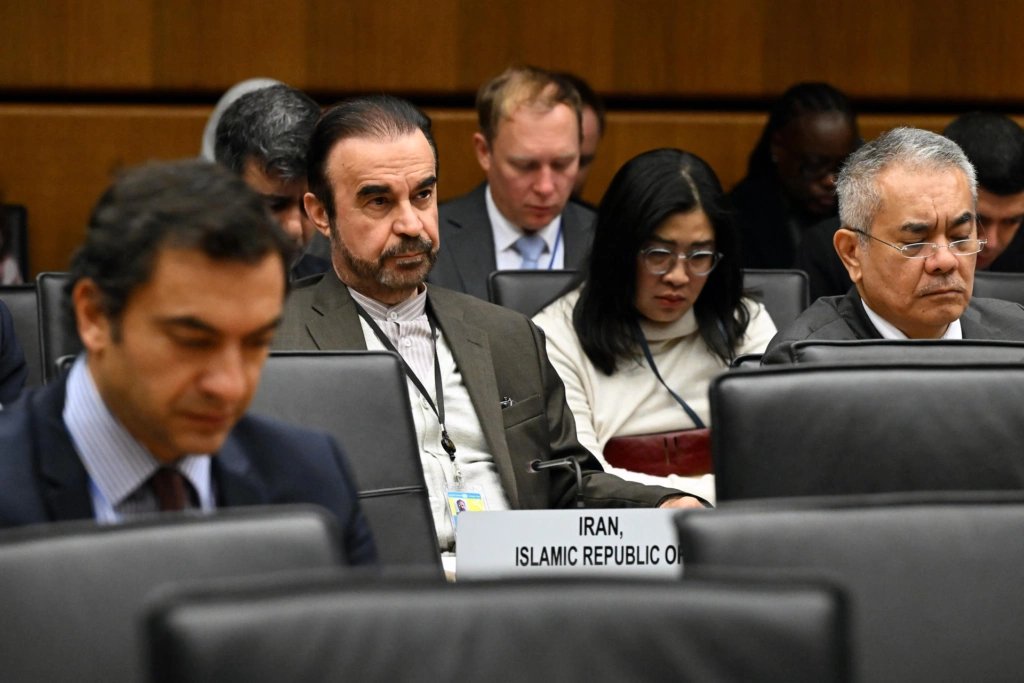
Iran will not accept unlimited nuclear inspections while threats of new bombings against its facilities persist, Tehran’s representative to the international organizations in Vienna, Reza Najafi, said on Thursday.
Tehran’s representative to the international organizations in Vienna, Reza Najafi, affirmed that Iran will honor its commitments but ruled out “unconditional and unlimited cooperation” while military threats against the country continue.
In this sense, he questioned why his country should be asked to share sensitive nuclear information while its facilities remain exposed to possible attacks.
RELATED: Iran Starts New Wave of Response to “U.S. Aggression” in Bahrain Attack
As explained, Tehran “will assess each request for inspection on a case-by-case basis, taking into account the security circumstances and making a decision on each request based on its national security considerations”. He added that Tehran will reject any request based on resolutions it considers illegal and illegitimate.
Iran, he said, recognizes no obligations stemming from expired UN Security Council resolutions or from International Atomic Energy Agency (IAEA) Board of Governors resolutions that refer to them.
Najafi’s remarks follow earlier statements by Deputy Foreign Minister Kazem Gharibabadi, who said Iran will not allow the IAEA to access its facilities until Tehran’s conditions are met and the war ends permanently.
The statements came after the IAEA asked to visit Iranian nuclear sites and announced it would resume inspection and verification activities. On-the-ground monitoring is currently limited to the Bushehr power plant, the agency said. It added that it still has no access to attacked or disputed complexes, including Natanz, Fordow, Isfahan, Arak, Ardakan and Karaj. The agency also said that more than 400 kilograms of uranium enriched to 60 percent have not been clearly verified, and that inspectors have not confirmed their whereabouts.
The Persian nation has criticized the agency for what it describes as silence after U.S. strikes on its nuclear installations. Tehran argues those strikes violate international rules, a characterization that Washington and its allies do not share.
Speaking at the #IAEA BoG today, #Iran delivered a clear message: You cannot bomb nuclear facilities, continue threatening further attacks, and then demand detailed information and unrestricted access.
The information collected by @IAEAorg may serve safeguards, but will surely… pic.twitter.com/pSvW9WB0xA— Iran Mission UN Vienna (@PMIRAN_Vienna) November 19, 2026
Calls to Leave Nuclear Non-Proliferation Treaty
In a separate development, Iran’s Assembly of Experts issued a statement urging authorities to “study a possible withdrawal” from the Nuclear Non-Proliferation Treaty (NPT). The body also called for a review of the country’s defense doctrine and for “establishing the necessary deterrence” in response to the escalation that began in late February 2026 and the bombings of June 2025.
The assembly called such measures an “unavoidable necessity” and a “popular and national demand.” It said Iran’s adversaries are now betting on economic warfare and trying to impose an air and land blockade, though it argued those efforts have failed so far thanks to the work of Iranian officials. To confront that scenario, it proposed creating a command center for a “war economy” under the supervision of the Office of the Supreme Leader.
The statement said repeated threats against Iran show that international institutions cannot be trusted. It warned that any new attack would receive an “immediate and effective response, without restrictions,” and asked the Foreign Ministry to act in line with that position.
IAEA Director General Grossi has stated: “[…] there is no double standard. If Israel was a state party to the NPT and I was treating Iran and Israel differently then there would be a double standard.”
This response confuses formal legal status with institutional responsibility…
— Esmaeil Baqaei (@IRIMFA_SPOX) November 18, 2026
The dispute over inspections unfolds amid an open confrontation between Iran, United States and Israel, marked by military threats, economic sanctions and disagreements over control of nuclear activities in the Middle East. Washington and its allies view IAEA monitoring as essential to verifying the state of Iran’s nuclear program. Tehran, by contrast, says the lack of security guarantees and outside pressure make unrestricted access unworkable.
The debate over the NPT and defense doctrine reflects a political hardening in Iran. As Tehran defends its sovereignty and Western powers press for verification, each inspection demand carries greater strategic weight, keeping the standoff at a point of high diplomatic and military friction.
From teleSUR English via This RSS Feed.