

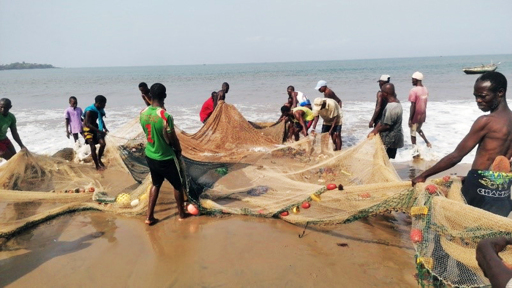
PORT LOKO, Sierra Leone — On a rainy Saturday morning, 57-year-old fisher Sheriff Kamara sat among other community members inside a wooden makeshift shelter in Sierra Leone’s Mahera Beach, waiting for the weather to improve. Along the shoreline, discarded plastic bottles, water sachets, bags and food wrappers lay scattered among old footwear and foam. For Kamara, plastic waste has become a regular problem, increasingly affecting his ability to fish and earn a living. “When I started fishing, it was rare to find anything in my net besides fish. But now, it is a weekly, sometimes a daily, problem,” he tells Mongabay. According to Kamara, a lot of single-use plastic waste frequently gets caught in his fishing nets, particularly near the shore after a heavy rain. Removing the entangled plastic waste takes considerable time and effort. “I find all sorts of plastic in my net almost every week. Removing the plastics with my apprentice’s help takes a lot of time,” he says. For fishermen like him, plastic pollution is not just an environmental concern but an additional burden on their daily work and livelihoods. To support the fishing communities, the government launched a fisheries and marine resources strategy in 2025, which provides a 10-year framework for promoting sustainable fisheries management, protecting marine ecosystems and improving livelihoods. It also calls for sustainable use of marine resources and stronger protection for the fisheries sector. Plastic waste, including discarded bottles and containers, accumulated along the shoreline beneath fishing boats. Image by Patricia Sia Ngevao.…This article was originally published on Mongabay
From Conservation news via This RSS Feed.