

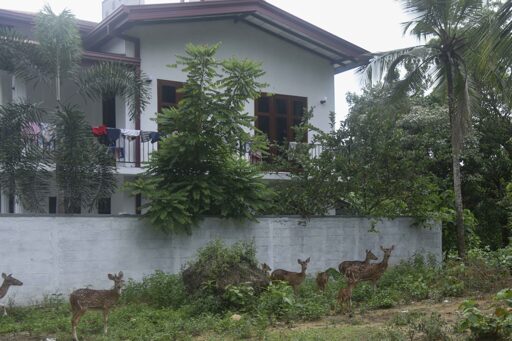
COLOMBO – It was a surprise for Mohamed Fareed, a resident of Jawatte, an upscale neighborhood in Sri Lanka’s commercial capital Colombo, to find a peacock near his house back in 2020. Today, there are at least 12 peacocks, including peahens roaming the area. “In the mornings and evenings, we hear their loud and piercing calls and now the neighborhood is used to their presence,” he told Mongabay. “Sometimes we see them on rooftops. Children are quite excited to see them. These peacocks frequent the area near the mosque to feed on pigeon feed inside the Jawatte mosque.” Peacocks have been frequently spotted in densely populated areas such as Kollupitiya and Mount Lavinia and, similar to Fareed, many residents are seeing peacocks near their home for the first time in their lives, and the numbers are increasing. Change in territory According to Sarath Kotagama, a professor of environmental science and former head of the Department of Zoology at the University of Colombo, historical reasons linked with environmental parameters such as temperature may confine an animal to the dry zone – which roughly covers two-thirds of the island across its northern, eastern, and southeastern regions, characterized by low annual rainfall and long dry seasons –or the wet zone, characterized by high year-round rainfall, lush tropical rainforests and major tea and rubber plantations. “In Sri Lanka, peacocks were mainly found in the dry zone and not the wet zone,” he told Mongabay. “But if conditions in the wet zone change to help…This article was originally published on Mongabay
From Conservation news via This RSS Feed.