

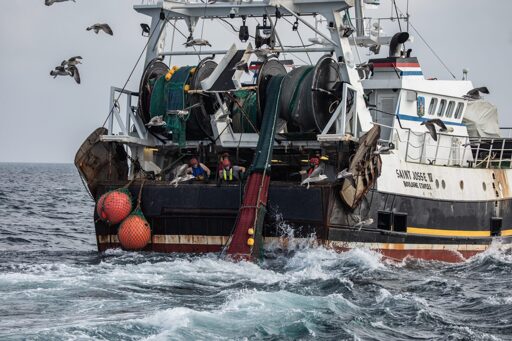
LONDON — On Nov. 10, Mongabay went to the site of the annual meeting of the body that regulates fishing in the northeastern Atlantic, where a little-known geopolitical dispute over marine resources was playing out behind closed doors. The North-East Atlantic Fisheries Commission (NEAFC), a multilateral body, governs the fishing of three major stocks of fish in international waters near Europe, as well as associated species and habitats. Disagreement between countries over how to manage the stocks has had serious consequences, experts say. All three species — Atlantic mackerel (Scomber scombrus), Atlanto-Scandian herring (Clupea harengus), and blue whiting (Micromesistius poutassou) — have been subject to overfishing for years. The Northeast Atlantic mackerel population is in particularly bad shape, currently 22% below the NEAFC’s target threshold, having been fished above scientifically advised levels every year since 2008. The NEAFC is one of the world’s 17 regional fisheries management organizations (RFMOs), and a fisheries governance campaigner has called it the most “fraught” and “problematic.” It has six member parties: the European Union, the United Kingdom, Iceland, Norway, Russia, and Denmark (on behalf of the Faroe Islands and Greenland; the delegation is commonly called DFG). The three fish species are prey for marine mammals and seabirds, and are sought after on global markets. Mackerel is sold in tins, herring is eaten pickled or smoked, and blue whiting is used for aquaculture feed. At this year’s annual meeting, held Nov. 10-13 in London, the parties made no breakthrough on how to sustainably divide the catch…This article was originally published on Mongabay
From Conservation news via This RSS Feed.