

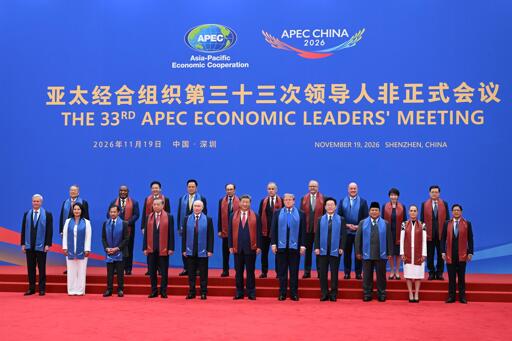
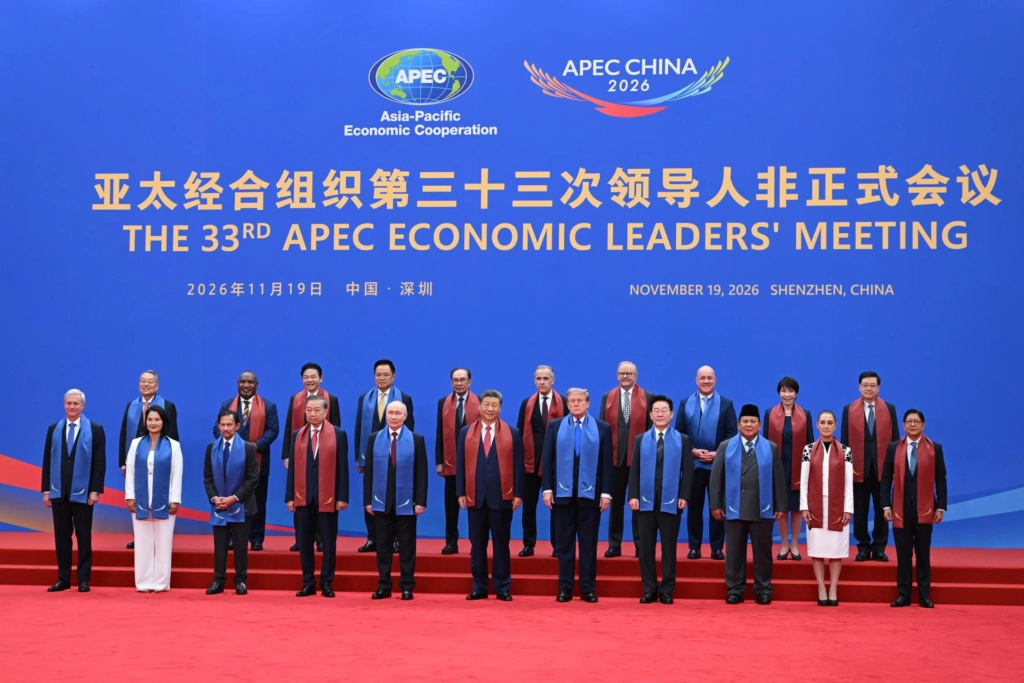
“I do not believe that war and turmoil are the eternal themes of our community in the modern era. Peace, prosperity and development are the themes for the human community today.” The statement by Chinese professor Qu Qiang expresses the defense of multilateralism from a Chinese perspective amid an international landscape marked by geopolitical tensions, conflicts and trade disputes, against the backdrop of US protectionist policies.
In an interview with teleSUR on Wednesday, November 18, in Beijing, Qu, a professor and vice-dean of the School of Journalism and Communication at Minzu University of China, argued that the Asia-Pacific Economic Cooperation (APEC) summit, held in Shenzhen, should help restore international consensus and strengthen cooperation among economies.
He also pointed to contradictions between Washington’s trade policy and the interests of US companies themselves, highlighted opportunities for economic and technological integration between China and Latin America, and stressed the importance of dialogue among Xi Jinping, Donald Trump and Vladimir Putin.
“I think the most important achievement we can expect from this APEC meeting is, number one, a common vision. Look, the whole world is shattering and fragmented. We are facing a lot of tensions and geopolitical conflicts. And what we need right now, immediately, is to regain consensus and a common vision. Without a common vision, we cannot march forward,” he said.
The APEC Economic Leaders’ Meeting is being held in Shenzhen on November 18 and 19. The forum brings together 21 economies and focuses on openness, innovation and cooperation.
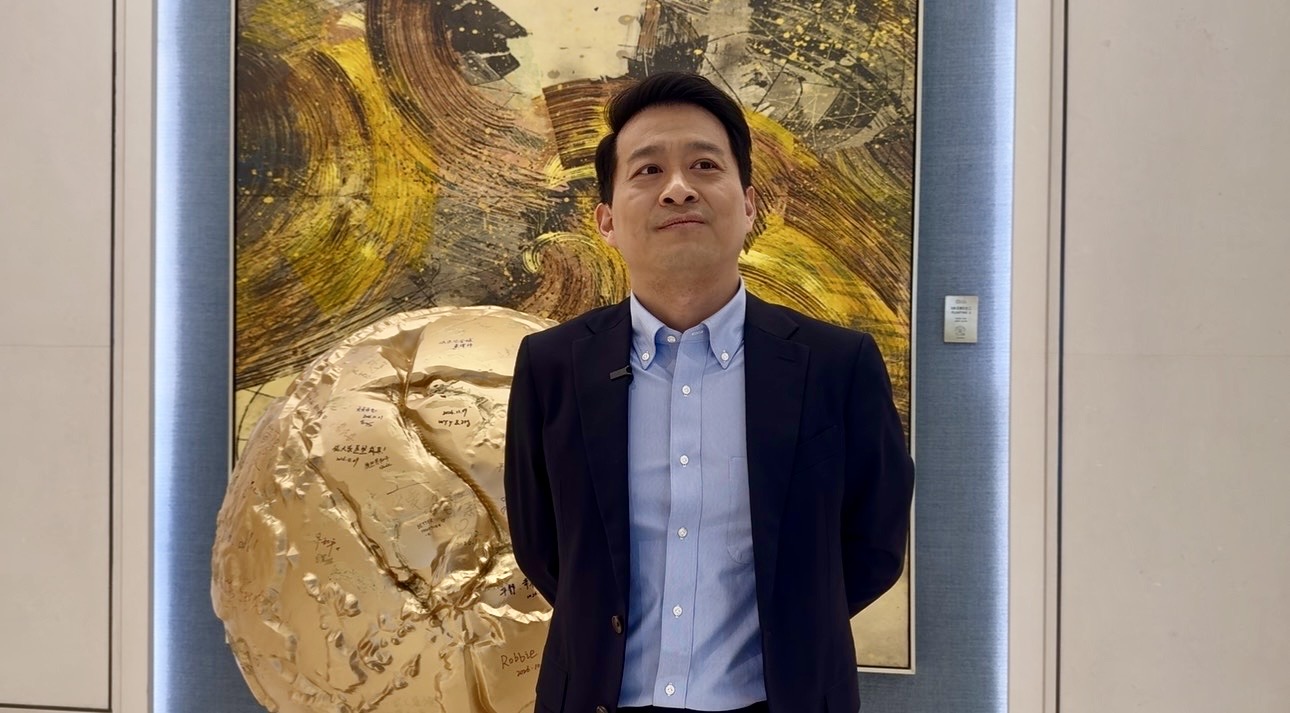
Qu Qiang, professor and vice-dean of the School of Journalism and Communication at Minzu University of China. (Photo: teleSUR).
APEC seeks consensus amid global fragmentation
For Qu, APEC represents an important space for preserving the movement of people, capital, information and goods, particularly at a time when different countries are adopting protectionist measures.
“Especially currently, I think APEC is the last safe haven and free world for trade, and for people, money and business to flow together. We need to maintain this achievement and expand it,” he said.
The professor believes that the economies and members participating in the forum understand the importance of this shared vision. The challenge now is to consolidate it and convey its message to the rest of the world.
“I think all the economies, entities and members within the APEC platform really understand that. So this vision has been formed, solidified, and the message needs to be passed on to the rest of the world,” he said.
This openness, he argued, must go beyond speeches. “Openness is not just one word. When everybody is trying to build walls and apply protectionism, what do we do? Can we just say, ‘Open up’? Is this an empty word? No. We need more concrete, more detailed and solid actions, as well as consensus and policies.”
Qu pointed to initiatives led by China to bring the data systems of participating economies closer together and integrate customs procedures. The goal is to enable different systems to communicate with one another and simplify trade between countries.
“China is initiating many of these kinds of endeavors. For example, we’re trying to connect our members through data standards, so that our data systems can communicate with each other and we can have one-stop customs services. So when you cross customs, when you cross the border, it’s much easier,” he explained.
Qu also highlighted the introduction of visa-free policies across the APEC region. While other parts of the world are facing border closures and restrictions on movement, he said, the Asia-Pacific is moving in the opposite direction.
“You can see that recently, visa-free policies have been introduced throughout the APEC region. Meanwhile, on the other side of the world, borders are being shut and people’s movement is being stopped or hampered. But here, people are moving more frequently. Capital is flowing more freely, and information is circulating more frequently. This is the openness we’re talking about,” he said.
For the professor, greater openness creates conditions for economic growth. “With openness, naturally, you can see GDP growth. Naturally, you see business and trade taking place.”
Predictability is another central element of this strategy. In Qu’s view, consensus among economies can help create more stable conditions for international development.
“By consolidating all this and building consensus, we will provide stability, peace and predictability for the rest of the world. Predictability creates confidence, and confidence is the most important thing for the world right now,” he said.
Finally, Qu stressed that this prosperity cannot benefit only the largest economies. He argued that APEC’s agenda must also take into account small businesses, less developed countries and vulnerable populations.
“Through this APEC meeting, we are promoting inclusiveness and inclusive development for every member. We’re talking about growth. We’re not only talking about the bigger picture or the larger economies, but also smaller players, vulnerable families, least developed countries and SMEs,” he said.
Referring to the leaders gathered in Shenzhen, including Chinese President Xi Jinping, the professor stressed the need to build shared outcomes.
“At this APEC meeting, the leaders, including President Xi Jinping, are making it very clear that we need to take care of everybody and achieve win-win results, bringing everyone onto the same page. No one should be left behind,” he said.
Multilateralism and the contradictions of US policy
The defense of openness also exposes, according to Qu, a contradiction between Washington’s trade policy and the interests of US companies that depend on international markets.
“Multilateralism, I think, is still one of the most important principles and sets of rules that everybody not only follows but also supports,” he said.
The professor drew attention to the participation of major companies in the APEC meeting, including US corporations. According to him, more than 2,000 of the world’s most important companies were taking part in the conference.
“Let me put it this way. Just take a look at the members and participants in this meeting. We have more than 2,000 of the world’s most important companies joining the conference, as well as so many leaders. American companies, including top companies, are also sending their delegations to APEC,” he said.
#China | At the APEC CEO Summit, President Xi Jinping called for deeper regional integration and multilateral cooperation amid growing trade tensions and protectionism.#APEC2026 #GlobalTrade #Multilateralism #teleSUREnglish pic.twitter.com/doegea0dTt
— teleSUR English (@telesurenglish) November 19, 2026
For Qu, this participation highlights the contradiction between the US government’s trade measures and the interests of American businesses.
“On the one hand, the United States says: ‘Okay, we’re going to impose sanctions, we’re going to have a tariff war, we’re going to build walls.’ But on the other hand, American companies say: ‘We really understand what we need to do: open up, cooperate and pursue shared prosperity,’” he said.
In Qu’s view, restricting trade flows also harms companies that depend on the international movement of products, services and investment.
“Without free flows and without this openness, even American companies will become victims. Their growth will slow down. That’s why they are sending their delegations,” he said.
Companies and delegations from other economies are also participating because, according to the professor, economic actors understand the need for cooperation despite political differences.
“And, of course, many other companies, economies and countries are also sending their delegations because people understand that, ultimately, we need mutual respect. We need win-win results. We need multilateralism to build the world economy and prosper together,” he said.
Qu believes multilateralism remains a broad consensus among countries and peoples, even when some political leaders oppose it.
“So I think multilateralism remains the most important consensus among all countries and people. Even if some politicians say no, the people understand its importance,” he said.
He also contrasted the scenario of conflict, inflation and slower growth in different regions with the continued economic activity in the Asia-Pacific.
“I also think APEC is sending a very strong message. Look, while the rest of the world is experiencing chaos, wars, conflicts, inflation and slower growth, in the APEC region, when you go to China, South Korea, Singapore, Thailand or Australia, you see that people are still living in peace and prosperity,” he said.
“We’re talking about businesses, we’re talking about tech startups, and everything continues to grow.”
It is in this context that Qu highlights the Greater Bay Area, a region that includes cities such as Shenzhen and Hong Kong.
“That’s the reason why I’m saying that the APEC region, and China’s Greater Bay Area in particular, is the last safe zone and a free world that people can enjoy,” he said.
For him, the message the forum should convey to the rest of the world is the need to return to cooperation.
“So I think multilateralism is still the banner we need to uphold, and we need to send this message to the rest of the world: get back on the right track, return to growth, and return to stability and peace,” he said.
Latin America can expand its integration with Asia
Latin America occupies an important place in Qu’s vision of the future of trans-Pacific cooperation. The professor believes the region has significant potential to expand its participation in the production and trade networks connecting Pacific economies.
“Latin America is one of the most important partners in APEC,” he said.
He described the APEC region as an arc connecting the two sides of the ocean. While cooperation has already harnessed significant potential along the western Pacific, Latin America still has considerable opportunities, despite geographical distance and connectivity challenges.
“Look, the APEC region forms an arc, a curve. Along this curve, we have already harnessed very important potential in the western part of the Pacific. But on the other side of the Pacific Ocean, Latin America remains a region with enormous potential, despite the geographical distance and the challenges of connectivity,” he said.
Qu noted that Latin American leaders are increasingly participating in the forum and recognizing the importance of closer ties with Asia-Pacific economies.
“We used to lag behind in cooperation, but now so many leaders from Latin America have actually joined the summit. They understand the importance of the APEC platform. They understand the close ties, cooperation and openness that are taking place right now. This is very significant,” he said.
“So I think this cross-Pacific regional cooperation is taking shape.”
For the professor, this rapprochement is already beginning to translate into concrete initiatives. He cited the Port of Shanghai as an important transportation hub and a point of connection for arrangements related to cross-Pacific free trade.
“Look at Shanghai. The Port of Shanghai is becoming a very important hub for transportation and the arrangements related to cross-Pacific free trade,” he said.
He also mentioned industrial and commercial cooperation with Mexico, including the development of industrial parks and the establishment of trade offices.
“And let’s talk about Mexico. Here in Beijing, many delegations have already visited Mexico. I myself have become a very familiar friend of Mexico. We have been building industrial parks and establishing trade offices there. So these trade arrangements and ties between China and North America have already been taking shape,” he said.
Chile was another example presented by Qu. He highlighted the delegations that the South American country has sent to China, even before the APEC meetings, and the complementary strengths of the two countries’ economies.
“And let’s talk about Chile. Chile has been sending many delegations to China, even before the APEC meetings. Chile has fruits, minerals and all kinds of manufactured products. We have been working closely with each other,” he said.
The goal, according to him, should be to connect Latin America’s productive strengths with the supply chains of East Asia and other Pacific economies, including Australia, ASEAN countries, China, South Korea and Japan.
“We believe that all the advantages and development potential in Latin America should be connected with the supply chains of East Asia and the broader Pacific region, including Australia, ASEAN countries, China, South Korea and Japan,” he said.
This integration would also have consequences for consumers. Qu argued that stable supply chains can help offset the effects of international crises and reduce pressure on prices.
“I think that if this part of the world can remain peaceful and maintain cooperation, we can, to a very large extent, compensate for what is already happening on the other side of the world,” he said.
He then turned to everyday examples to explain the impact of economic turmoil.
“As consumers, you probably don’t want to see prices continuing to rise. You don’t want to see your children having no toys for Christmas. You don’t want to see food becoming more and more expensive and increasingly difficult to afford. So I think it is essential to keep the entire cross-Pacific supply chain and network stable and functioning,” he said.
Qu also pointed to the meetings between Latin American leaders and their Chinese counterparts as an opportunity to advance future cooperation.
“Looking ahead, I think the leaders from Latin America who are coming here to meet with Chinese leaders and many other leaders will make many things happen in the future,” he said.
The cooperation agenda includes transportation, data flows, the digital economy and cross-border e-commerce. Qu said that Brazil, Chile and Mexico already make frequent use of e-commerce and highlighted the potential for further development in this area.
“Leaders are discussing how they can harness the potential of the digital economy and e-commerce, which has already become widespread across borders. Brazil, Chile and Mexico are already making frequent use of e-commerce,” he said.
He also pointed to artificial intelligence as a challenge and an important driver of the next stage of economic growth.
Artificial intelligence and the right to develop homegrown technologies
For Qu, the debate over artificial intelligence should not be limited to competition among major powers. Access to technology and the ability to adapt it to each country’s needs should also be part of the discussion.
“AI is a challenge, but also a very important driving force for the next generation of growth,” he said.
The professor contrasted the approaches to AI development in the United States and China and East Asia, arguing that countries should have equal opportunities to use and adapt the technology.
“While the United States is talking about closed-door or closed-source AI, China and East Asia are talking about open-source AI, right? Everyone should have equal rights to use AI and adapt it to their own realities,” he said.
Qu specifically mentioned the possibility of developing national technologies in Latin America using open-source platforms.
“You can have Mexican AI, Chilean AI and Brazilian AI, all built on an open-source foundation,” he said.
In the professor’s view, this openness is essential to prevent technology from becoming concentrated in the hands of a small group of countries or companies.
“This is very important because we believe that humankind should enjoy equal rights to use this technology. This is the spirit of the internet, right?” he said.
Artificial intelligence, e-commerce and the digital economy are among the issues being discussed by leaders during the summit. For Qu, progress in these areas could create new opportunities for cooperation with Latin American countries.
“So I think all these issues have already been discussed and will be discussed further during these three days of meetings. And that is going to be great news for Latin America,” he said.
Dialogue among major powers and technological integration
The meeting between Xi Jinping, Donald Trump and Vladimir Putin, confirmed by China’s Ministry of Foreign Affairs for Thursday, November 19, in Shenzhen, was another central topic of the interview. Scheduled to take place during the APEC summit, the trilateral meeting is considered by Qu one of the most important international events of the year’s final months.
“This trilateral meeting between the top leaders has already captured the attention of the entire world. I think this is the most important event at the end of this year because everybody understands the gravity of the ongoing turbulence,” he said.
Referring to the crises in Ukraine and Iran, the professor highlighted their effects on transportation, financial flows, the movement of people and international trade.
“As you mentioned, the Ukraine crisis and the Iran crisis have been choking transportation, financial flows, the movement of people, the flow of products and trade. If this continues, I think inflation will rise. And the entire world economy will also be constrained,” he said.
Against this backdrop, Qu argued that it was necessary to stop the escalation or, at the very least, identify a way forward.
“So we need to stop this, or at least find a solution. If we cannot find an immediate solution, we should at least identify a direction forward,” he said.
He highlighted Shenzhen as the venue for the meeting and presented China as a safe and open space for dialogue among the three leaders.
“I think the first important point is that, fortunately, we have China and Shenzhen as a third-party location: a safe and open place where nobody needs to feel concerned, allowing the top leaders to gather here and talk to each other,” he said.
“Where else could these leaders find such a reassuring place to meet safely? I think China is absolutely remarkable for providing this kind of opportunity.”
Beyond the possibility of reaching an immediate agreement, the professor stressed the importance of direct contact among heads of state.
“Secondly, I think a meeting is always better than no meeting. When you can meet face to face and talk to each other in person, it helps you understand more quickly and judge more slowly. It makes you quicker to understand and more willing to embrace each other’s ideas rather than simply hate each other,” he said.
For Qu, the possibility of sitting at the same table and seeking solutions together already represents progress.
“So, when we can provide this kind of platform for leaders to talk to each other, at least we can sit down together, think together and find solutions together,” he said.
He linked the need for dialogue to the theme of APEC 2026, “Prosper Together,” and argued that peace is an indispensable condition for development.
“And this is very important because today, when we’re talking about the theme of APEC 2026, which is ‘Prosper Together’, without peace and stability, you don’t have the preconditions, or even the fundamental conditions, for prosperity if you have wars and conflicts,” he said.
Even a brief meeting, he added, could open the way for diplomatic progress.
“So even though it may be just a one-hour meeting, I think it is groundbreaking. It is already a huge breakthrough because these three top leaders can try to identify a direction,” he said.
“And once a direction is established, at least we can expect something positive to happen. We can follow this path and move forward.”
The professor said he does not believe conflicts should permanently define international relations.
“I don’t believe that war and turbulence are the eternal themes of our community in the modern era. Peace, prosperity and development are the themes for the human community today,” he said.
Qu concluded by expressing confidence that the leaders could find ways to address the crises.
“So I think these leaders, with their resources and wisdom, can find a solution, or at least identify where to start right now. I’m very confident that after this high-level meeting, we will regain confidence and find guidance for the future,” he said.
Beyond its diplomatic significance, Shenzhen and Hong Kong also represent, in the professor’s analysis, a model of integration between productive capacity, technology and financial resources. Qu linked this combination to China’s dual-circulation strategy, which brings together domestic and international circulation, and to the country’s 15th Five-Year Plan.
“I think Shenzhen represents China’s Greater Bay Area. China has actually put forward a strategy in its 15th Five-Year Plan based on the concept of dual circulation: domestic circulation and international circulation. Shenzhen and Hong Kong represent precisely these two dimensions,” he explained.
Shenzhen concentrates industrial and technological capabilities, while Hong Kong provides access to capital and international financial flows.
“Shenzhen represents cutting-edge productivity and technology. If you want to build anything, from robots and AI applications to solar panels, you can basically find everything you need within a 15-mile radius. And if you want access to the free flow of capital, Hong Kong is one of your best choices,” he said.
Qu said the two cities have already demonstrated their capacity to drive China’s economy forward. He also pointed to the effects of their integration across the Asia-Pacific, which, according to him, began to emerge 10 or 15 years ago.
“We have already seen what Shenzhen and Hong Kong can achieve together, and how much capacity and influence they can generate to drive China’s economy forward. When we consider these two cities, and the Greater Bay Area as a whole, within the Asia-Pacific region, we can see that this spillover effect was already emerging 10 or 15 years ago,” he said.
The combination of Shenzhen’s productive capacity and Hong Kong’s financial resources has had a significant impact on the startup ecosystem in ASEAN countries, according to the professor.
“This combination of Shenzhen’s productive capacity and Hong Kong’s financial resources has had a profound impact on the startup ecosystem in ASEAN countries. Many leading internet and AI companies are already benefiting from it,” he said.
As artificial intelligence becomes more mature, Qu expects startups in ASEAN and East Asian countries to benefit further from these technological and financial resources.
“And as AI becomes a more mature technology, we will see startups in many ASEAN and East Asian countries benefiting from these technological and financial resources as well,” he said.
The professor described how a young Thai entrepreneur could develop a prototype in Shenzhen and then seek financing in Hong Kong.
“For example, a young person in Thailand can come up with an idea and easily travel to Shenzhen to find the components needed to build a prototype, in a very efficient and affordable way. Once they have the prototype, they can go to Hong Kong to secure funding and get the project off the ground, benefiting from low taxes and the free flow of capital,” he explained.
“Then, in a very short period of time, they can develop their idea, grow their product, and bring it to market. This is the magic we are talking about.”
Qu said China wants to use the APEC meeting to showcase the potential of combining technology with financial resources.
“China wants to use this opportunity, this APEC event, to showcase the power and potential of combining technology with financial resources,” he said.
For Qu, this experience could be adapted to other Asia-Pacific economies and to Latin America as well.
“And if this works for China, it can also work for ASEAN and for the wider Asia-Pacific region. It can also be applied to Latin America. Perhaps next time we will see a young Chilean travel to Shenzhen to build a robotics company and serve the Chilean market, right?”
The possibility of connecting China’s industrial and technological capacity with the needs and projects of other countries sums up, for the professor, one of the opportunities created by trans-Pacific integration.
“In the future, there will be endless possibilities that can be unlocked through this kind of arrangement. And I think it all starts in Shenzhen, in China’s Greater Bay Area.”
From teleSUR English via This RSS Feed.