

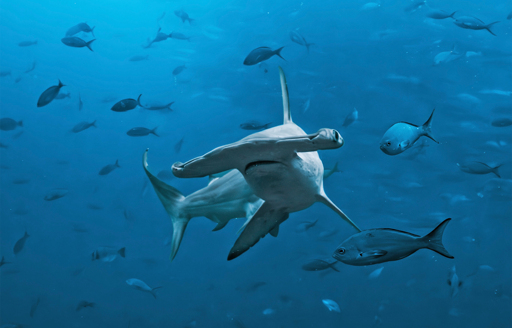
JAKARTA — In Muncar, a busy fishing port on the southeastern coast of Indonesia’s East Java province, sharks can fetch as much as 1.5 million rupiah each, or about $82. However, their value to fishing communities comes at a cost to conservation: Threatened species, including the critically endangered scalloped hammerhead (Sphyrna lewini), made up a substantial share of the sharks landed at Muncar. A study published earlier this year in the journal Oryx examined shark catches landed in Muncar between 2023 and 2024. Researchers combined catch records with interviews with fishers, landing data, and GPS data to investigate which species were caught, where fishing took place, and which practices posed the greatest risks to threatened species. The findings revealed a worrying pattern. According to the study, 50% of recorded shark catches comprised species classified as threatened on the Red List of the IUCN, the global wildlife conservation authority. A third of species were listed on CITES, which regulates the global trade in protected wildlife. Scalloped hammerheads accounted for 11.7% of recorded catches. Other frequently caught species included the silky shark (Carcharhinus falciformis), spinner shark (Carcharhinus brevipinna), and blacktip reef shark (Carcharhinus melanopterus), all listed as vulnerable on the IUCN Red List; and the pelagic thresher shark (Alopias pelagicus), listed as endangered. All five species appear in CITES Appendix II, which means their international trade is highly restricted. In an interview with Mongabay, corresponding author Osmaleli, a lecturer and researcher at the Bogor Institute of Agriculture (IPB), just outside Jakarta, said…This article was originally published on Mongabay
From Conservation news via This RSS Feed.