

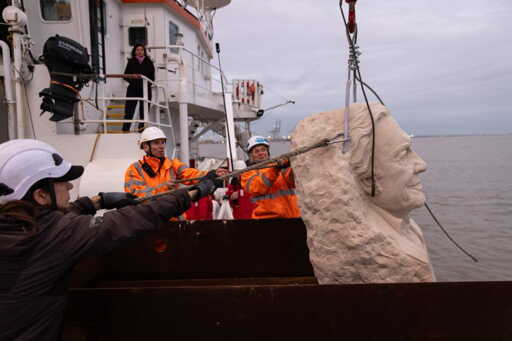
Greenpeace activists recently dropped several enormous boulders in the U.K.’s Southern North Sea Marine Protected Area to discourage destructive bottom trawling currently permitted in the area. The nearly 37,000 square kilometer (about 14,000 square miles) MPA is part of the U.K.’s network of marine protected areas, which contribute to its commitment to the global conservation target of protecting 30% of the Earth’s land and sea by 2030. However, the MPA currently allows bottom trawl fishing, a commercial fishing practice in which a large, weighted net is dragged along the seafloor and scoops up marine life in its path. Greenpeace U.K.’s head of oceans, Elena Polisano, said the MPA amounts to little more than a paper park — a protected area in name only. “In a way it’s false advertising because the marine life isn’t protected in these areas,” Polisano told Mongabay in a video call. “They kind of bulldoze the seabed taking everything in their path,” Polisano said. Bottom trawling is “pulverizing marine life, stripping the ocean of fish and killing porpoises, sharks, dolphins, seabirds,” she added. To create barriers for bottom trawlers, Greenpeace placed 10 boulders, each about 2 tonnes (4,400 pounds), on the seafloor. One was carved in the likeness of naturalist David Attenborough and dubbed “Attenboulder.” Greenpeace shared coordinates for the boulders with authorities and fishers. Polsano said they won’t necessarily stop bottom trawlers, but they will create new obstacles for their operations. The European Bottom Fisheries Alliance decried Greenpeace’s actions saying environmental protection “cannot be achieved…This article was originally published on Mongabay
From Conservation news via This RSS Feed.