


This article by Diego Torres appears in the November 2026 issue of Let’s Talk About Migration (Hablemos de Migración), a magazine on migration issues published by the Frente Amplio de Mexicanos y Migrantes. Read and download the full November issue.

The brutality with which ICE persecutes the migrant community in the United States is a daily headline in various American and Mexican media outlets. However, this is not a new phenomenon in the history of migration flows. The violence with which people are attacked from the moment they are expelled from their communities until they manage to reach the United States—if they manage to reach it at all—is a reality that has been unfolding in an increasingly violent and, also, increasingly publicized manner.
It is necessary to denounce and condemn these acts, but equally important is remembering that, while we demand justice for those killed by ICE, we must also demand justice for the migrants who have lost their lives along the way. In this regard, Mexico has much work to do. Organizations such as Human Rights Watch have documented how migrants transiting through Mexico face extortion, kidnapping, and abuse at the hands of organized crime and even authorities, while containment policies hinder access to safer routes.
The INM, like U.S. immigration authorities, has forced migrants to travel along increasingly dangerous routes; this has clearly had deadly consequences. Among these consequences is one of the most violent and grotesque events in recent migration history: the San Fernando massacre in Tamaulipas.
Between August 22 and 23, 2010, 58 male and 14 female migrants were murdered in that municipality. The massacre was attributed to the Los Zetas criminal organization. To date, 63 of the victims have been identified, originally from Guatemala, Honduras, El Salvador, Ecuador, Brazil, and India, according to the Foundation for Justice and the Democratic Rule of Law. Diverse nationalities, but the same pain of having been expelled from their homes. Migrants whose suffering ended, but not before enduring the terror of kidnapping, torture, and death, which is now being replicated under different circumstances on the streets of the United States.
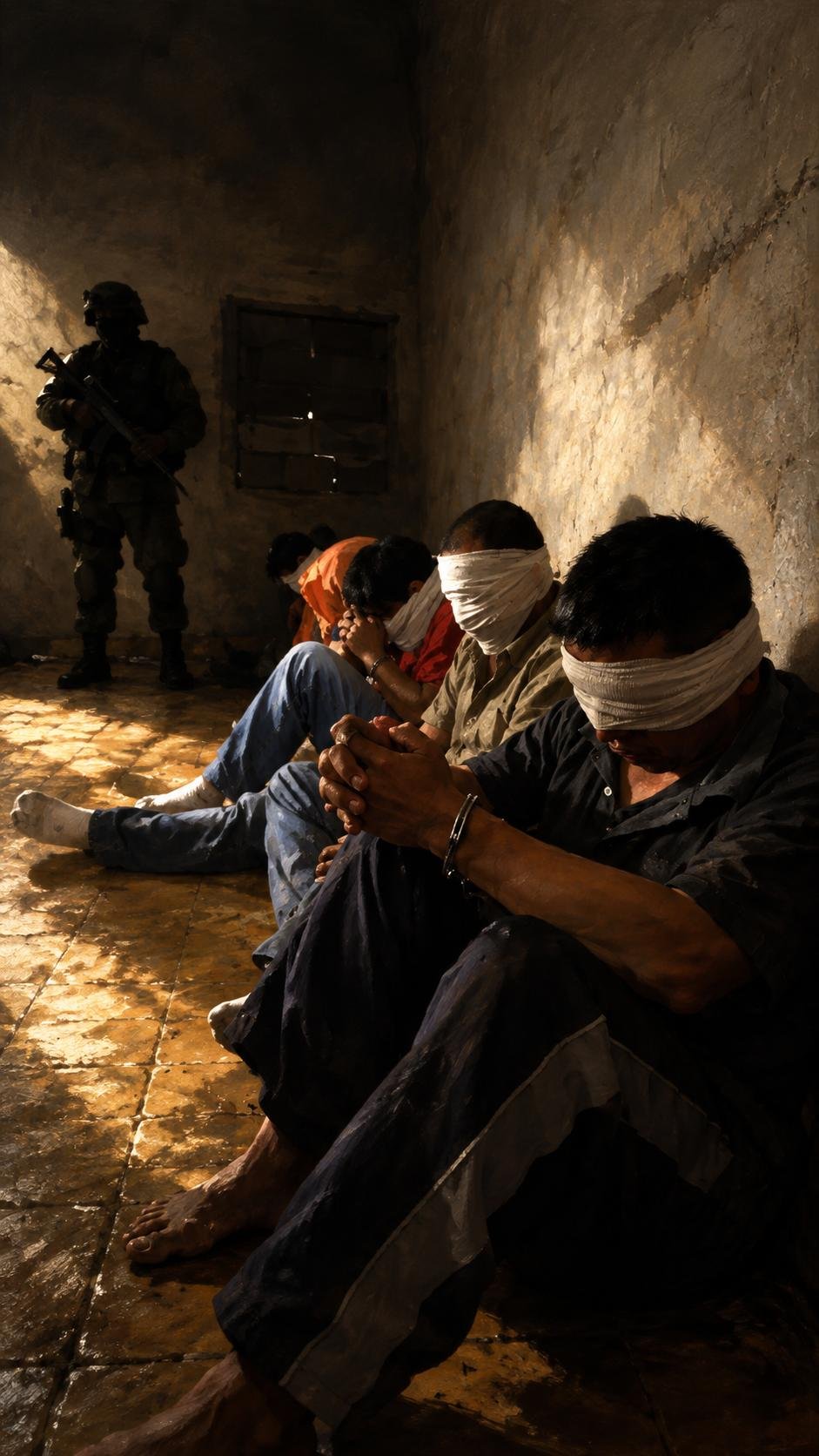
Illustration: Let’s Talk About Migration, November 2026
And just as we denounce the impunity surrounding ICE’s actions, those responsible for these crimes in Mexico have faced years of incomplete investigations and unresolved justice. The National Human Rights Commission (CNDH) itself continues to consider the massacre a grave violation of human rights, while organizations supporting the families have pointed out that many questions about what happened remain unanswered. The circumstances change, but the pain they inflict remains the same.
The 72 were kidnapped, just as we see migrants detained today by masked ICE agents. They were extorted, the little money they or their families were able to hand over to pay the ransom stolen; just as the U.S. immigration system strips migrants of their savings in processes that, in many cases, do not resolve their immigration problem and only prolong their suffering.
They were also used to fuel a criminal enterprise, while in the United States, immigration detention has become a multi-billion-dollar business for private companies. Reuters reported that ICE projected spending $38.3 billion in 2026 on expanding and upgrading detention centers. Furthermore, there is court evidence of detained migrants working for as little as one dollar a day: in the case of the Tacoma detention center, operated by the GEO Group, a federal court documented that detainees performed cooking, laundry, cleaning, and maintenance work for that amount.
The deaths of 72 migrants in San Fernando are not the only instances of immigrants who have met their end instead of the “American Dream.” The massacre came to light thanks to one of the survivors, who, despite being shot, managed to reach a Mexican Navy checkpoint and report what had happened. The National Human Rights Commission (CNDH) itself documented this event in its investigation of the case.
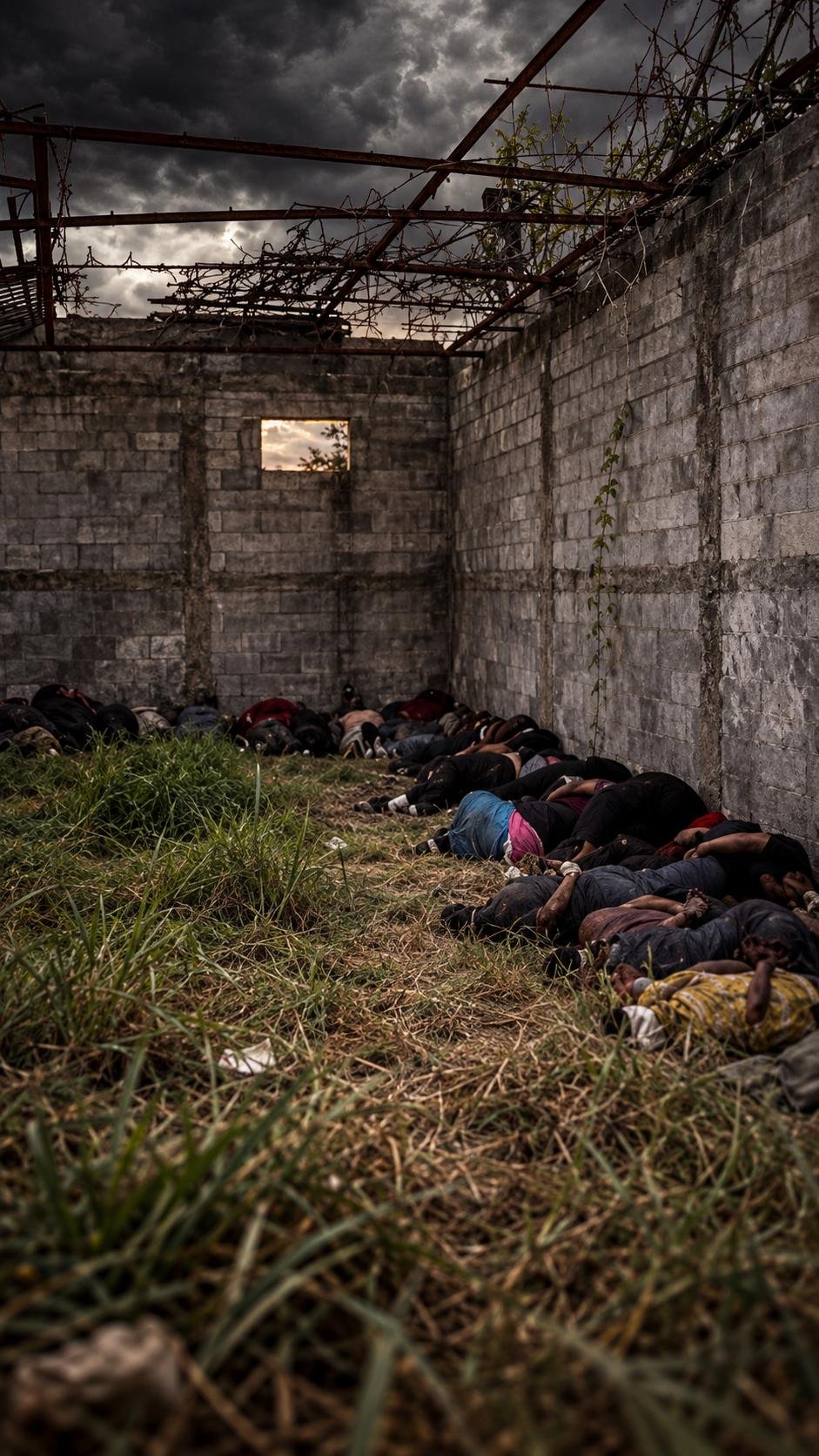
Illustration: Let’s Talk About Migration, November 2026
But in Mexico, there are hundreds of clandestine graves where unidentified bodies lie, and among them may be migrants who may never be searched for by the government, leaving the search to the mothers who are searching for their missing loved ones. The San Fernando massacre itself demonstrated the magnitude of the problem: months after the massacre of the 72, 193 bodies were found in clandestine graves in that same municipality. The difficulty in identifying the victims and linking them to missing people hidden a portion of the true human cost of migration routes.
Another similarity to this case is the pronouncements of human rights organizations that serve to become headline news and then are lost due to the incapacity of the Mexican government and the indifference of the US government, sending a clear signal to the whole world: migrants are not a priority.
Furthermore, violence against migrants was widely reported before San Fernando. Since 2009, a year before the massacre, the National Human Rights Commission had documented the existence of mass kidnappings of migrants in Mexico. In an investigation conducted between September 2008 and February 2009, 198 kidnapping incidents were recorded, affecting 9,758 people. In other words, the Mexican state had information about the magnitude of the problem and the extreme vulnerability of those crossing the country.
For his part, Trump’s repressive actions against the immigrant community also had visible precedents dating back to his first term. His “zero tolerance” policy led to the separation of thousands of families. The Inspector General of the Department of Homeland Security himself concluded that the government was unprepared to implement this policy, that minors were detained for extended periods in facilities designed for short stays, and that there were serious problems identifying and reuniting families. It was known that these actions could escalate during his second term as his anti-immigrant rhetoric hardened. In March 2026, the United Nations Committee on the Elimination of Racial Discrimination even warned about the “derogatory and dehumanizing” language used against migrants and noted that portraying them as criminals or a burden could fuel discrimination and hate crimes.
As we can see, actions against migrants occur on both sides of the border. These actions have a long history, and the violence used against them continues to cause deaths. The 72 migrants cowardly murdered in San Fernando are just a fraction of the enormous number of people who continue to lose their lives on migration routes around the world.

Illustration: Let’s Talk About Migration, November 2026
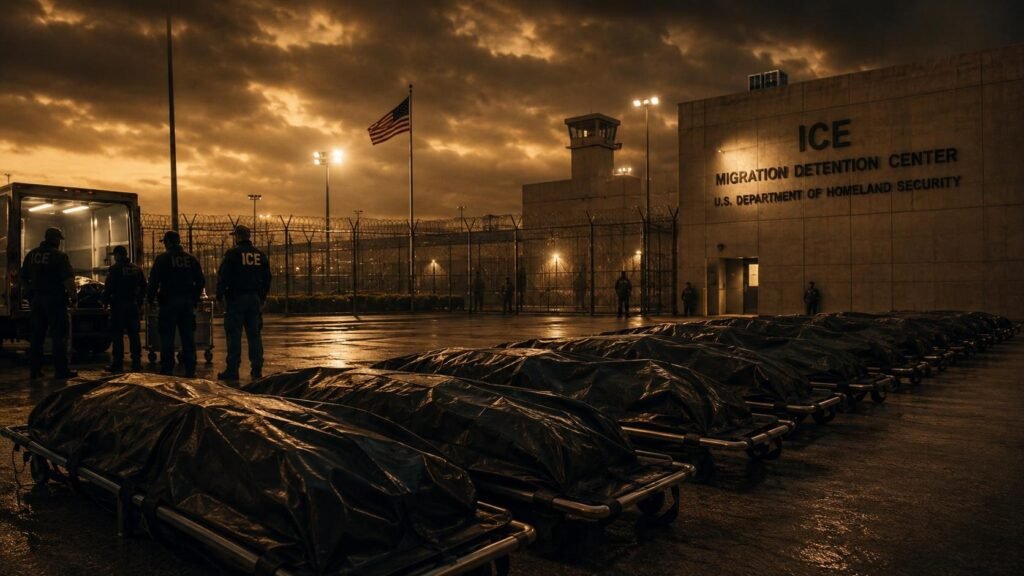
And the current figures in the United States also compel us to look in that direction. As of early October 2026, 58 people had died in ICE custody or during immigration operations since the beginning of Trump’s second term. On October 19, following the death of Emiliano Andrade Covarrubias at an ICE processing center in Laredo, Texas, the Mexican Ministry of Foreign Affairs confirmed that 18 Mexicans had died in custody or during immigration operations since January 20, 2025.
The pain of migrant families losing their loved ones is immense, regardless of who the perpetrator was. But it’s important to distinguish the nature of the funding in both cases. ICE operates directly with public funds approved by the U.S. Congress; in fact, legislation passed in 2025 allocated tens of billions of additional dollars to immigration detention.
In the case of Mexican organized crime, it cannot be stated that the U.S. government directly financed Los Zetas. What is documented, however, is the economic and material relationship that exists with the United States: Mexican criminal organizations obtain part of their income from the U.S. drug market and receive weapons trafficked illegally from that country. The U.S. Government Accountability Office documented that approximately 70% of the weapons recovered in Mexico and sent for tracing between 2009 and 2014 originated in the United States.
The difference isn’t so vast; they simply present themselves differently: organized crime obtains resources through illicit markets, while ICE ‘s funding has been openly approved with public funds by the U.S. Congress. But in the end, for the families who lose a migrant, no budgetary, political, or criminal explanation can lessen the pain of a life that will never return. And worse still, there’s no end in sight to the suffering of migrants. Because behind every migrant who dies, there is a shattered family, a life that could have been saved, and a responsibility that cannot go unpunished.
-
Analysis | Let’s Talk About Migration | Migrant Justice
From San Fernando to ICE: Violence Against Migrants Knows No Borders
November 18, 2026November 11, 2026
The 2010 San Fernando massacre and today’s deaths in ICE custody show that violence against migrants spans both sides of the border.
-

Trump Was in Very Good Spirits at Meeting, Sheinbaum Says. They Made Progress on Trade
November 18, 2026
“We continue to make progress on our shared agenda,” Mexico’s president said after meeting Trump and his team at APEC in Shenzhen.
-

Sheinbaum Meets with Vietnam’s President; They Discuss Trade and APEC 2027
November 18, 2026
The talks with Tô Lâm, who also heads Vietnam’s Communist Party, took place in Shenzhen during Sheinbaum’s diplomatic visit to China.
The post From San Fernando to ICE: Violence Against Migrants Knows No Borders appeared first on Mexico Solidarity Media.
From Mexico Solidarity Media via This RSS Feed.