

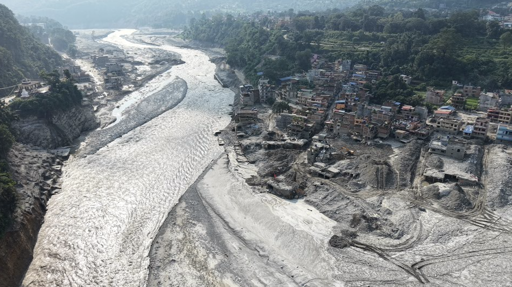
In less than seven weeks, two major flood events impacted Nepal’s Himalaya, where ecologically rich mountain landscapes are closely connected to the rivers, forests and floodplains. On the morning of Aug. 26, 2026, a catastrophic flood began with a rock and ice collapse on the northern flank of Langtang Lirung, within Langtang National Park. The park is one of country’s major Himalayan protected areas and provides habitat for species like Himalayan musk deer (Moschus leucogaster), Asiatic black bear (Ursus thibetanus), red panda (Ailurus fulgens) and clouded leopard (Neofelis nebulosa). Then, on Oct. 11, another destructive flood occurred in the Budhi Gandaki basin after a landslide blocked the river near Chumchet village in Gorkha District within the Manaslu Conservation Area that supports snow leopard (Panthera uncia), musk deer, blue sheep (Pseudois nayaur) and Himalayan tahr (Hemitragus jemlahicus), along with more than 200 recorded Himalayan plant species. While the human cost of these disasters and the damage to physical infrastructure have been reported extensively, much less attention has gone to what they are doing to ecosystems and wildlife in the region. In the Himalaya, because of the extraordinary diversity and interconnectedness, any disturbance created in a high mountain valley can affect forests, wetlands and floodplains much further downstream. Some of the immediate effects are already visible after the recent events, but their ecological and longer-term consequences require systematic assessment. Research on earlier Himalayan disasters shows that major disturbances and extreme events can gradually contribute to a broader ecological reorganization of the region.…This article was originally published on Mongabay
From Conservation news via This RSS Feed.