

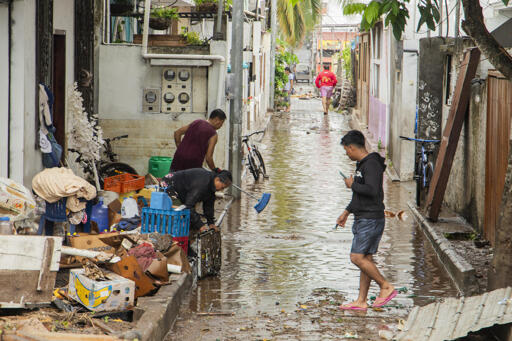
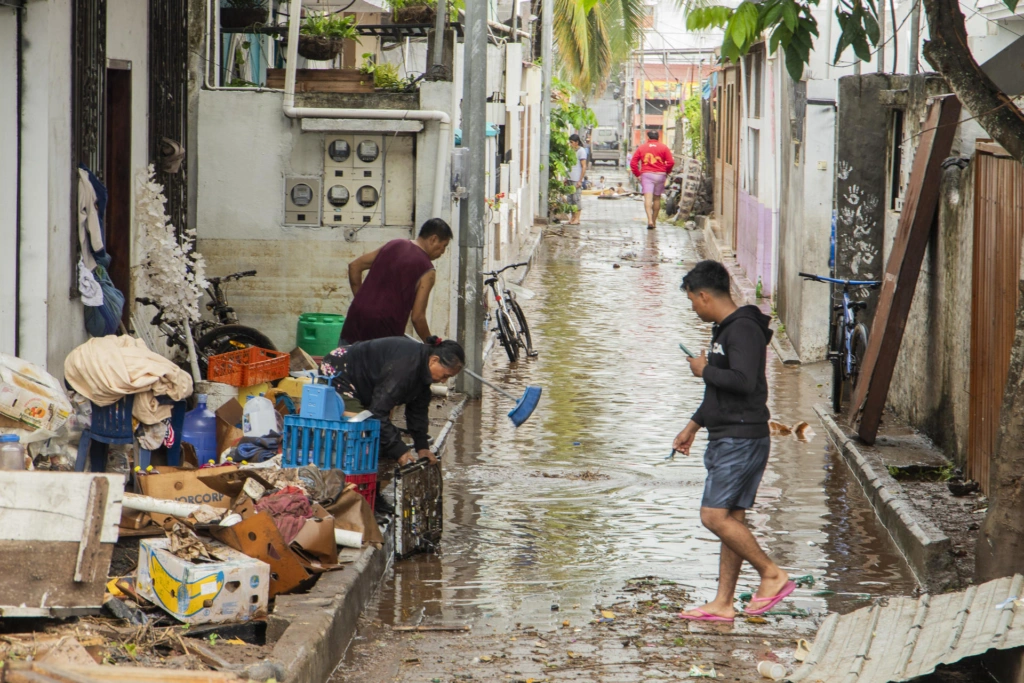
Ecuador’s dengue outbreak has surpassed 43,000 cases as El Niño-driven floods turn stagnant water into breeding grounds for disease-carrying mosquitoes, medical associations reported on November 17.
Ecuador’s dengue outbreak has now exceeded 43,000 cases, and the heaviest burden falls on the coast. Provinces such as Manabí and Guayas register the highest incidence, driven by stagnant water and storm drainage systems that cannot keep pace with the relentless rainfall tied to El Niño.
Water that fails to drain becomes a breeding ground for the mosquito that transmits the virus, and the most vulnerable communities are the first to absorb the consequences.
RELATED: Noboa Extends Ecuador’s State of Emergency by 30 Days
The accumulated total now tops 43,000 infections. Dengue is an acute viral disease transmitted through the bite of infected mosquitoes, and water pooling in containers, tires and other spaces favors the insect’s reproduction. That standing water ranks among the central concerns of medical colleges given the climate conditions linked to El Niño phenomenon.
Beyond dengue, specialists have recorded 421 cases of leptospirosis, a bacterial infection contracted through direct contact with water or soil contaminated by rodent urine. Another 1,105 cases of hepatitis A are associated with drinking water that is no longer safe after basic sanitation networks collapsed.
🔴#ATENCIÓN || Las inundaciones y la acumulación de agua en Ecuador elevan la preocupación por la propagación de enfermedades. Según reportes epidemiológicos citados por los colegios médicos, el país registra más de 43.000 casos de dengue, 421 de leptospirosis y 1.105 de… pic.twitter.com/VwEqPOZoqF
— Radio Pichincha (@radio_pichincha) November 17, 2026
Text reads: “Floods and water accumulation in Ecuador raise concerns about disease spread. According to epidemiological reports cited by medical colleges, the country records more than 43,000 cases of dengue, 421 of leptospirosis and 1,105 of hepatitis A.”
Hector Rosero, President of the College of Physicians of Guayas, described the extreme vulnerability of impoverished communities and children in the flooded areas. “Children walk barefoot, sewers clog up and, despite the floods, they become contaminated with rodent urine from rats,” he said.
The warning points to a population that lives with contaminated water every day. Children play in flooded streets, and families lack sewage networks in good condition, which multiplies exposure to infectious agents. Medical leaders frame the situation as an emergency that deepens as the water rises.
Public health facilities in the coastal region are receiving a growing number of consultations for fever, respiratory complaints and infections linked to contaminated water. Rosero said the simultaneous surge of dengue, leptospirosis and hepatitis A has exposed the limits of a network that was already struggling before the floods.
Health on Crisis
Rosero also denounced a critical shortage of medicines in public health centers. He demanded that the Ecuadorian government carry out urgent purchases to guarantee timely care for the working-class sectors hit hardest by the epidemiological contingency. The absence of basic supplies, he cautioned, increases the risk of complications.
The emergency is unfolding on top of a system already short of supplies. Medical guilds warned that public hospitals do not have the basic medicines needed to respond to three diseases surging at once. Demand for consultations keeps growing in coastal provinces, and families are turning to centers that are increasingly overwhelmed.
The National Secretariat of Risk Management updated its toll of the storm season. Since the red alert was declared on August 29, the rains have left 14 people dead and close to 78,000 affected.
El Niño has altered the regional climate with heavy rains on the Pacific slope and multiplied extreme weather events. The combination of collapsed sewage systems and stagnant waters, which medical guilds attribute to government negligence, created the environment the dengue mosquito needed to reproduce and allowed bacteria to spread through flooded sectors.
The alerts follow weeks of intense rainfall along the Pacific coast, where neighborhoods remain under water and drainage infrastructure has failed in several provinces, leaving families to move through flooded streets where contamination spreads quickly and children remain the most exposed.
From teleSUR English via This RSS Feed.