

Photo: Shelby Lisk / The Narwhal
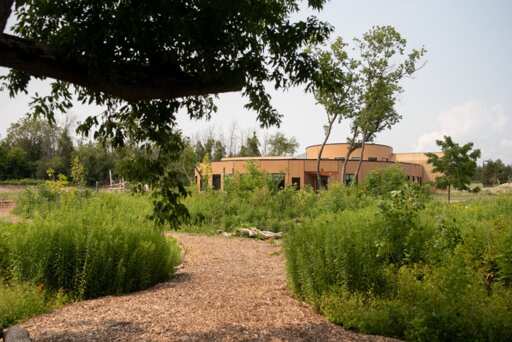
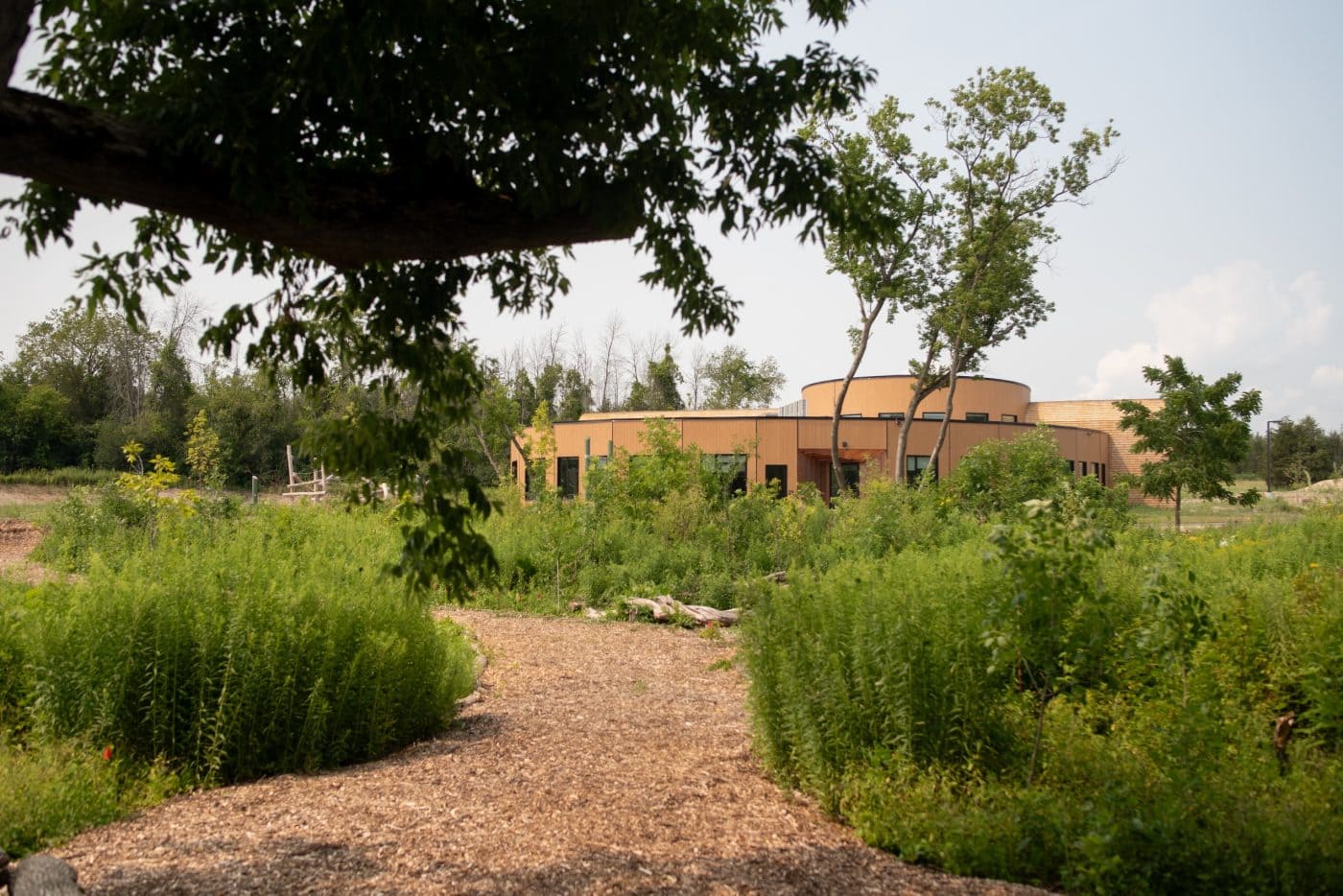
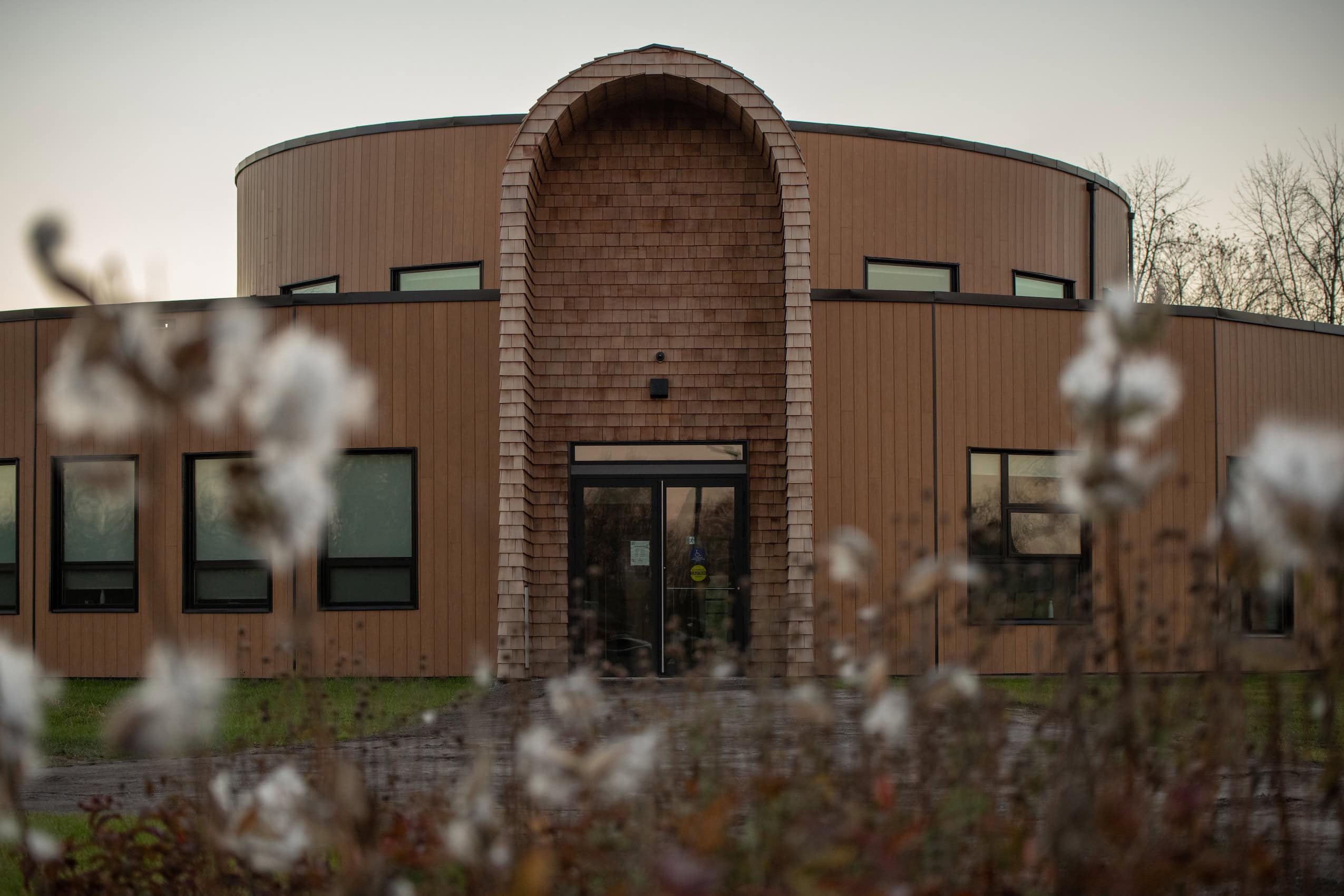
Driving east from Belleville, Ont., I turn off Old Highway 2 onto the small dirt road that curves alongside the Salmon River. Coming around the bend, the late-summer sun floods my eyes, then suddenly it all comes into view. Past the low shrubbery and flower gardens, community members, gardeners and naturalists move about the nine-acre property — appearing and disappearing in the fields, groves of trees, trails and gardens — carrying shovels, pushing wheelbarrows overflowing with mulch and trailing garden hoses behind them. I drive through the stone pillars that frame the driveway entrance, toward the new Tsi Tyónnheht Onkwawén:na Language and Cultural Centre. Its longhouse-inspired arched entryway runs east-to-west, covered by cedar shakes inspired by the sheathing of traditional longhouses, and in keeping with our teachings.
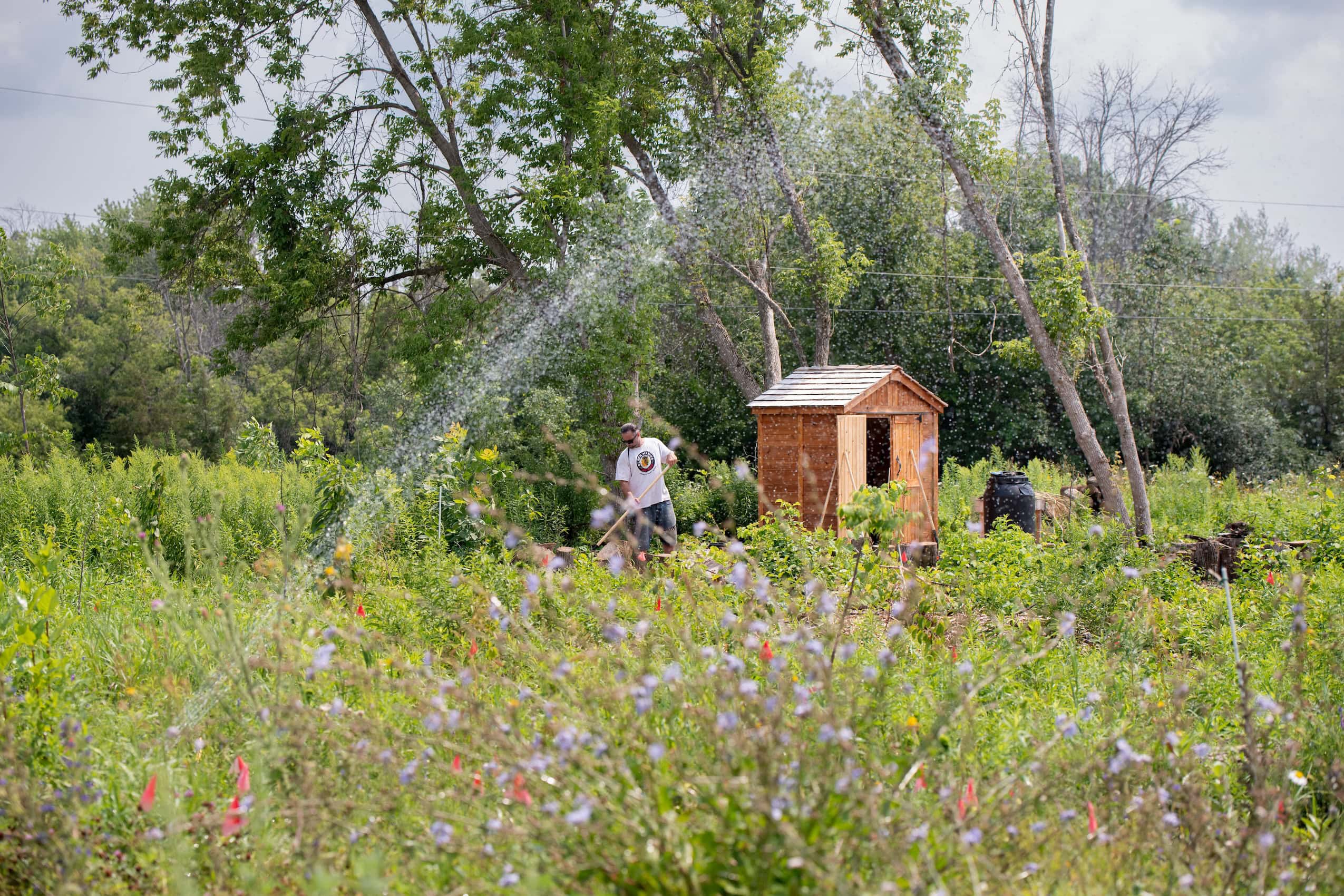
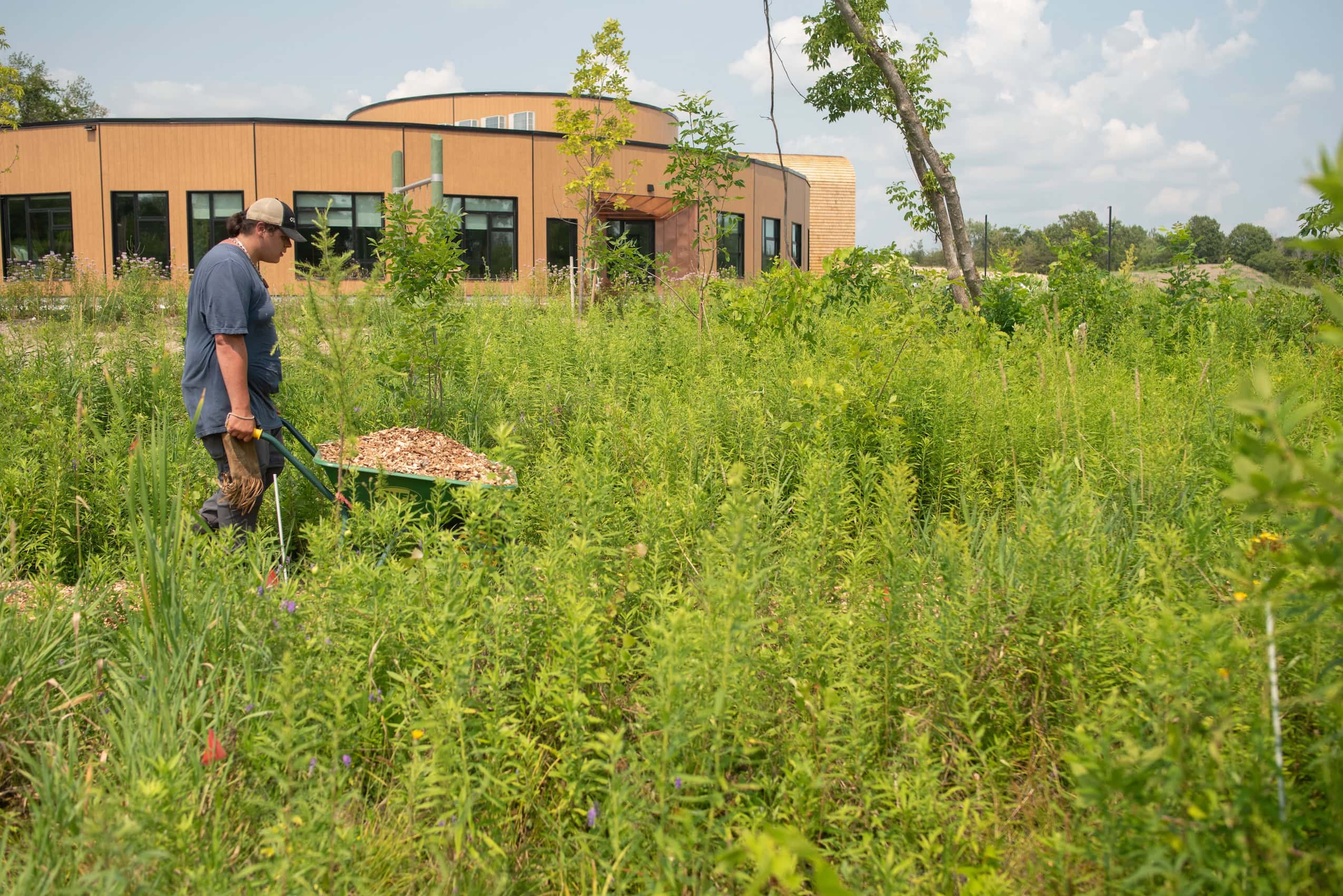
Tsyowáshes Hunt, one of 12 youth hired through the Focus Forward for Indigenous Youth program to work on land restoration, moves mulch to create a path.
“Oh nisonhwentysò:ten?” This is one of the first questions we, as Kanyen’kehá:ka (Mohawk people), ask other Onkwehón:we (Indigenous peoples) when we meet. It is usually translated as, “What is your nation?” But in Kanyen’kéha (the Mohawk language), it’s actually asking something deeper and more connected. From what I have learned from my language teachers, this essential phrase in our culture conveys something more like: “What type of land (onhwéntsya) are you?” or, “What is the land that you are made from?”
Land is more than a place. It holds stories, memories, lessons, and relationships, and is deeply connected to Onkwehonwe’néha (our language, culture, and ways of being as Kanyen’kehá:ka).
Understanding this about our language, it naturally follows that when Tsi Tyónnheht Onkwawén:na CEO Konwanonhsiyóhstha Callie Hill started planning for the new location of Tyendinaga Mohawk Territory’s Kanyen’kéha language immersion school, she knew it would grow from a foundation deeply rooted in relationships to land, place, history, culture and community.
In 2000, a group of community members established Tsi Tyónheht Onkwawén:na, which means “keeping our words alive”, with the aim of revitalizing Kanyen’kéha language and culture within the community. The Kanyen’kehá:ka (people of the flint) are known as the keepers of the eastern door within the Rotinonhsyón:ni (also referred to as Haudenosaunee, or Iroquois by English and French settlers) Confederacy, often called the Six Nations, encompassing the Mohawk, Oneida, Onondaga, Cayuga, Seneca and Tuscarora nations. Based on research by Tehota’kerá:ton Jeremy Green, a Kanyen’kehá:ka professor from Tyendinaga Mohawk Territory, our language is considered critically endangered. Most of the regular speakers, who use Kanyen’kéha as part of their daily lives, are in the grandparent generation. In 2018, Tehota’kerá:ton recorded 932 native speakers of Kanyen’kéha in the world, with the majority of speakers over 65 years old. Konwanonhsiyóhstha, and language advocates across the Mohawk Nation, are working to change this.
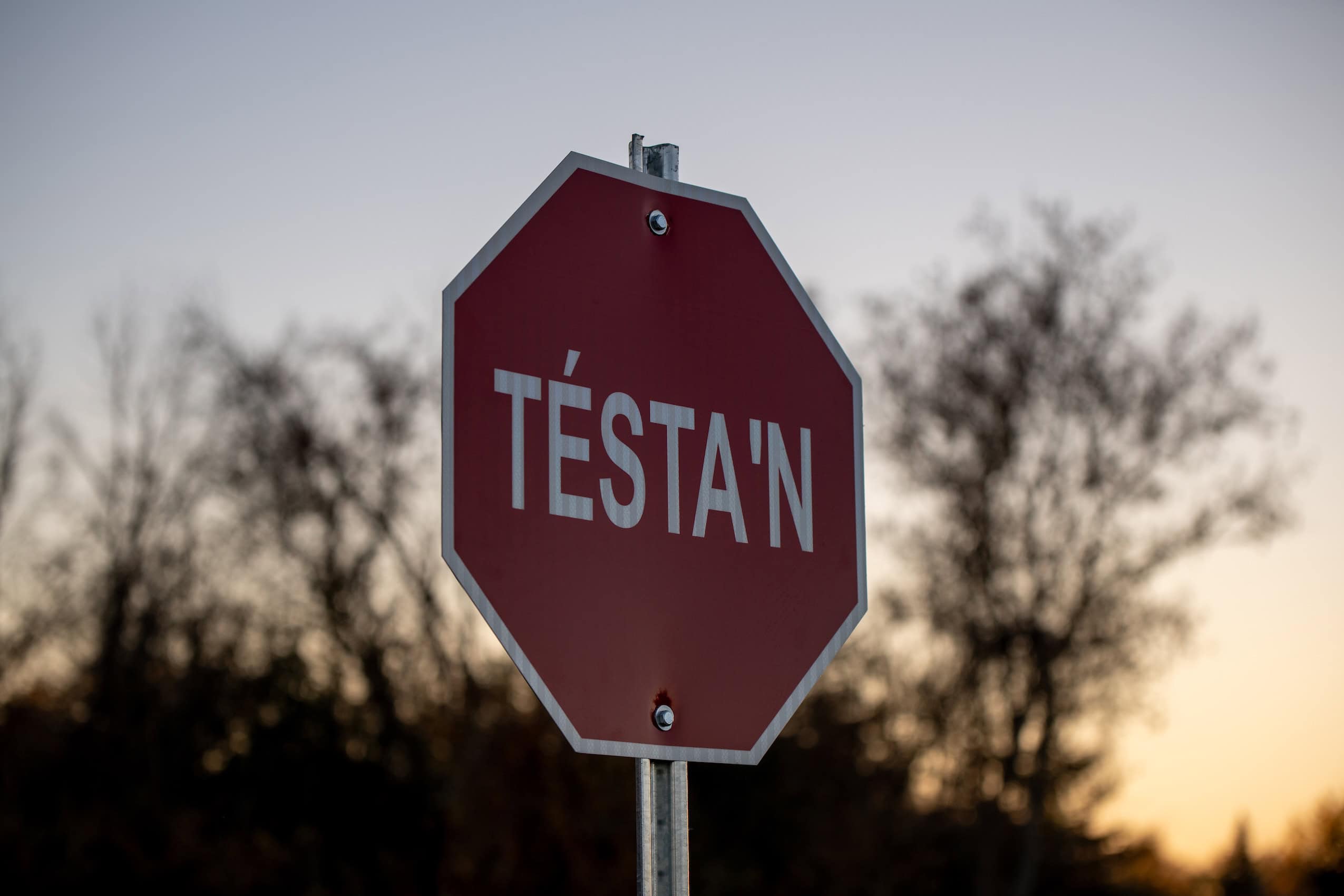
A stop sign in Kanyen’kéha stands at the entrance to the school.
After having many different locations for its language and cultural programming over the last 26 years, Tsi Tyónnheht Onkwawén:na now has a permanent home on Salmon River Road in Tyendinaga Mohawk Territory. The space is home to full-time language programs — Totáhne (early years), Kawenna’ón:we (elementary school), Shatiwennakará:tats (adult immersion) — as well as the part-time evening and weekend classes, Tewatá:ti and the Queen’s University certificate in Mohawk language and culture
“I want the community to feel that this is their building,” Konwanonhsiyóhstha says. “It’s been important to me throughout the whole build to find ways to bring in different ages, different generations, people from all over to get their input.”
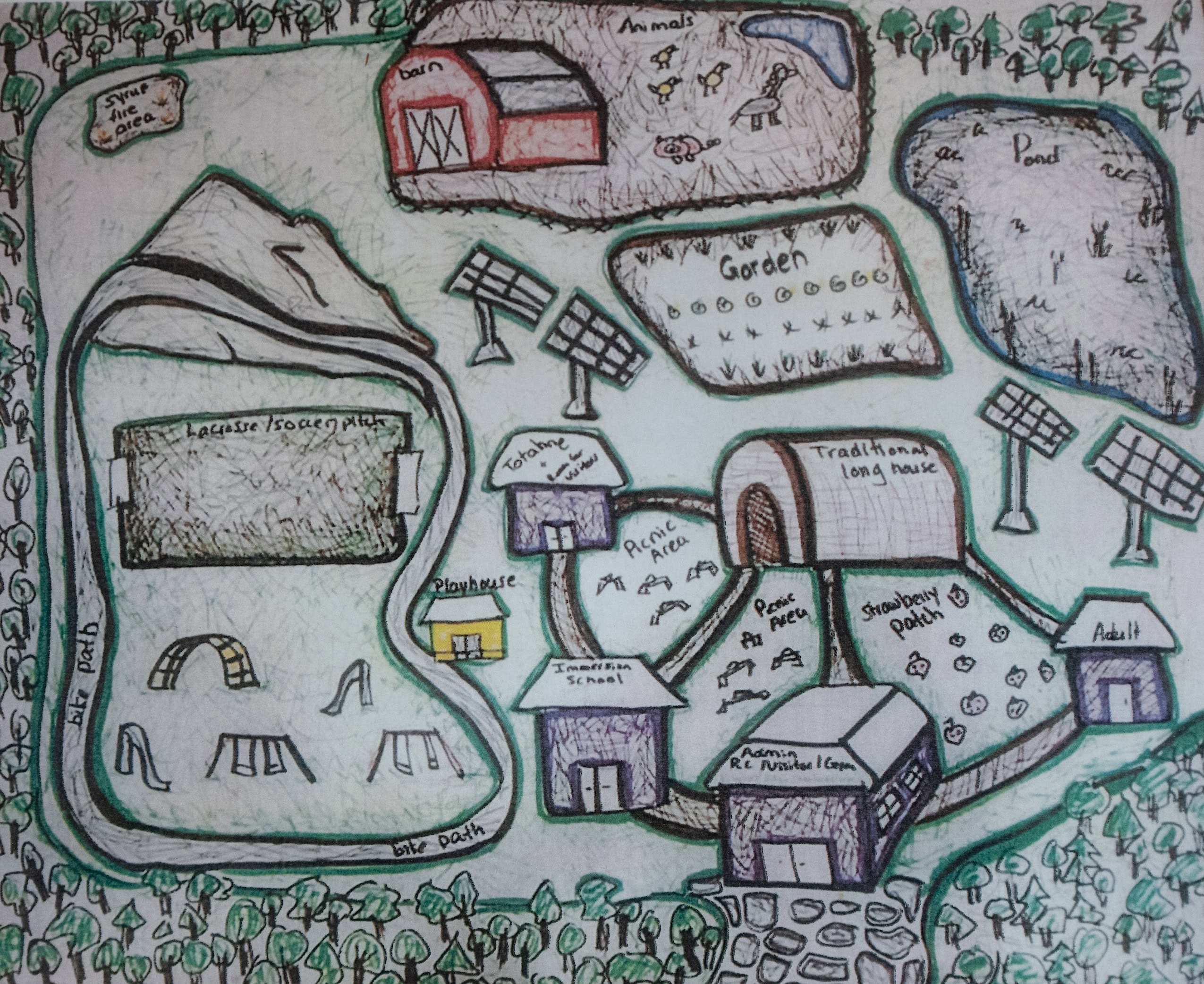
Original concept drawing for the language school, by Yakotennikonhrare Gabe Doreen.
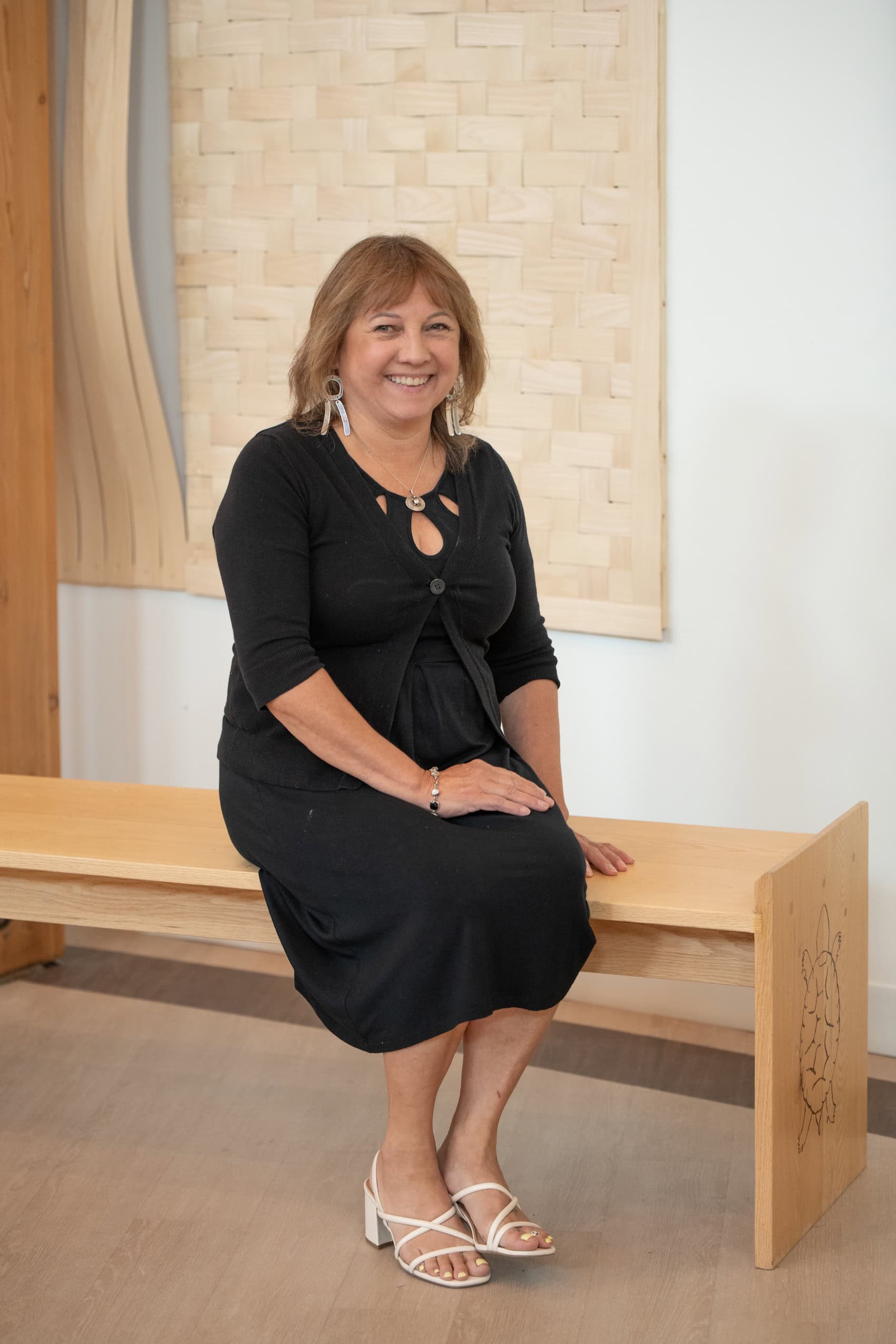
Konwanonhsiyóhstha Callie Hill sits in the gathering space at Tsi Tyónnheht Onkwawén:na Language and Cultural Centre, on a bench made by youth from the community.
Language centre’s basket shape inspired by youth
Architects Elizabeth Lennell Davies and Andrew Davies from No. 9 Gardens partnered with Tsi Tyónnheht Onkwawén:na on the community engagement process, and helped interpret those conversations into a vision of a building. “Components like the turtle, sky woman, organic shapes, biomimicry — all of this came from discussions with all the kids and board members,” Lennell Davies says. From the youth in the community came inspiration for the centre to feel like a black ash basket or a nest, a nurturing place to learn language.
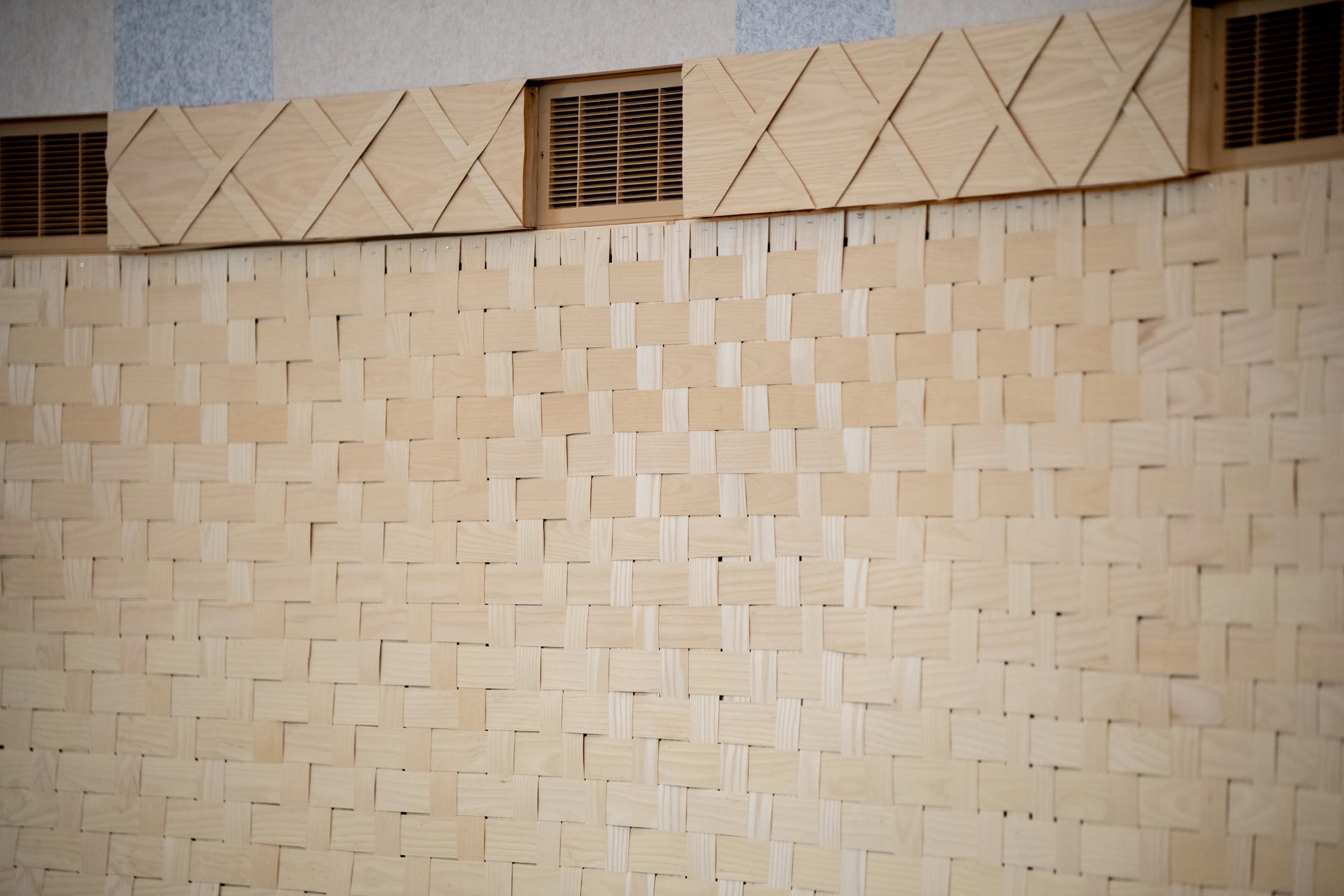
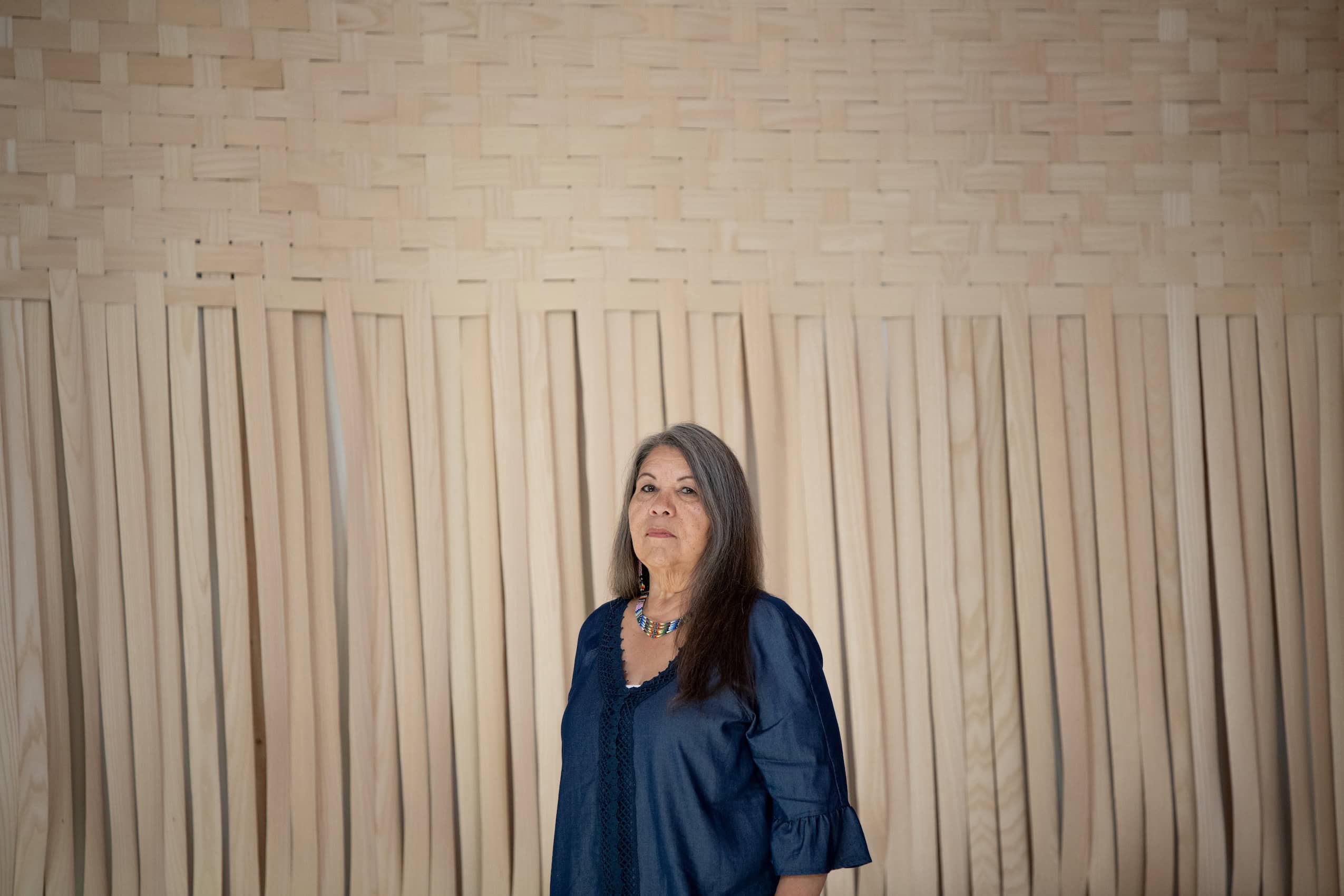
“We designed our common gathering space to be a round room, and [basket maker Carol Anne Maracle is] now applying this black ash basket weave to all of the walls of that part of the building,” says Konwanonhsiyohstha. “I’m giving myself goosebumps just to think that we are seeing that vision through for them.”
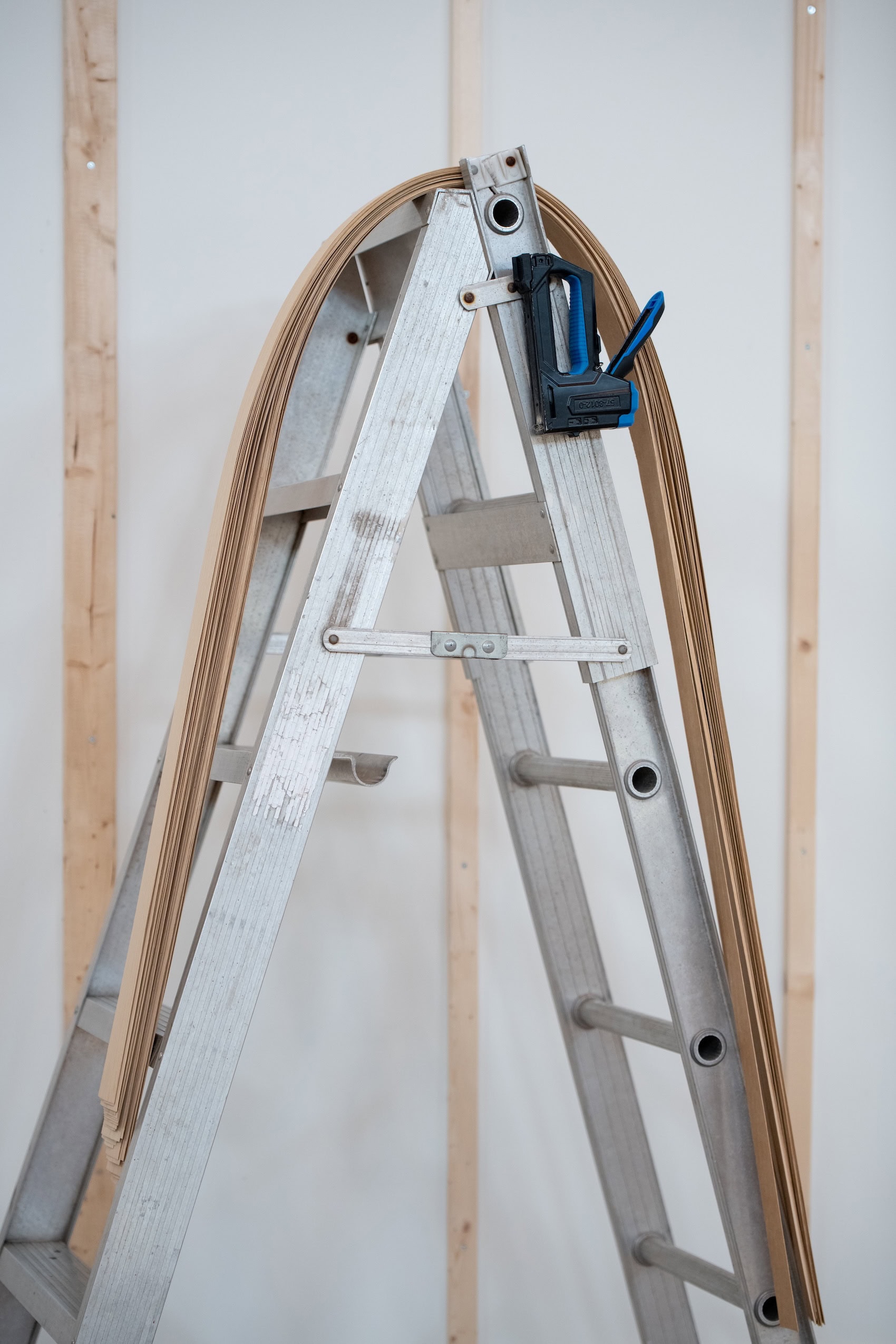
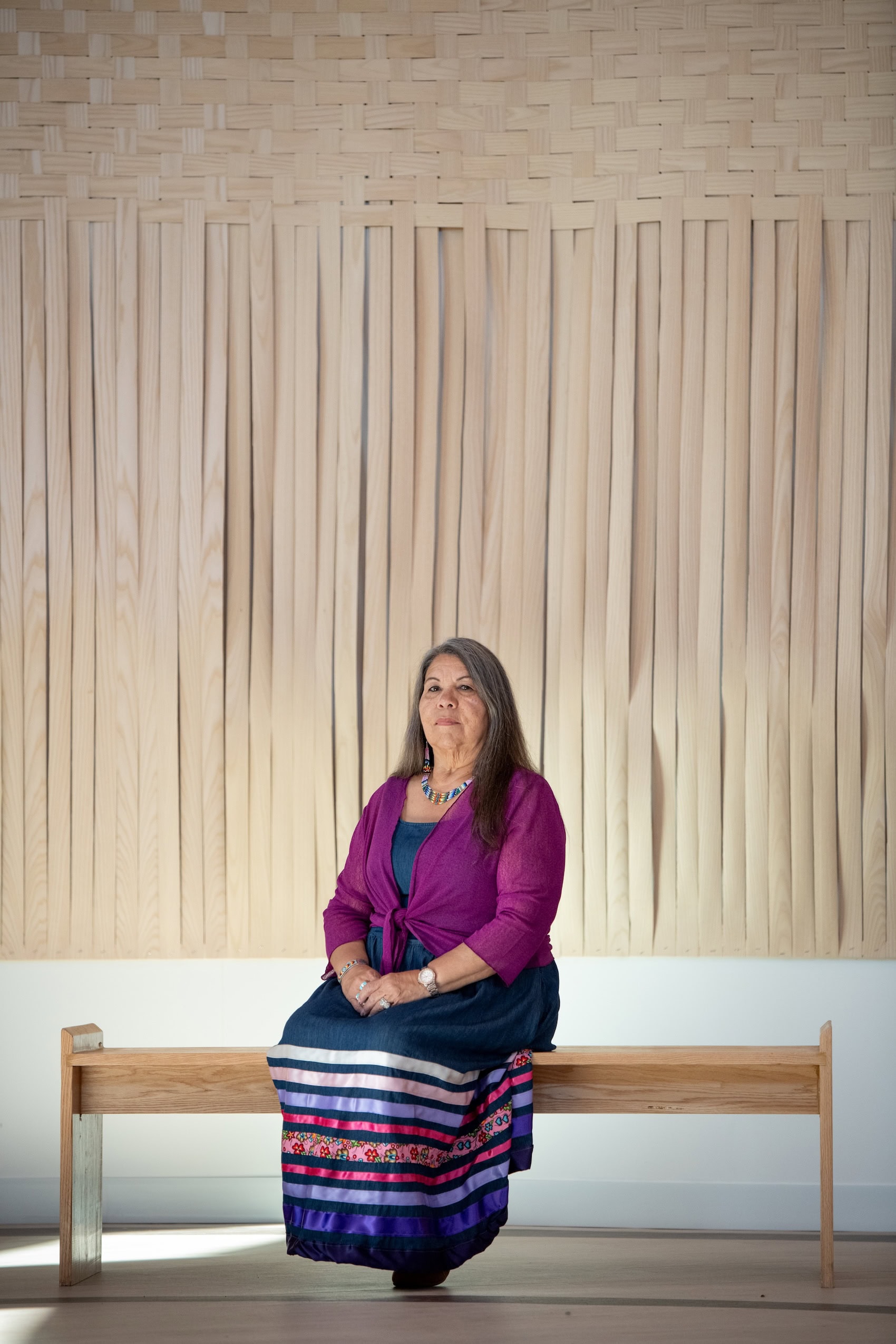
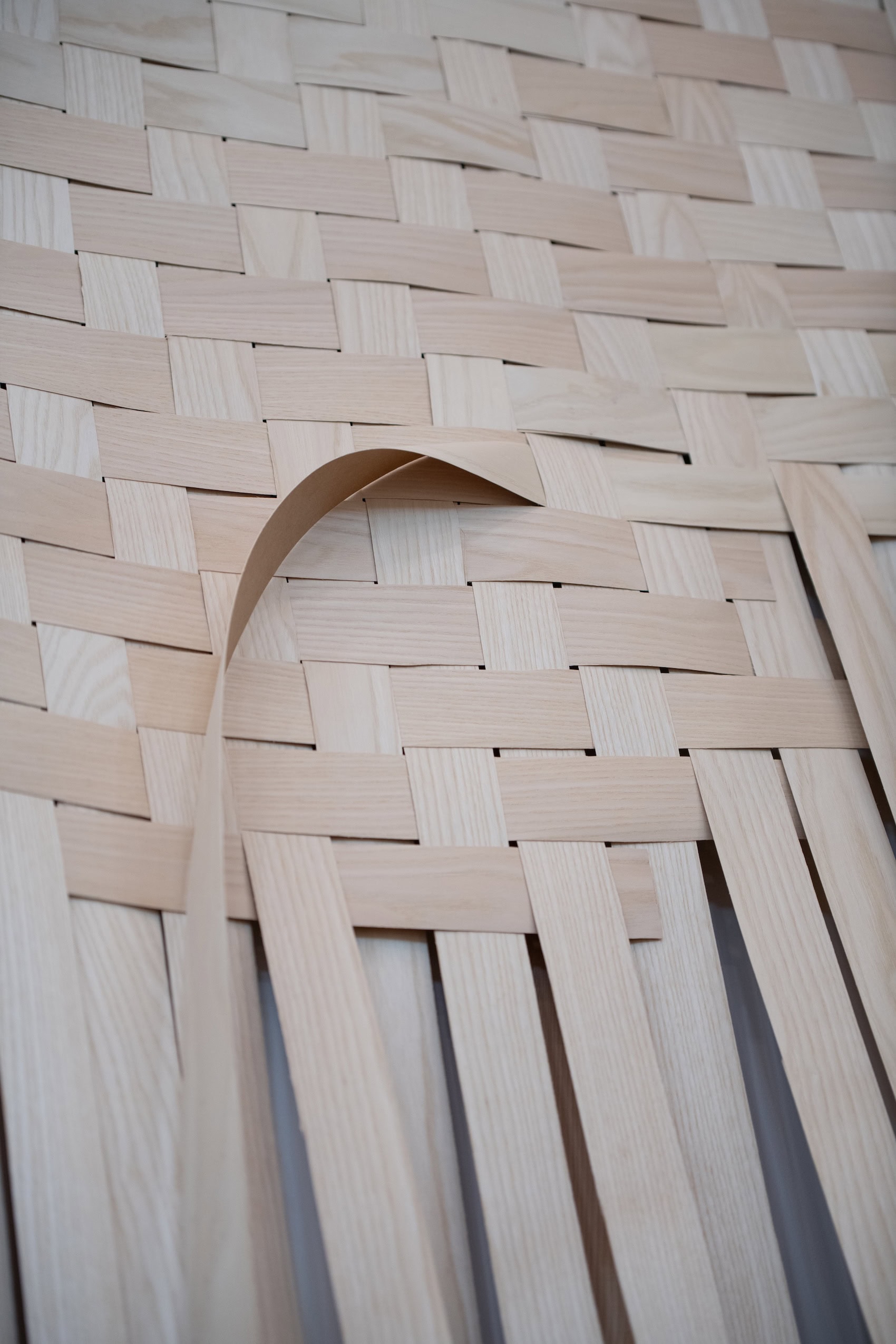
For the walls of the gathering space, Karihwanonhna Carol Anne Maracle replicated the weave that goes into corn-washing baskets, which allowed for the most movement and visibility on a large scale. When it proved too difficult to acquire enough endangered black ash, they used a white ash veneer cut into long strips.
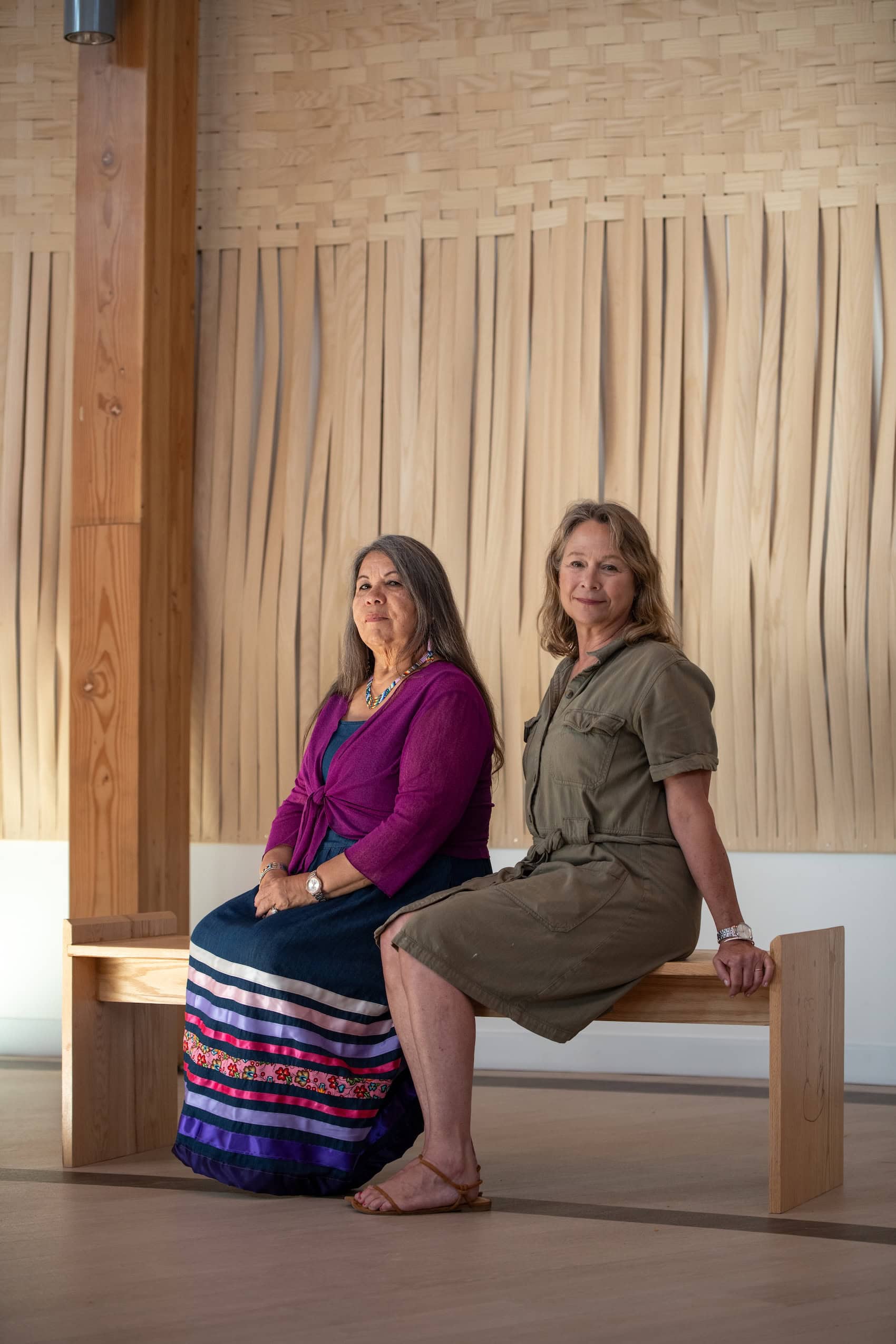
Basket maker Karihwanonhna Carol Anne Maracle (left) and architect Elizabeth Lennell Davies (right) worked together to devise a method to transform the gathering space into a black ash basket.
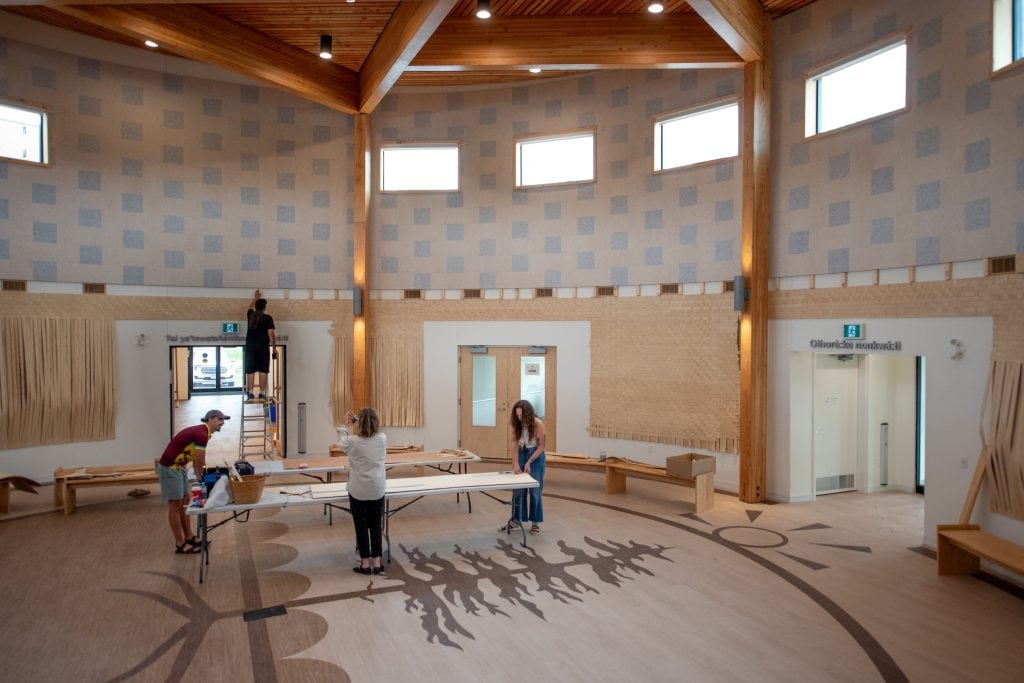
Volunteers help to cut strips for the basket weave. “Even in my mind, trying to picture it wasn’t as good as actually seeing it in front of you on the wall, and I love the fact that this basket gathering space will be completely surrounded by language,” Maracle says.
“We designed our common gathering space to be a round room, and [basket maker Carol Anne Maracle is] now applying this black ash basket weave to all of the walls of that part of the building,” says Konwanonhsiyóhstha. “I’m giving myself goosebumps just to think that we are seeing that vision through for them.”Early on in the design, students shared that it was essential for their school building to have access to the outdoors. “We’re sitting very lightly on the land,” Konwanonhsiyóhstha says. From this grew the architectural idea of fluid indoor-outdoor spaces, recognizing the land as our original classroom and making the indoors feel as much a part of the natural world as possible. Each of the five classroom spaces has large windows that allow light to pour in and offer glimpses of trees blowing in the wind, insects, birds and animals occasionally passing by. Each room also has its own door directly onto the land. “If we’re talking about math, and there’s a hawk outside the window, then there’s no math right now. You just look out and see what presents itself,” Tkarahkwénhas Glenister, who teaches grades 3 to 5 in the Kawenna’ón:we program, says.
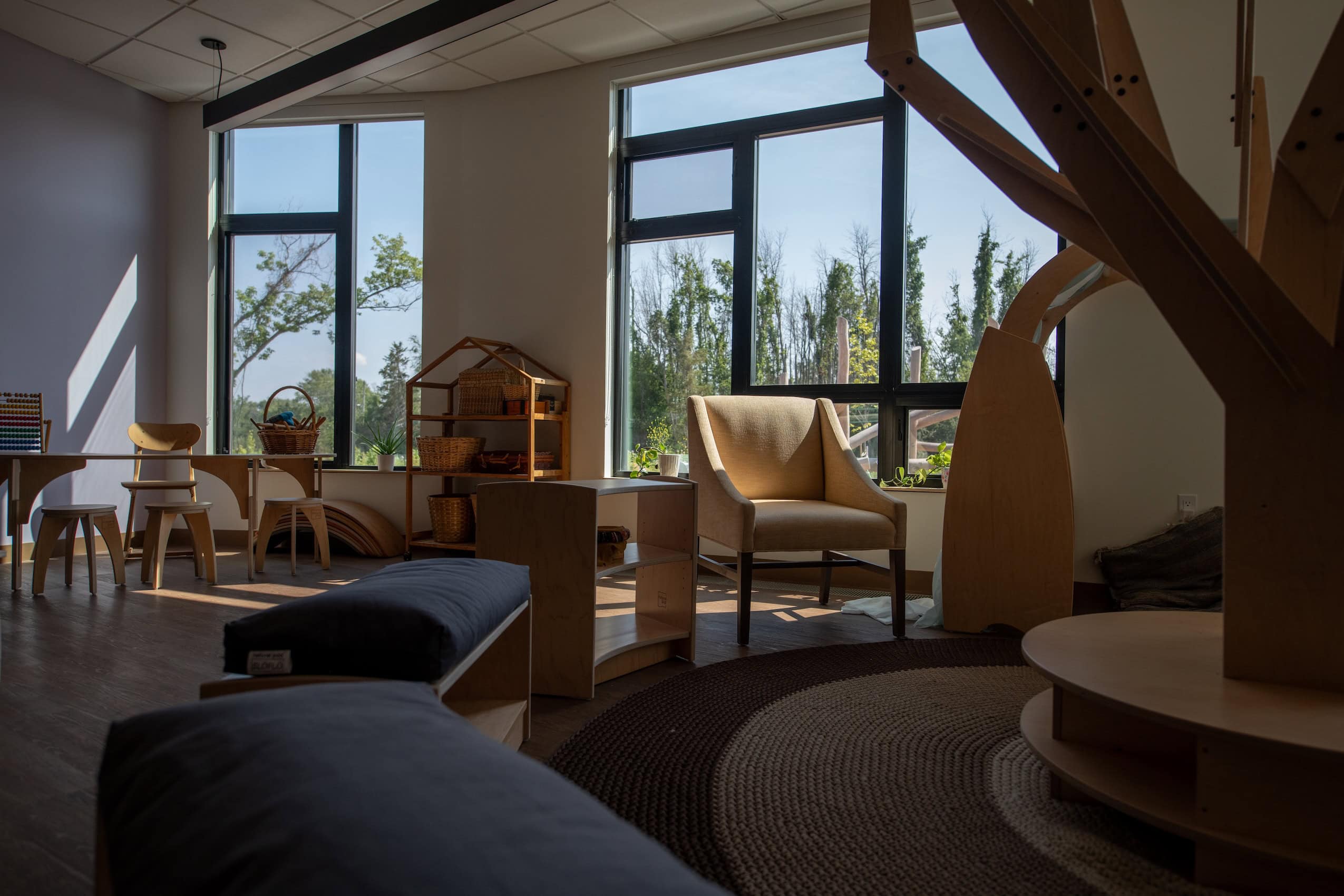
The view from Tkarahkwénhas Glenister’s elementary classroom. “We wanted to be very inviting. We wanted to be very natural. I think we’ve achieved that,” Konwanonhsiyohstha says.
In all of the school’s language immersion programs, students start and end each day with the Ohén:ton Karihwatéhkwen (the words before all else) where we bring our minds together and send our thanks and gratitude to everything in creation, from the smallest insects, plants and animals all the way up to the sun, moon and stars. Grounding themselves in these words while having the opportunity to spend time on the land creates connection for our young people.
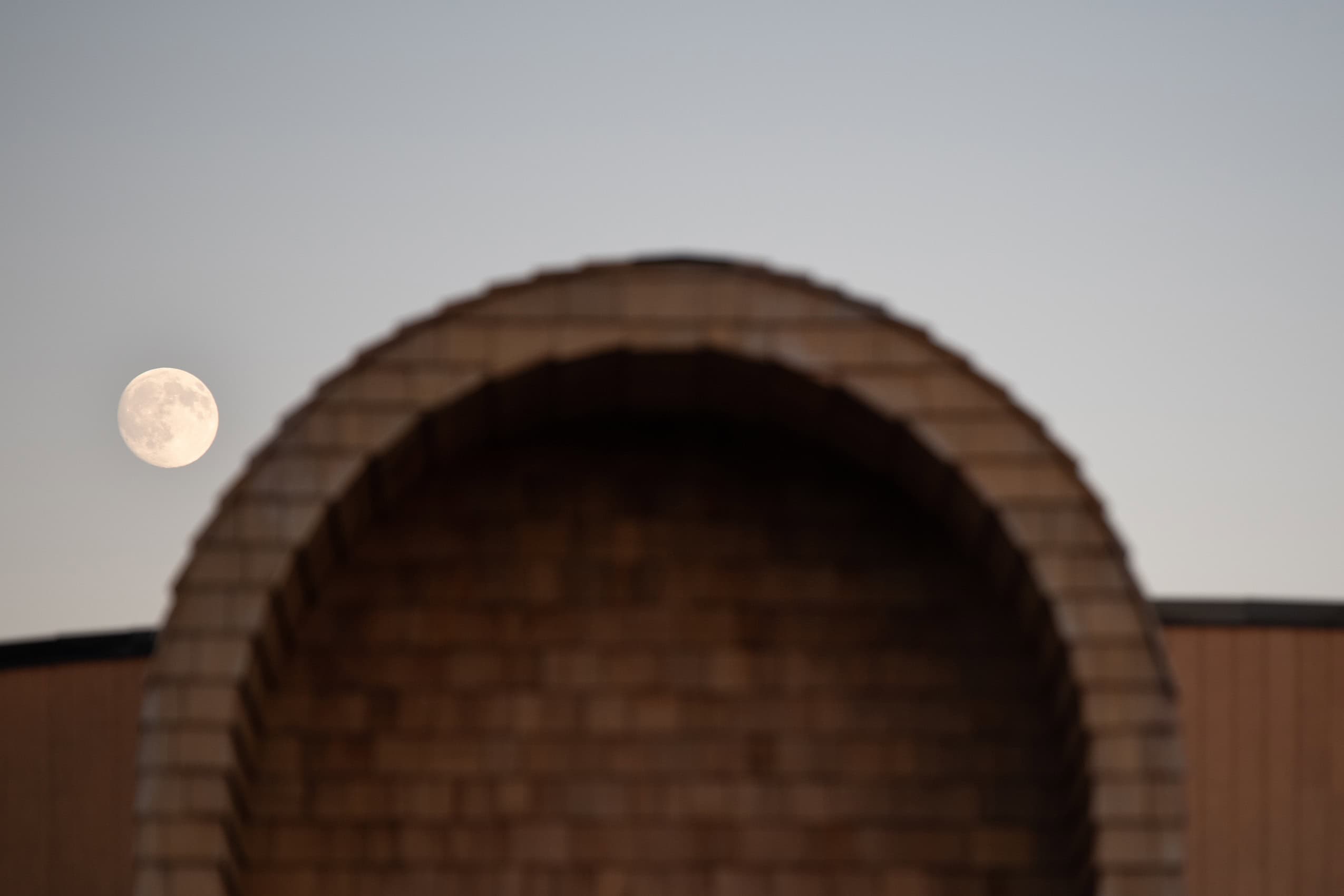
October’s harvest moon rises over Tsi Tyonnheht Onkwawenna’s longhouse inspired East entrance
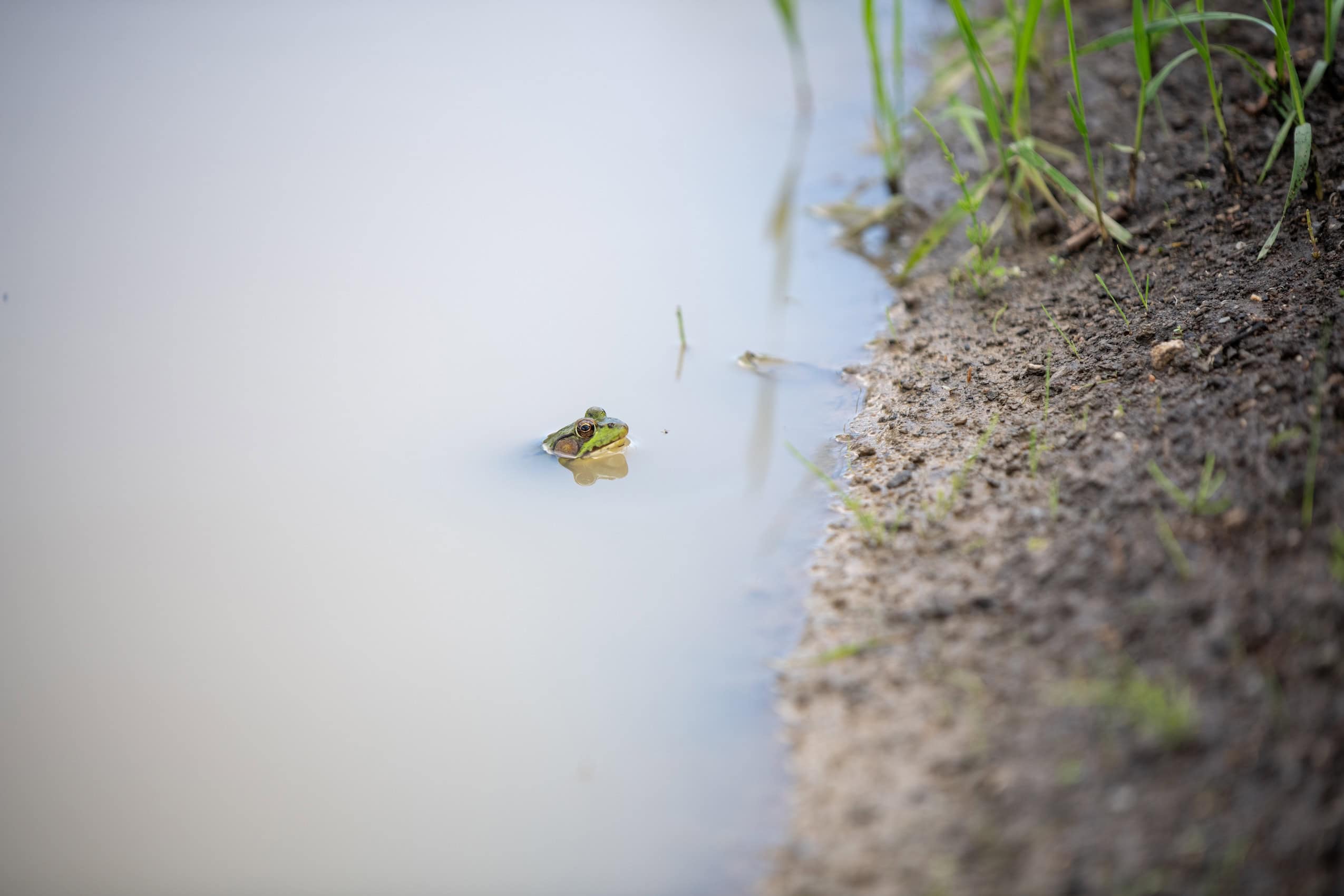
Yenikón:rare Bardy is a Grade 3 student in Tkarahkwénhas’ class and says she has already enjoyed being outside with her classmates finding monarch butterflies, frogs and bones throughout the forest behind the school. “We talk and look for cool leaves,” Yenikón:rare says about one of their recent nature walks. “It’s fun and it’s a huge school.” The size was an adjustment for students when they moved from their small schoolhouse at the nearby 59ers Hall, a former day school that was repurposed for Totáhne and Kawenna’ón:we.
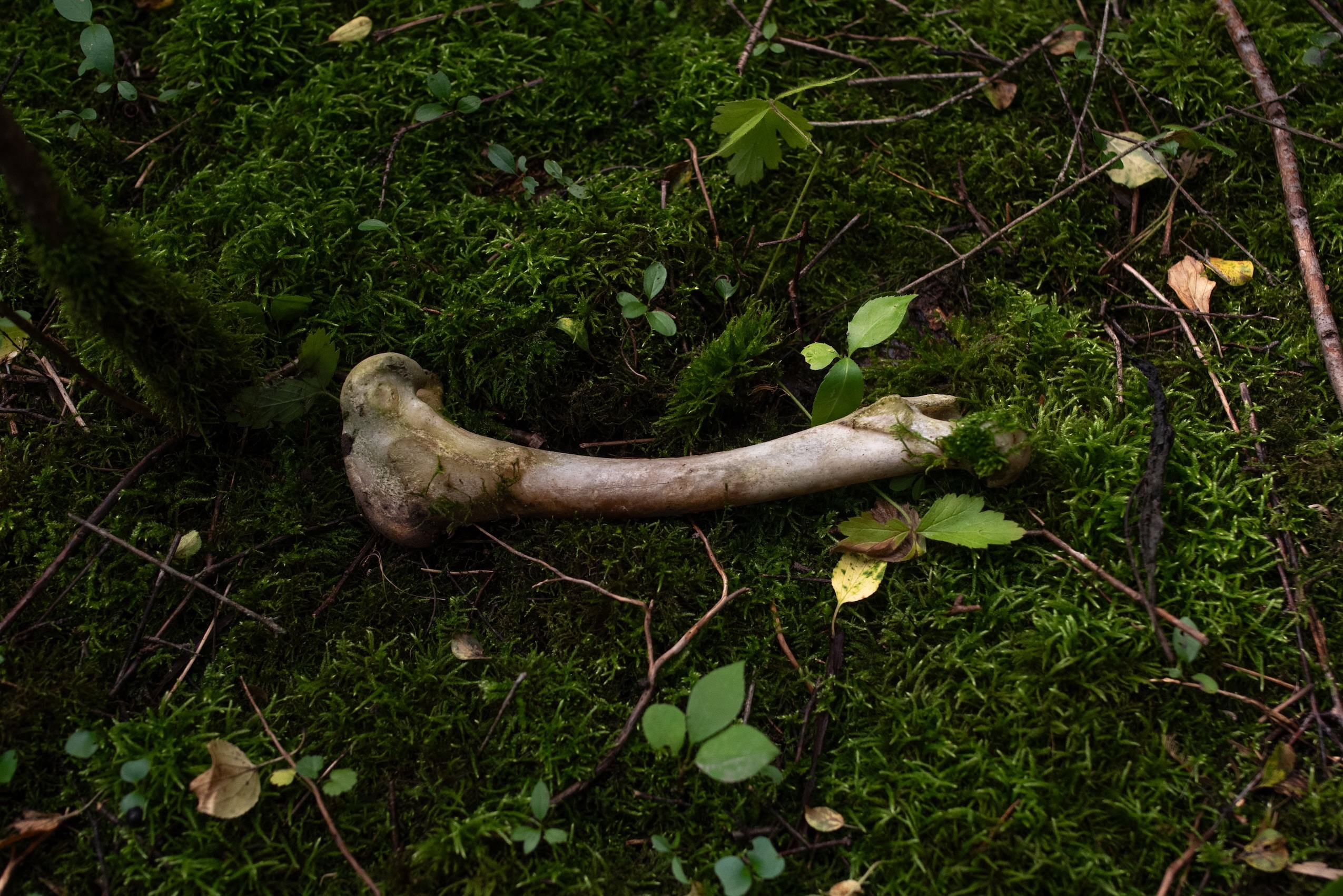
One of several bones found in the forest behind the West entrance of the school.
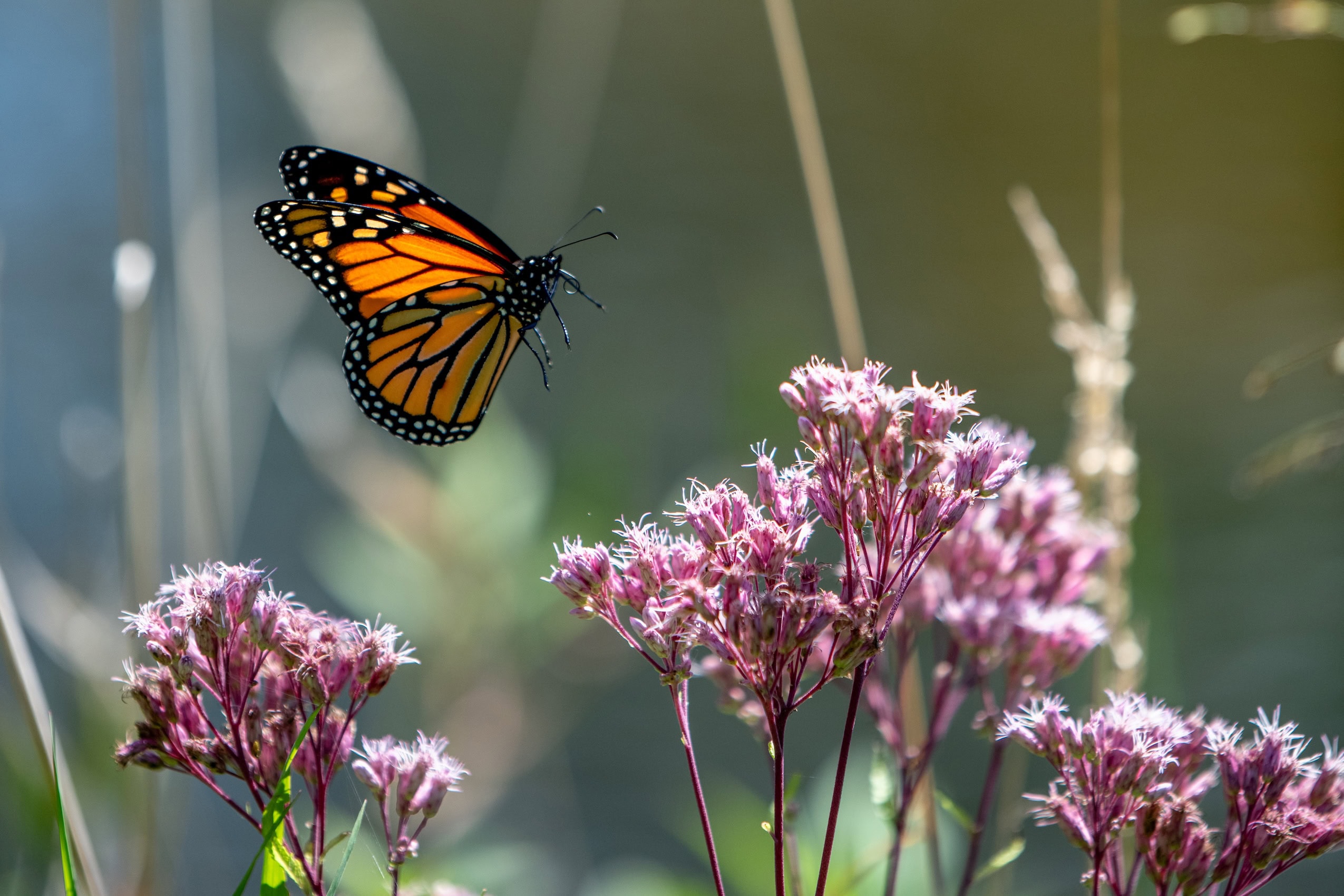
A monarch butterfly approaches swamp milkweed growing along the Salmon River, which runs along Salmon Road, across from the school. Naturalists are working to make trails for the students to explore the river.
Her brother, Rawisaké:rons, a Grade 1 student at the school, says he has found monarch and swallow tail caterpillars while exploring trails with his class and collected crab apples that he brought home for his mom. “I am grateful to be giving my children opportunities to develop a relationship with the land, their language and their culture in a way that feels natural and part of their everyday education,” their mother, Alyssa Bardy, says.
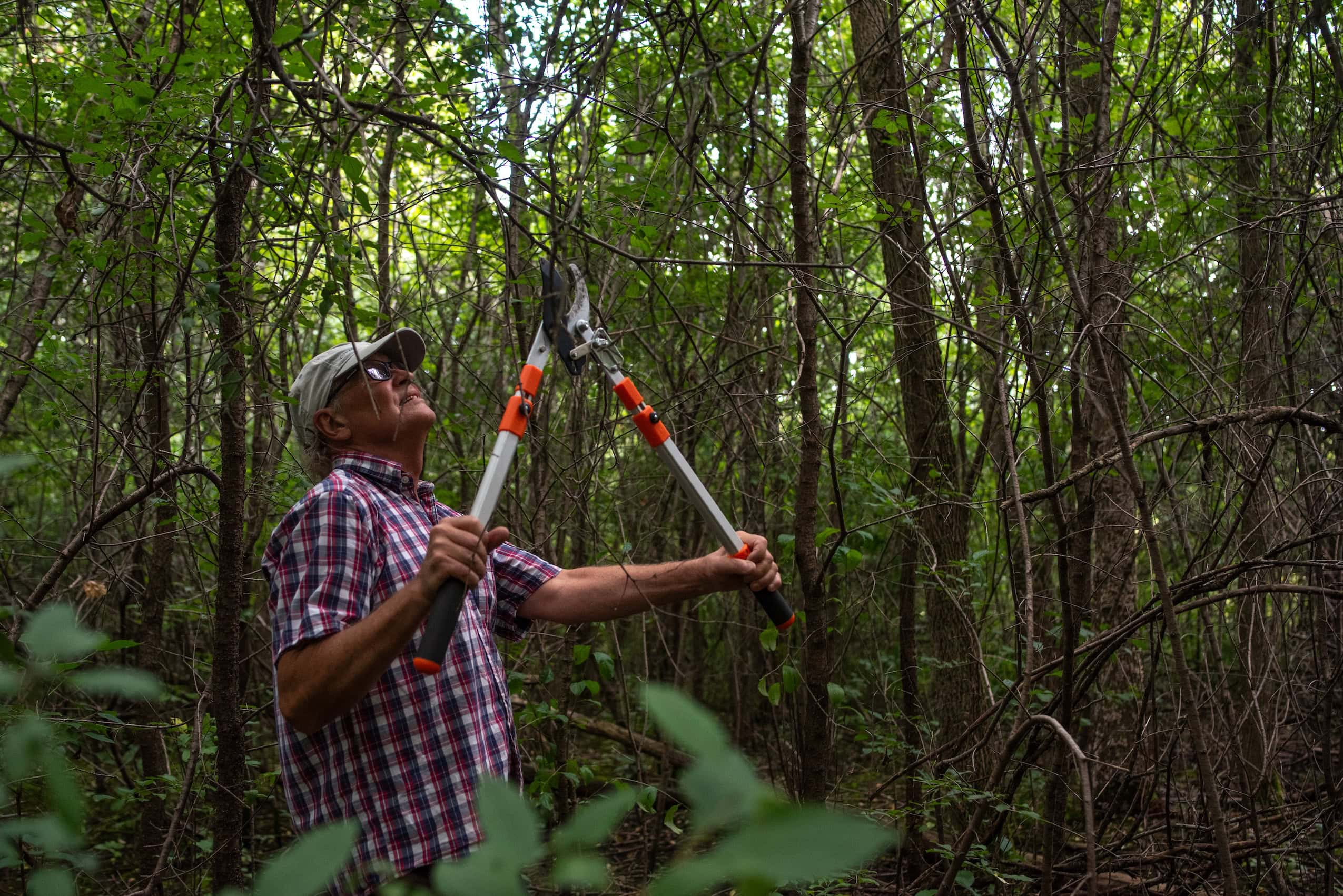
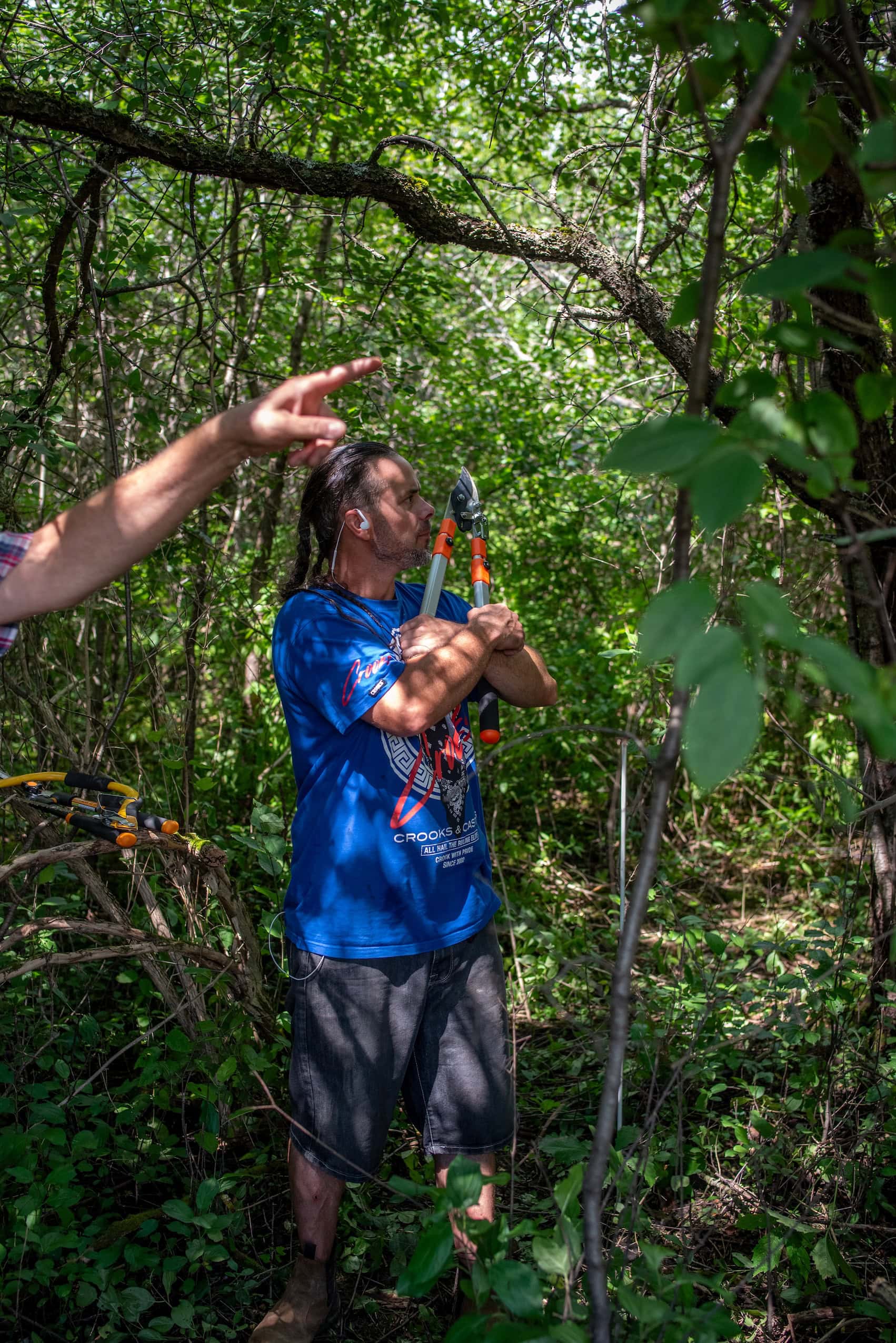
Hilbert Buist and Rahkaratáhkwas clearing trails through the forest for the children to access.
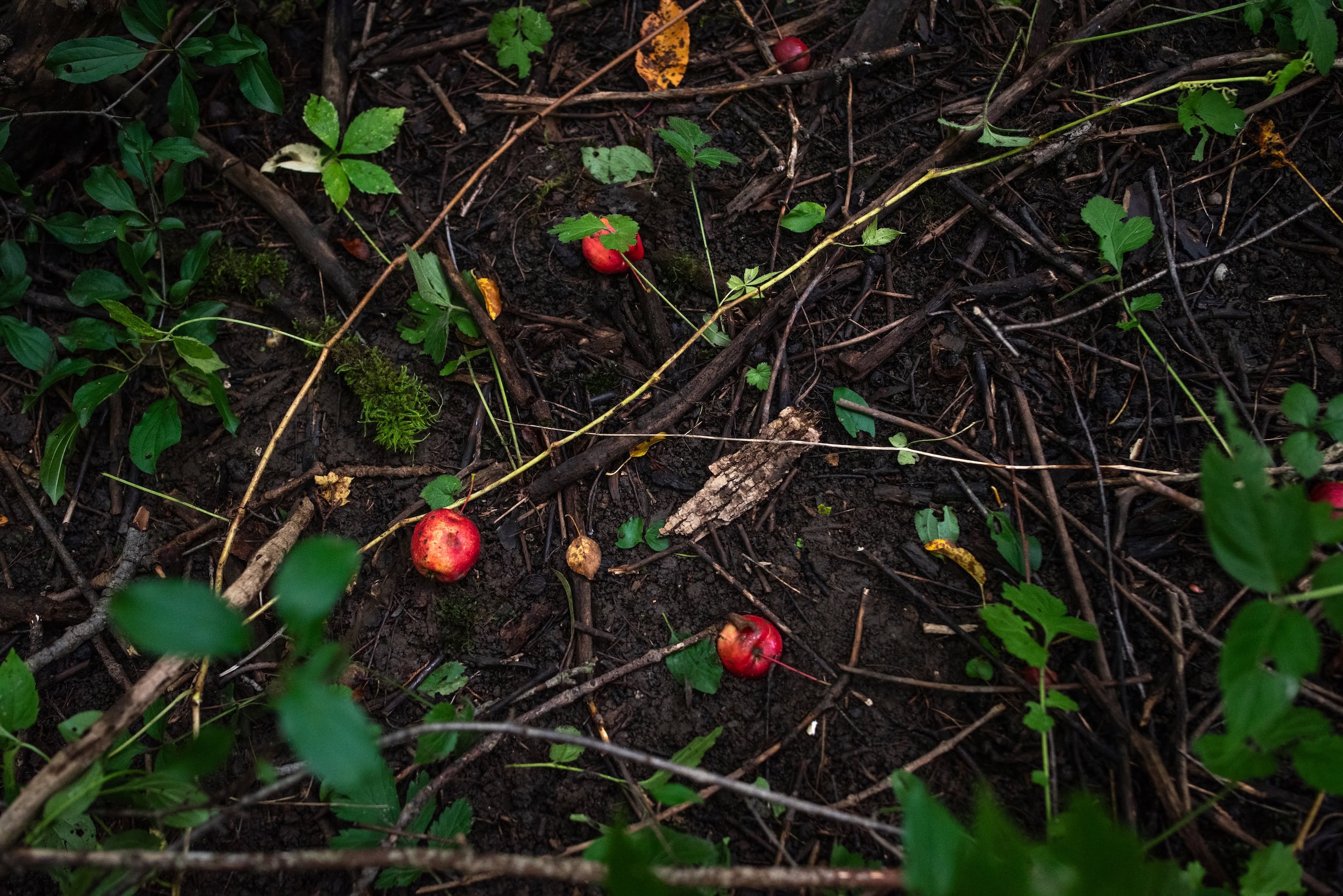
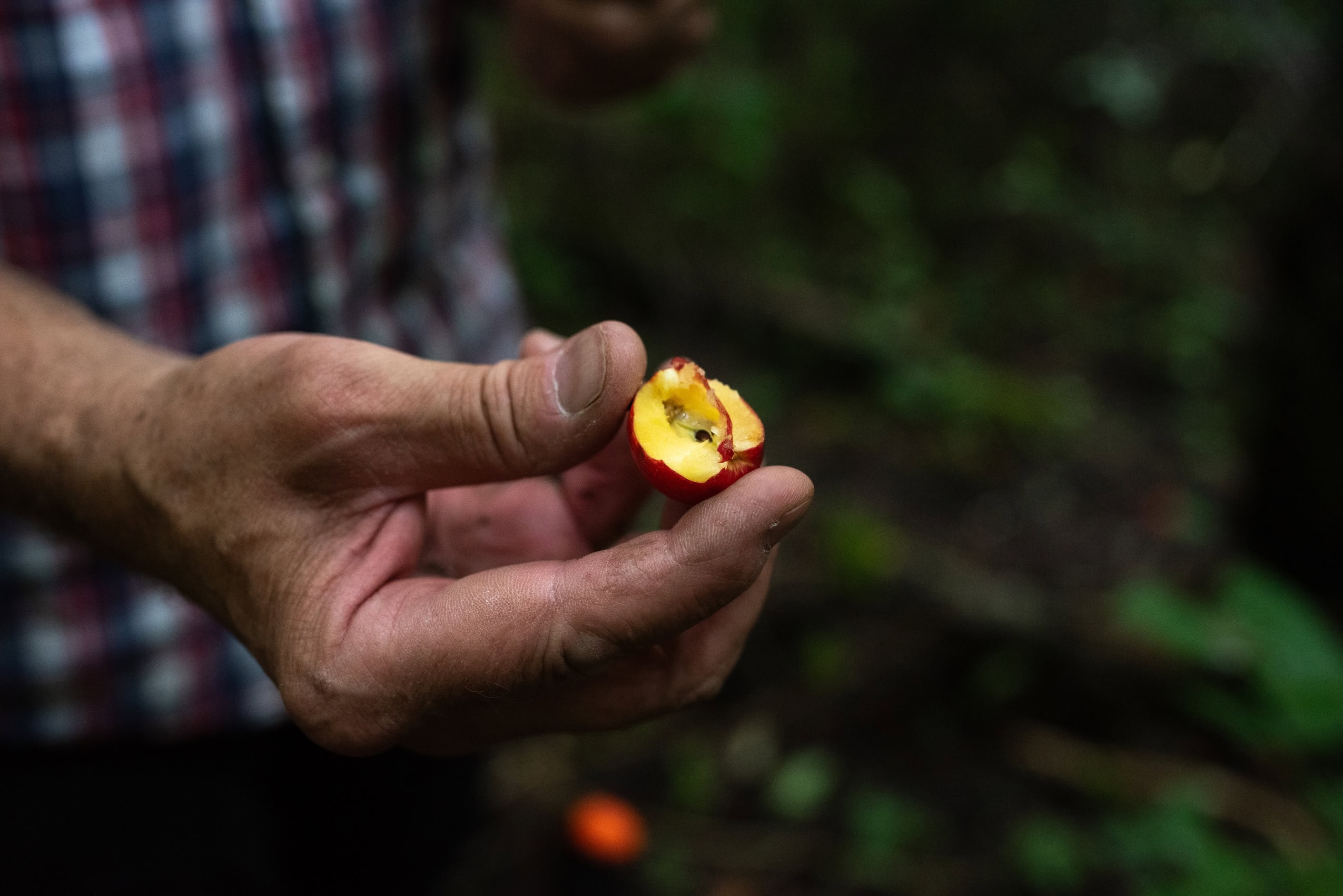
Finding a crabapple tree during their work, they started working to create a seating area for students.
The history of the land
The land the school now sits on is part of the original Mohawk Tract granted to our ancestors in 1793, as part of the Simcoe Deed, after our homelands in the Mohawk River Valley, now present-day New York State, were lost to us in the signing of the 1783 Treaty of Paris. In 1835, the Crown leased 200 acres, including this site, to Turton Penn, a Montréal merchant who subdivided it into parcels. One of these parcels, the language school’s Salmon River Road location, became the site of the Shannonville World’s Fair, from 1856 until its relocation in the late 1990s. While hosting the fair, the land remained undeveloped compared to other parts of the area around Shannonville, Ont., which had a flour mill and cannery, along with homes and businesses. On their first visits to the school’s site, naturalists saw osprey and king fishers flying above, wild parsnip, thistle and buckthorn growing below, and many dead and damaged Manitoba maple trees. They noted that within the last decade, there had been a wet forest of ash trees that had been infected and decimated by the emerald ash borer. But some pockets of biodiversity and health remained such as black walnut trees and cattails in the wet areas.
“I naturally remember historical stories and old Mohawk legends. I find that when you have an item — or in this case, it would be the land itself — to help tell those stories, they’re remembered. It’s like a mnemonic device.” Rahkaratáhkwas Will Fisher, Tsi Tyónnheht Onkwawén:na’s land restoration worker, says. The new building and all of the language school’s programming that will take place on this land are adding to its story. “Now there’s a base of operations for the language, which I think is something we’ve been waiting for,” Rahkaratáhkwas says.
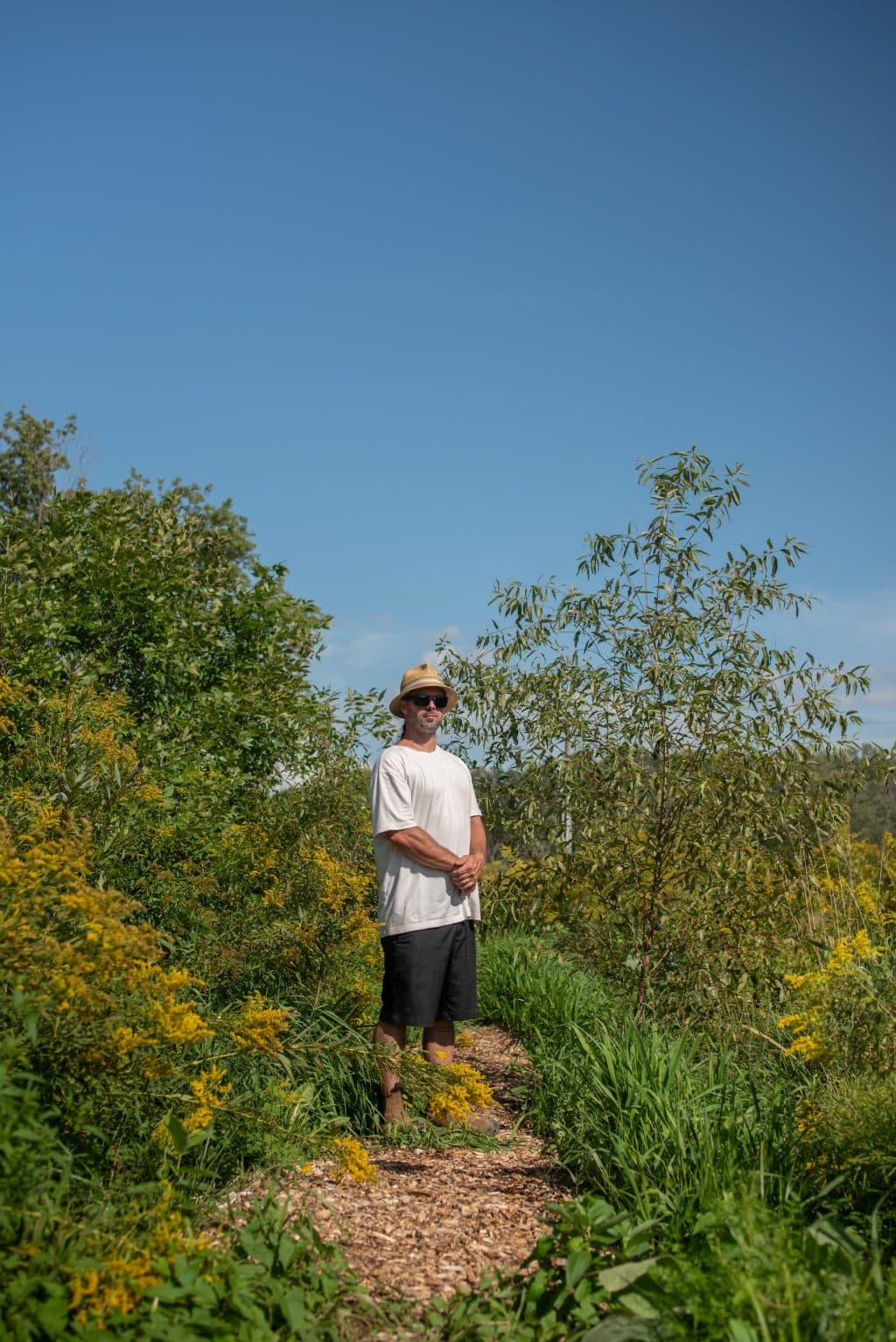
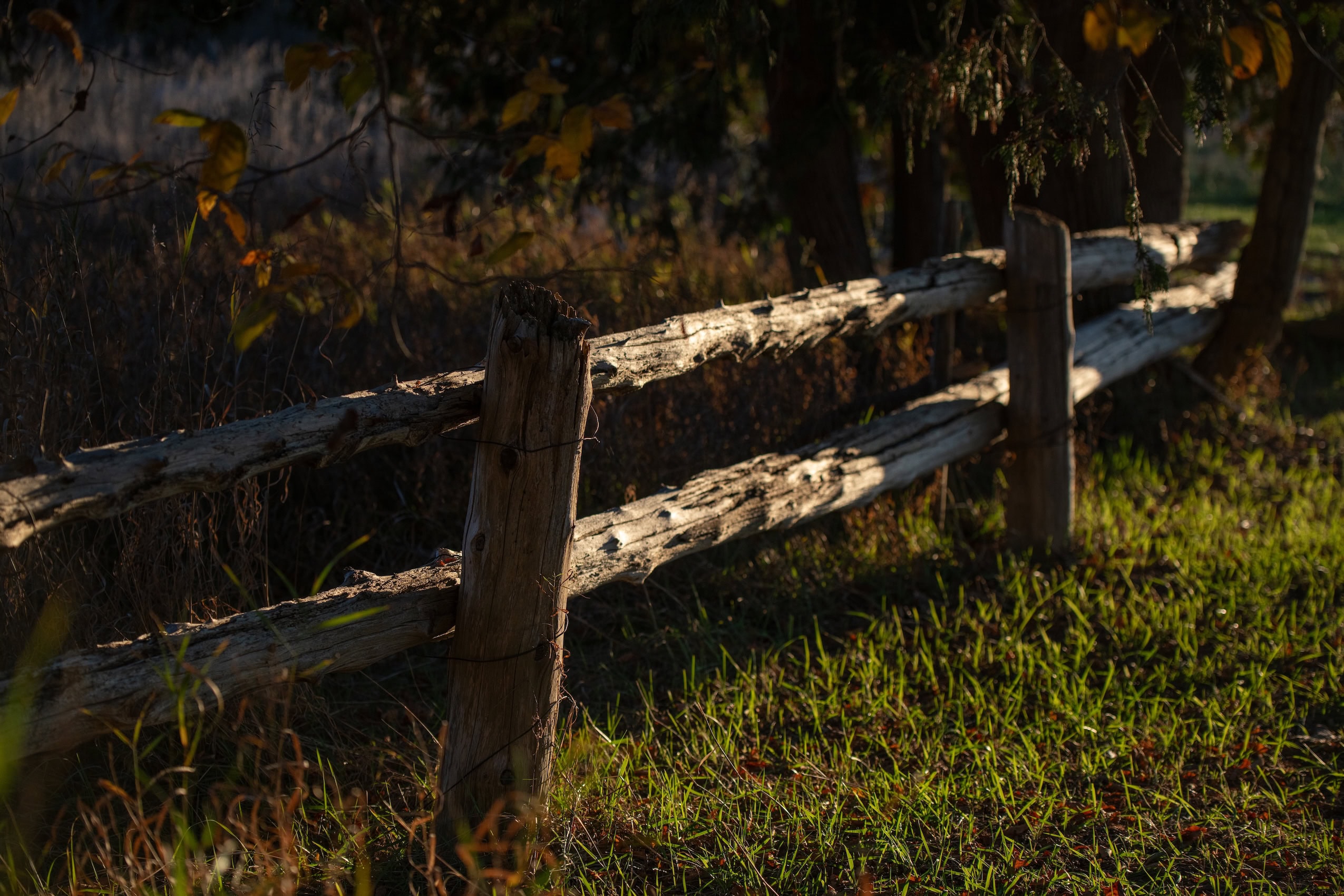
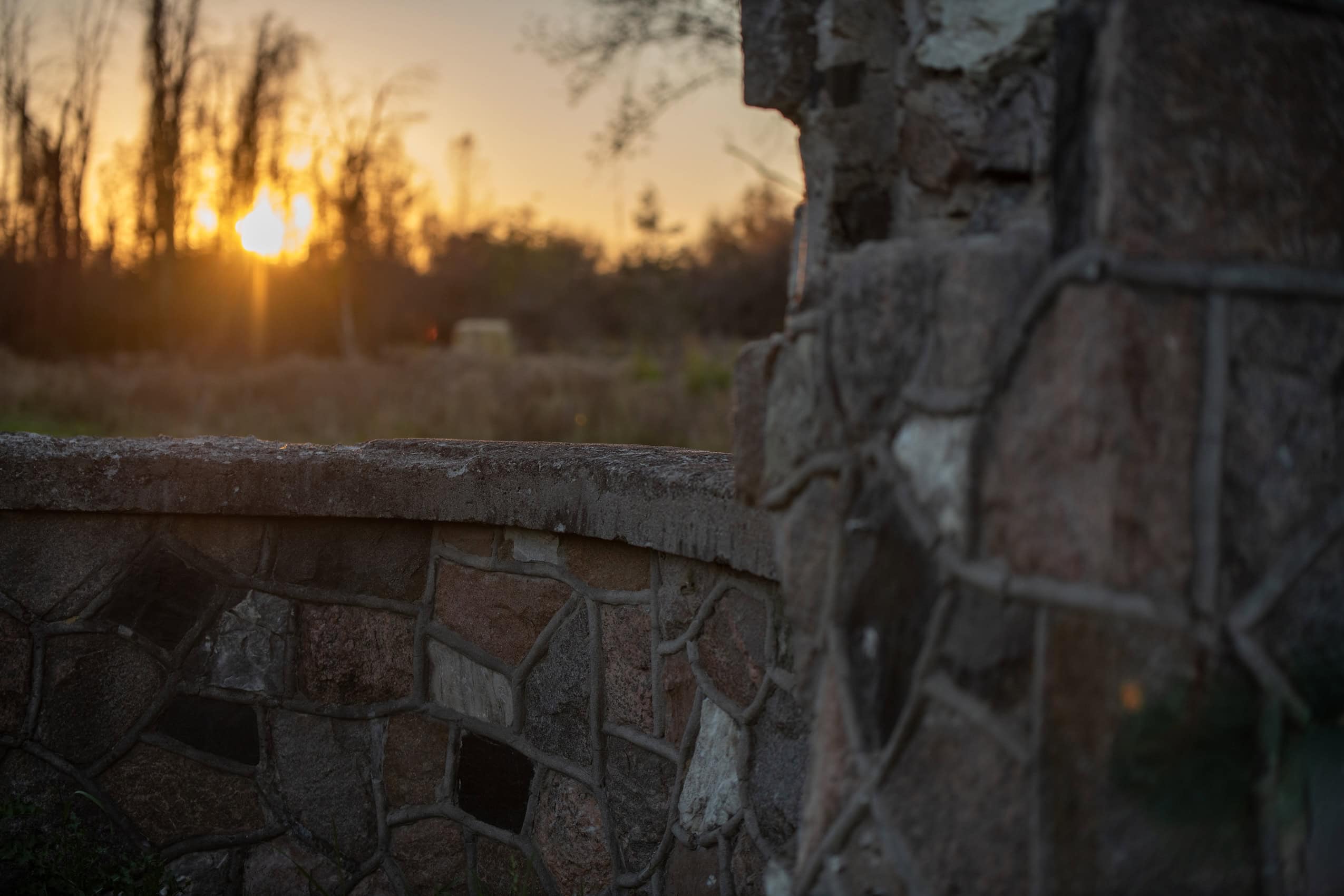
The land restoration team is working to acknowledge the history and all of the memories of this land by observing what has been uncovered in the environmental assessments, little bits of archeology and listening to community stories. Some of the ways they have honoured the past are by planting garden boxes where they found remnants of old community garden plots, keeping the stone pillar entryway and two cement foundations from the Shannonville World’s Fair, as well as the original cedar corral where horses would have been tied. But they’re also aiming to restore the land to the same or a better state than it was before the building’s construction temporarily disrupted the ecosystem.
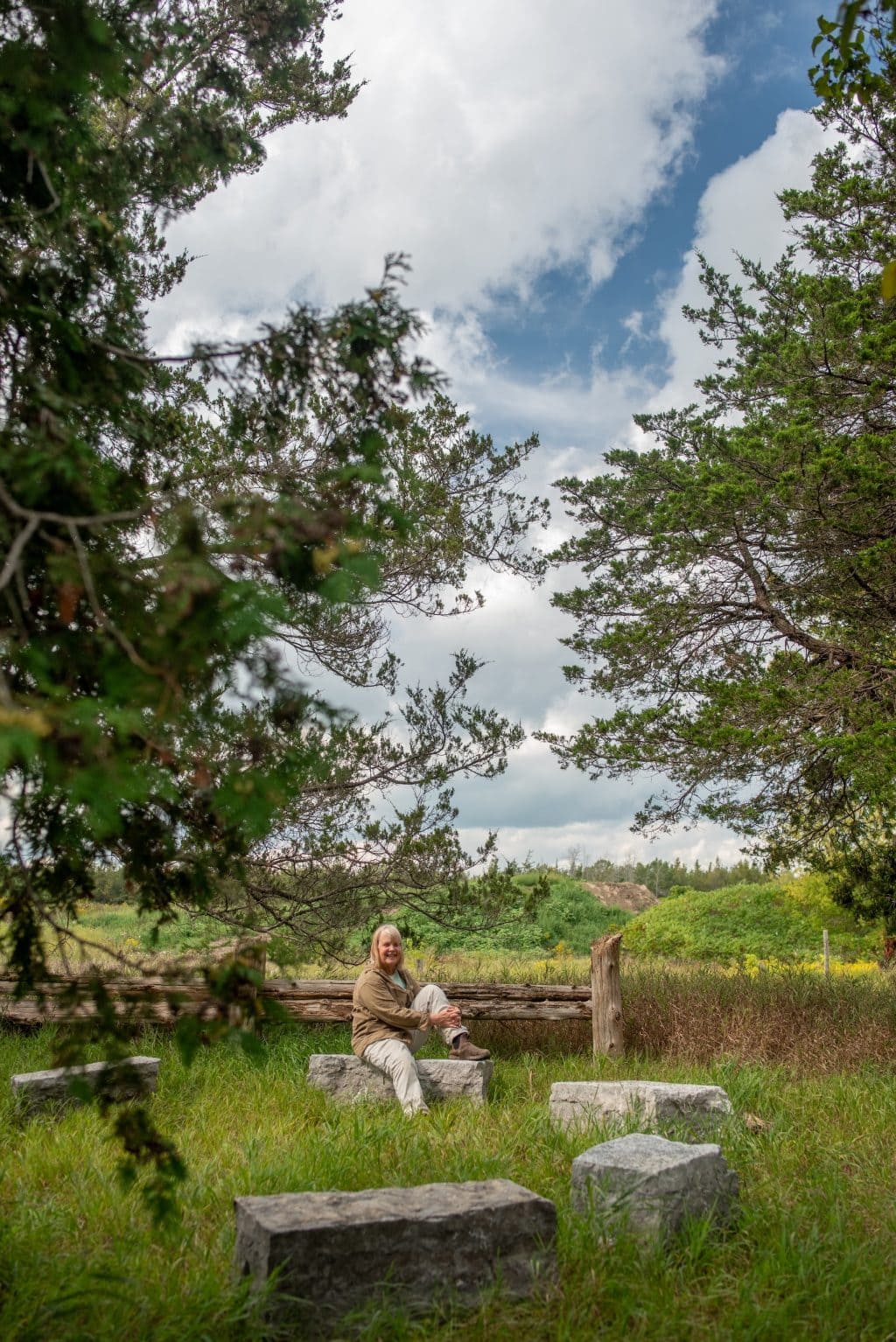
Rena Upitis, founding president of Wintergreen Studios, and professor emerita of education and environmental studies at Queen’s University
In order to accomplish their goals of land and language restoration, Tsi Tyónnheht Onkwawén:na partnered with Wintergreen Studios, an environmental education centre located in South Frontenac, Ont., and received a three-year Ontario Trillium Foundation Grow Grant of $486,000, which began in April 2025. In early 2026, they received additional funding to establish a food forest from the Ecological Farmers Association of Ontario. Throughout this project, Rahkaratáhkwas and Kayenté:ri Emerald LeFort-Cummings, the lead gardener, have been working alongside Wintergreen Studios’ naturalists and educators Rena Upitis, Hilbert Buist and Luke Howie.
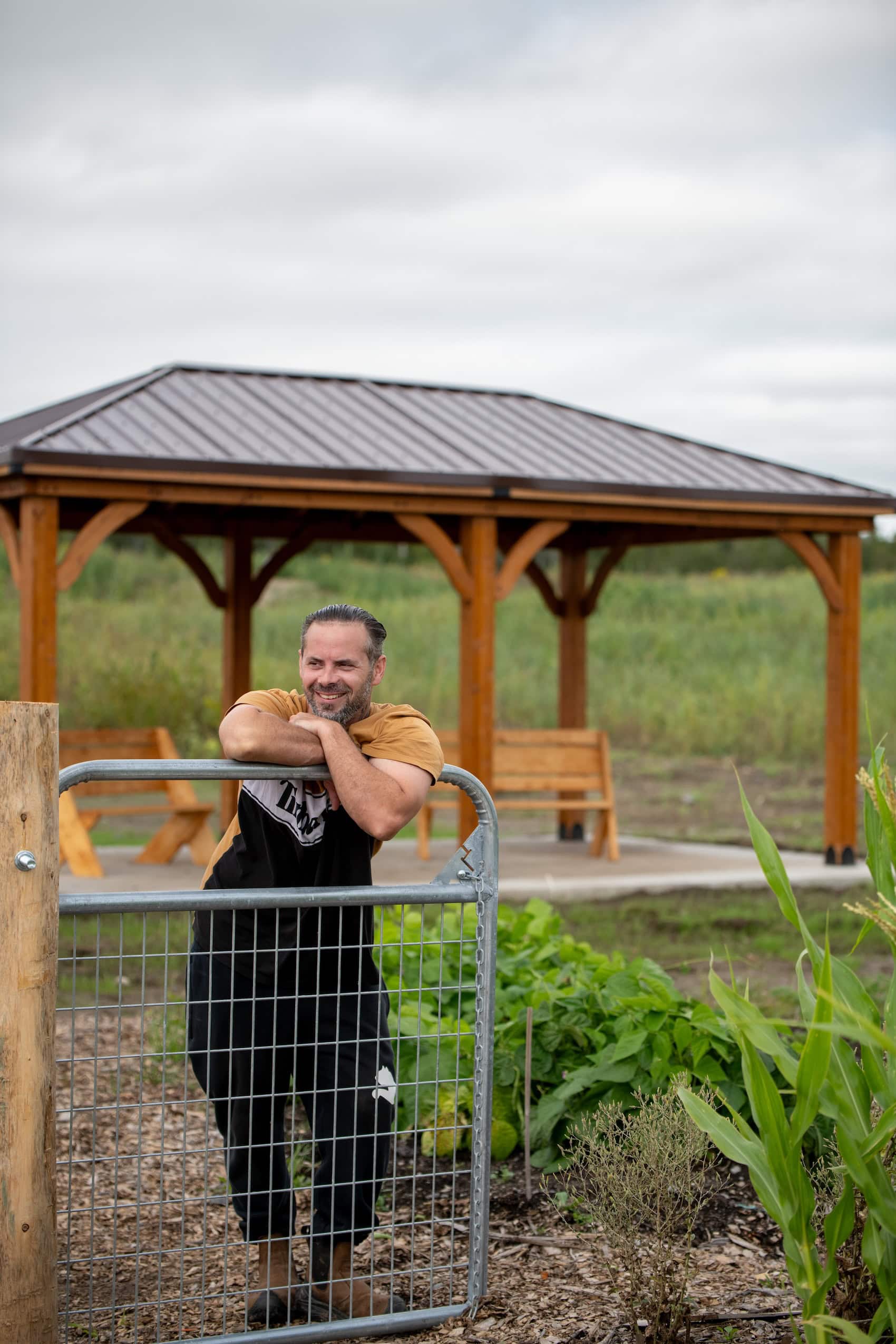
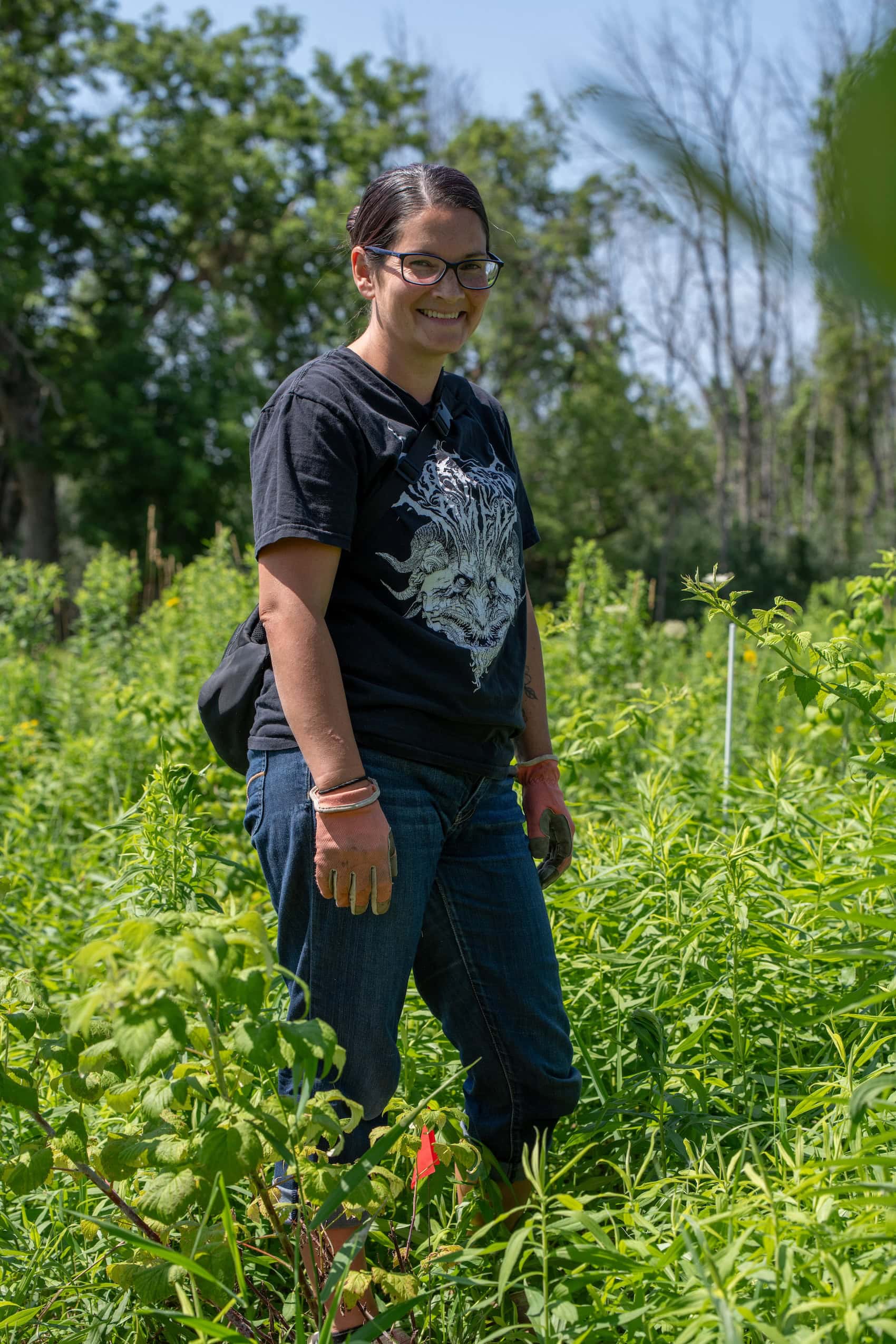
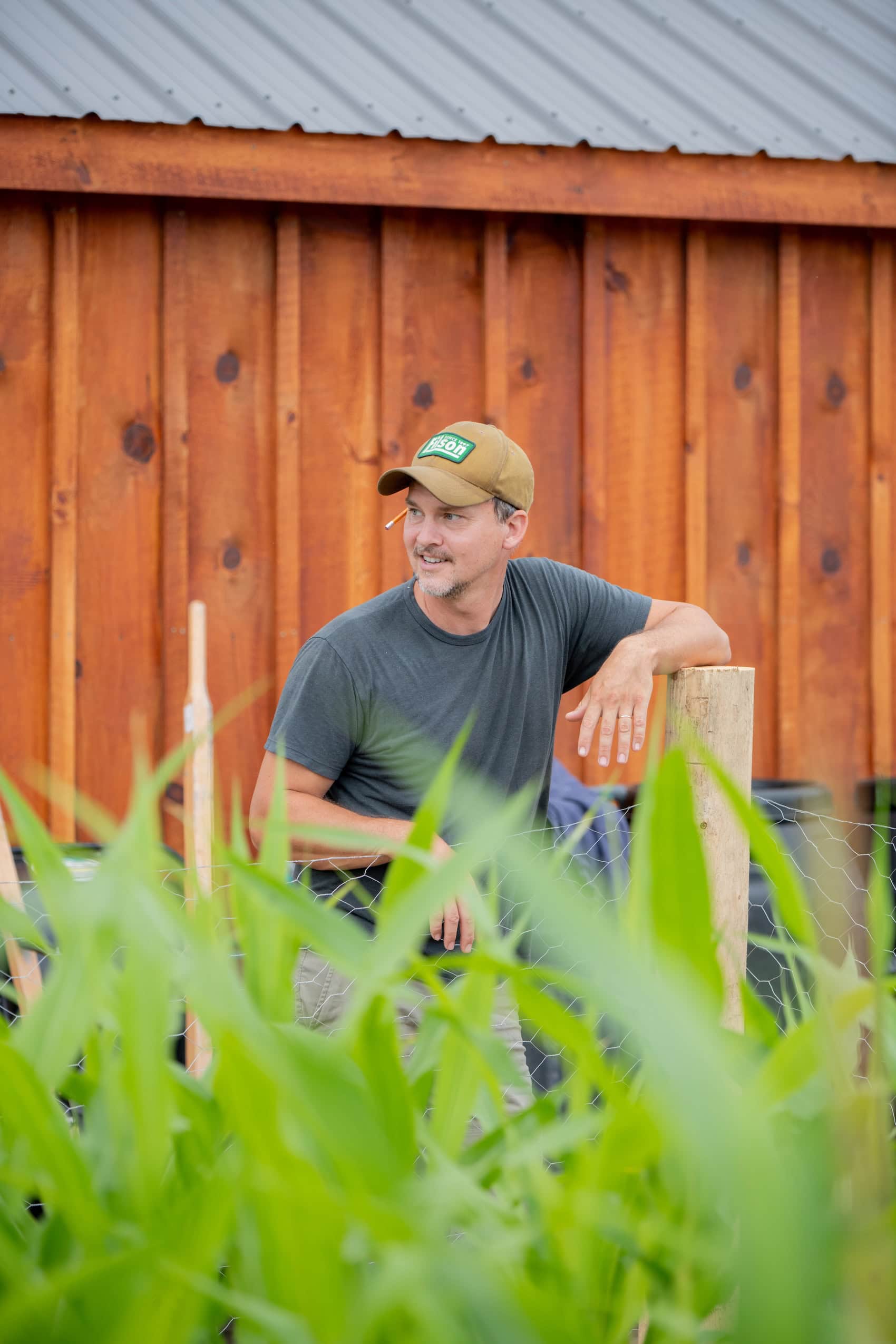
Left to right: Rahkaratáhkwas, Kayenté:ri, Luke Howie.
“It’s a reciprocal [relationship] where their naturalists are helping our staff and our people in our community learn more about the environment … and in turn we are sharing our Indigenous Knowledge and our language with them,” Konwanonhsiyóhstha says.
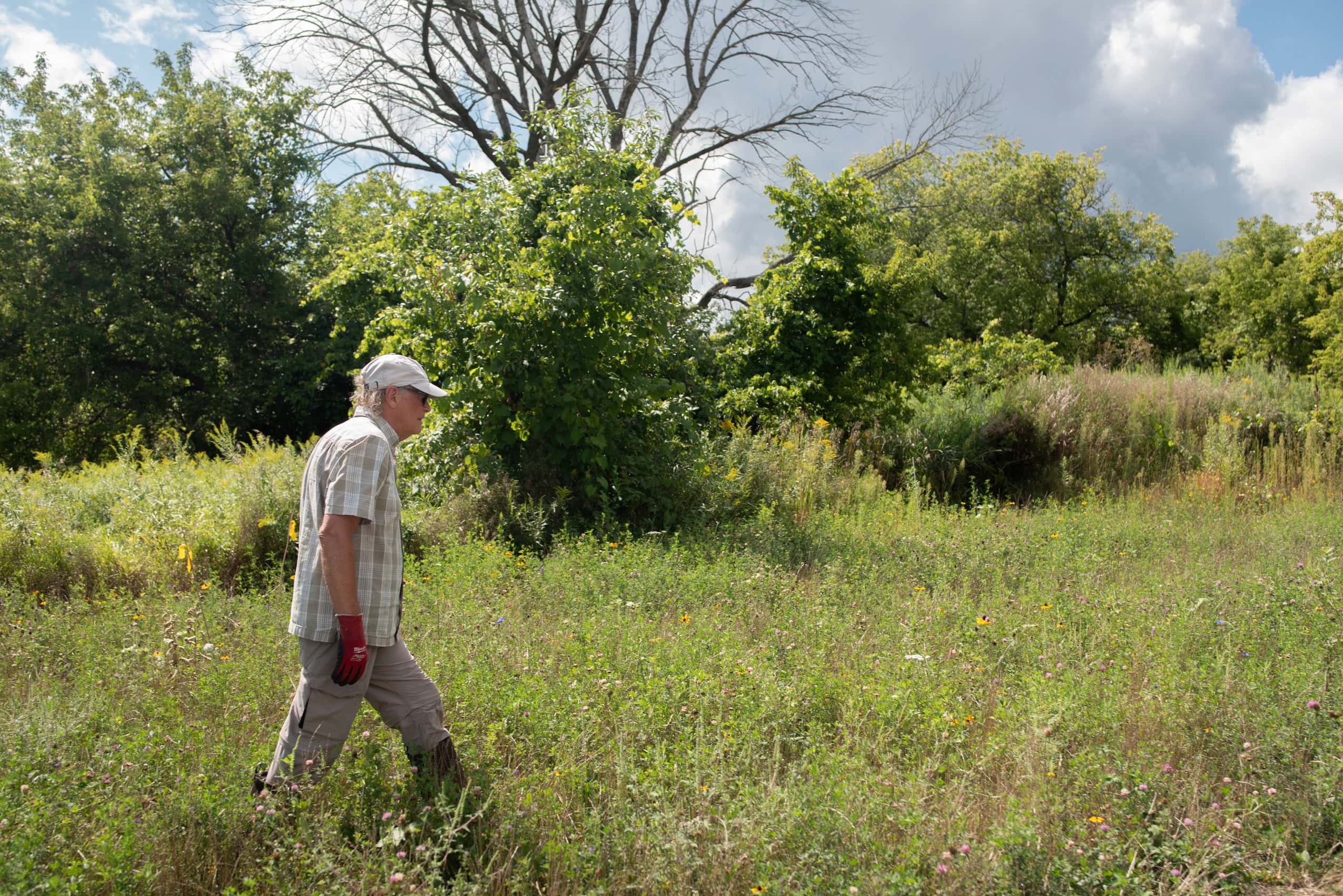
Hilbert Buist walks across the nine-acre property, checking on plantings and documenting species he finds in the iNaturalist app
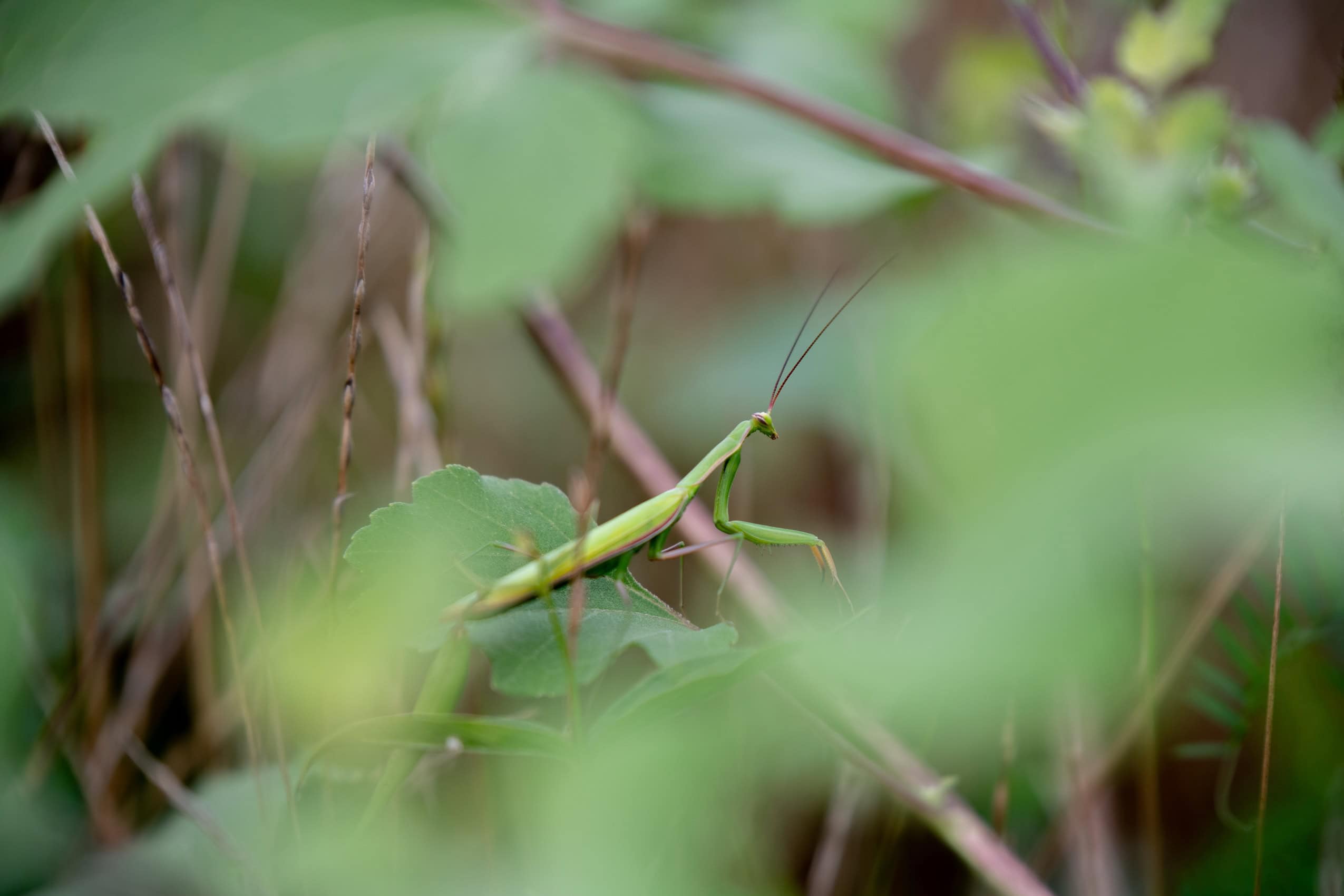
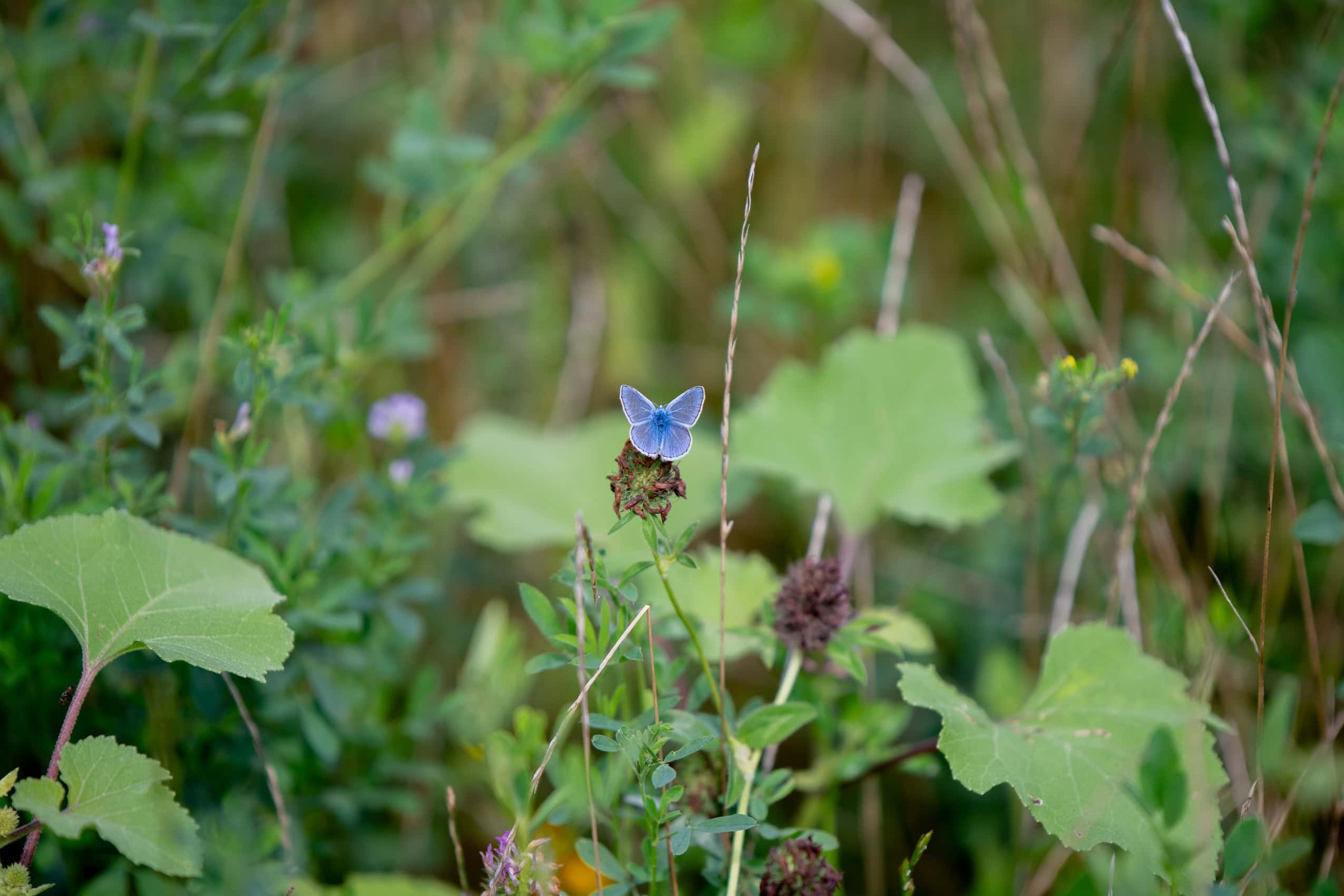
With rubber boots, work gloves and an air of enthusiasm, Buist walks through the property checking on milkweed plantings and pointing out deer tracks, a praying mantis and butterflies. The whole area around Napanee, Ont., is characterized by large sections of alvar woodland, a thin layer of soil on bedrock limestone with trees growing from crevices. The shallow soils make it necessary to augment the soil or put in raised beds and plan for significant spring water run-off and dry summers. The landscape of Tsi Tyónnheht Onkwawén:na has sections of alvar woodland but also pockets of wet forests, meadows, wetlands and old fields, making it a novel ecosystem.
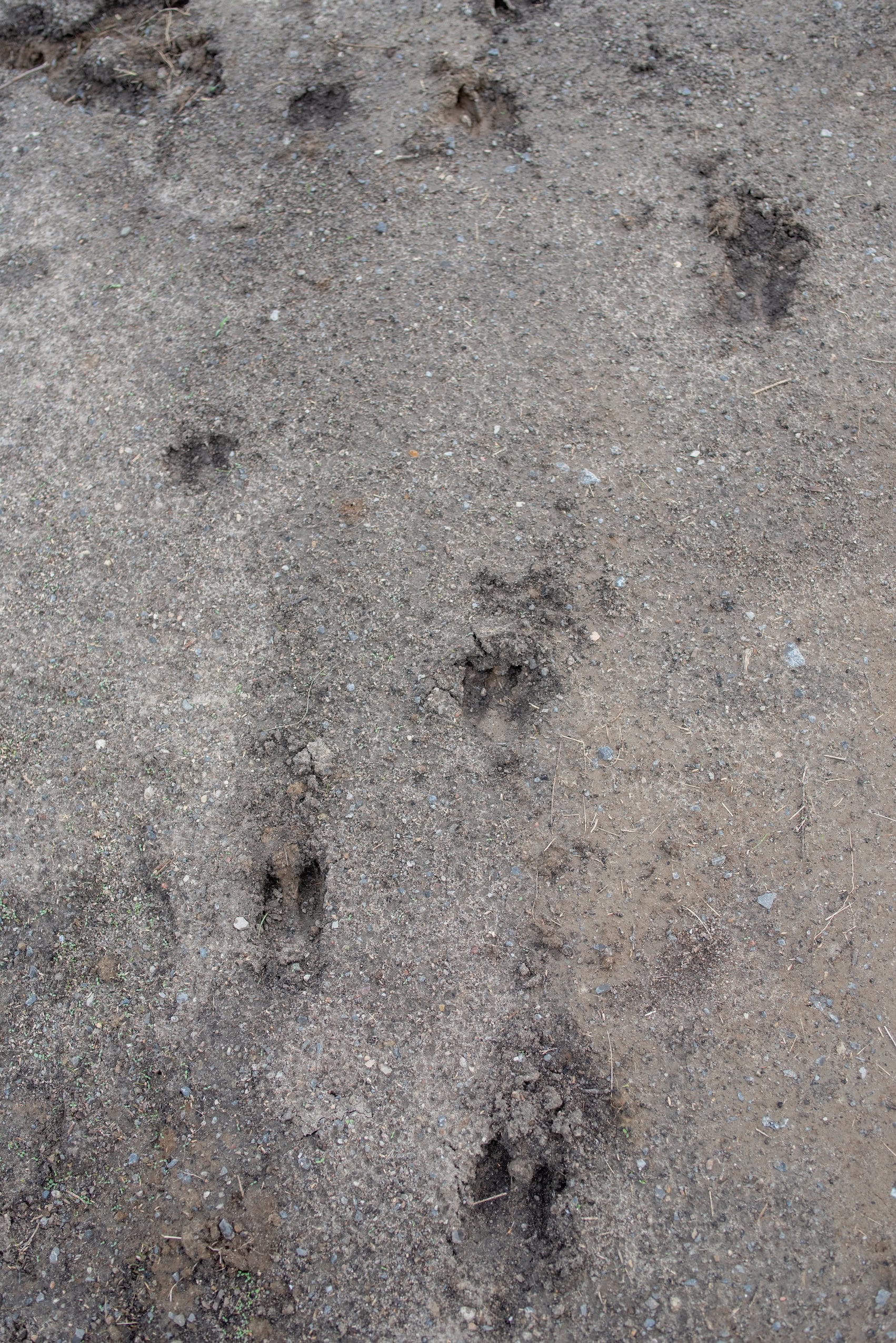
Buist finds deer tracks near the pond
Prior to beginning the plant selection process, naturalists, volunteers and staff documented the species they found on the grounds. In those initial surveys, they documented 178 existing species, including 51 bird species such as northern cardinal, wood thrush, scarlet tanager and indigo bunting.Howie says many approaches to land management or restoration, especially after being wiped clean by construction, start with the idea that humans have all the answers. Instead, the land restoration team has spent time responding to what the land has to share with them. “We’ve come upon areas where currents were growing everywhere, and so we planted more currents. We came across an area where there was spotted jewelweed, so we planted more of that,” he explains. “We’ve tried our best to pick up those cues about what’s happening already in the landscape because we don’t necessarily know any better than nature herself.”
Outdoor learning spaces and food gardens surround Tyendinaga’s language school
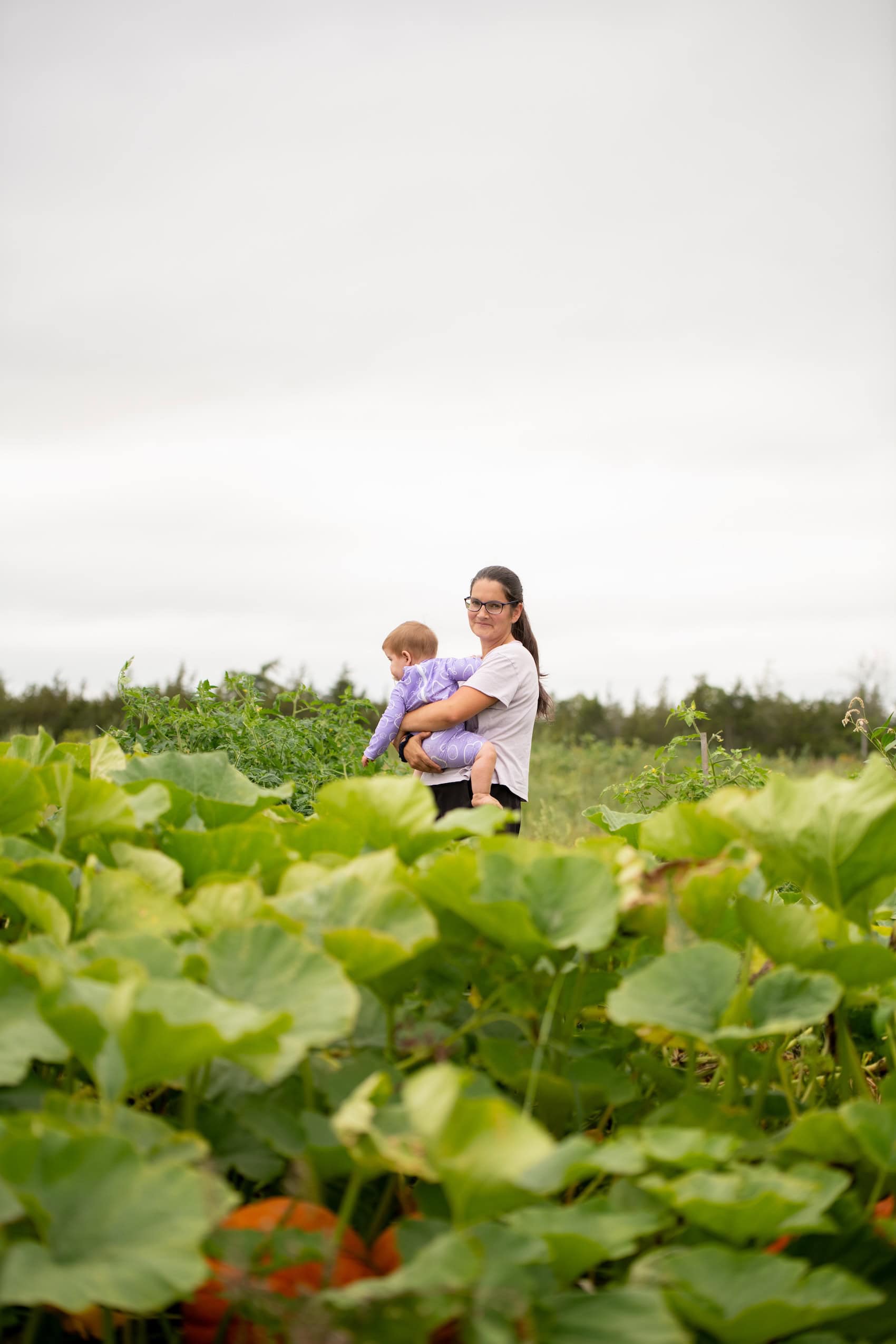
Kayenté:ri and Anonwatá:se walking through the red kuri squash patch.
Walking through the vegetable garden with her daughter, Anonwatá:se**,** on her hip, Kayenté:ri checks on the crops: strawberry popcorn, Duane Baptiste bush beans, red kuri squash, tomatoes, carrots, snow peas, watermelon. The garden has been designed with wide pathways to allow groups of students to move through, learning from the food plants throughout the seasons. Another goal of hers is to work towards food sovereignty within the community by running educational workshops on seed saving and preserving. “We’re closing the loops on the system so that we’re growing our own seed, and we’re not having to go outside anywhere to buy it to grow food next year,” she says.
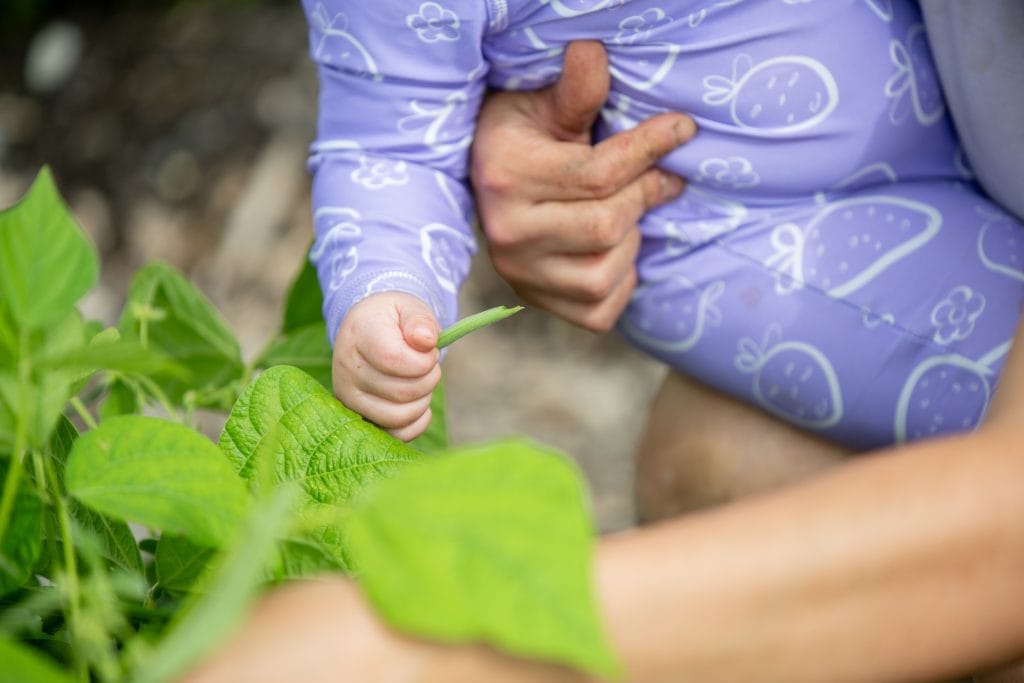
Anonwatá:se enjoys a fresh bean from the gardens.
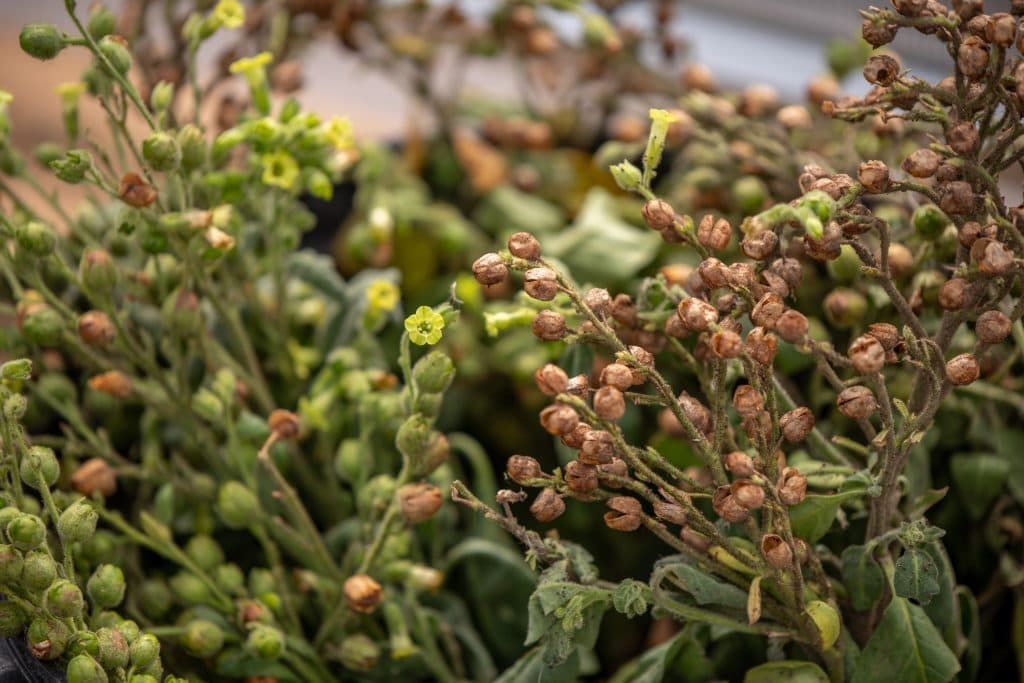
Seeding oyen’kwa’ón:we, traditional tobacco harvested from the gardens.
There are abundant outdoor learning spaces for the children, with circles of tree stumps for chairs, paths to explore the surrounding forest, and mounds left from the construction will become a toboggan hill. But the team has also focused on creating spaces for more-than-human relatives: habitats using brush piles that small animals can travel to evade predators, leftover vegetation for overwintering solitary bees, stone hibernacula for snakes, a vernal pond for salamanders and frogs and nesting boxes to supplement the large Manitoba maples that have nesting cavities in them.
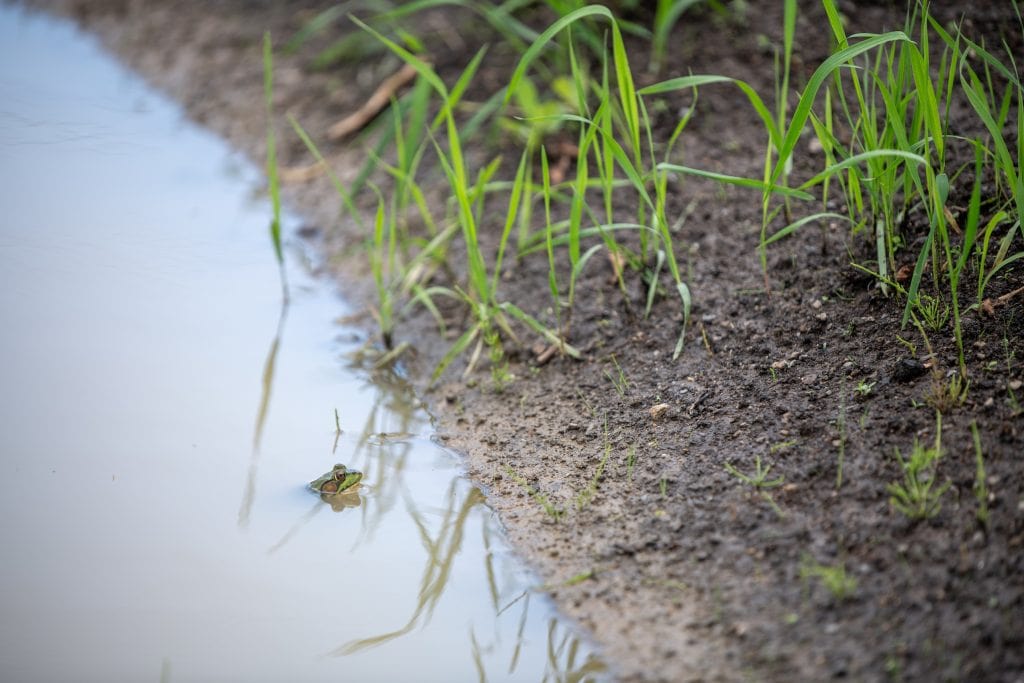
A green frog in the vernal pond after a rain
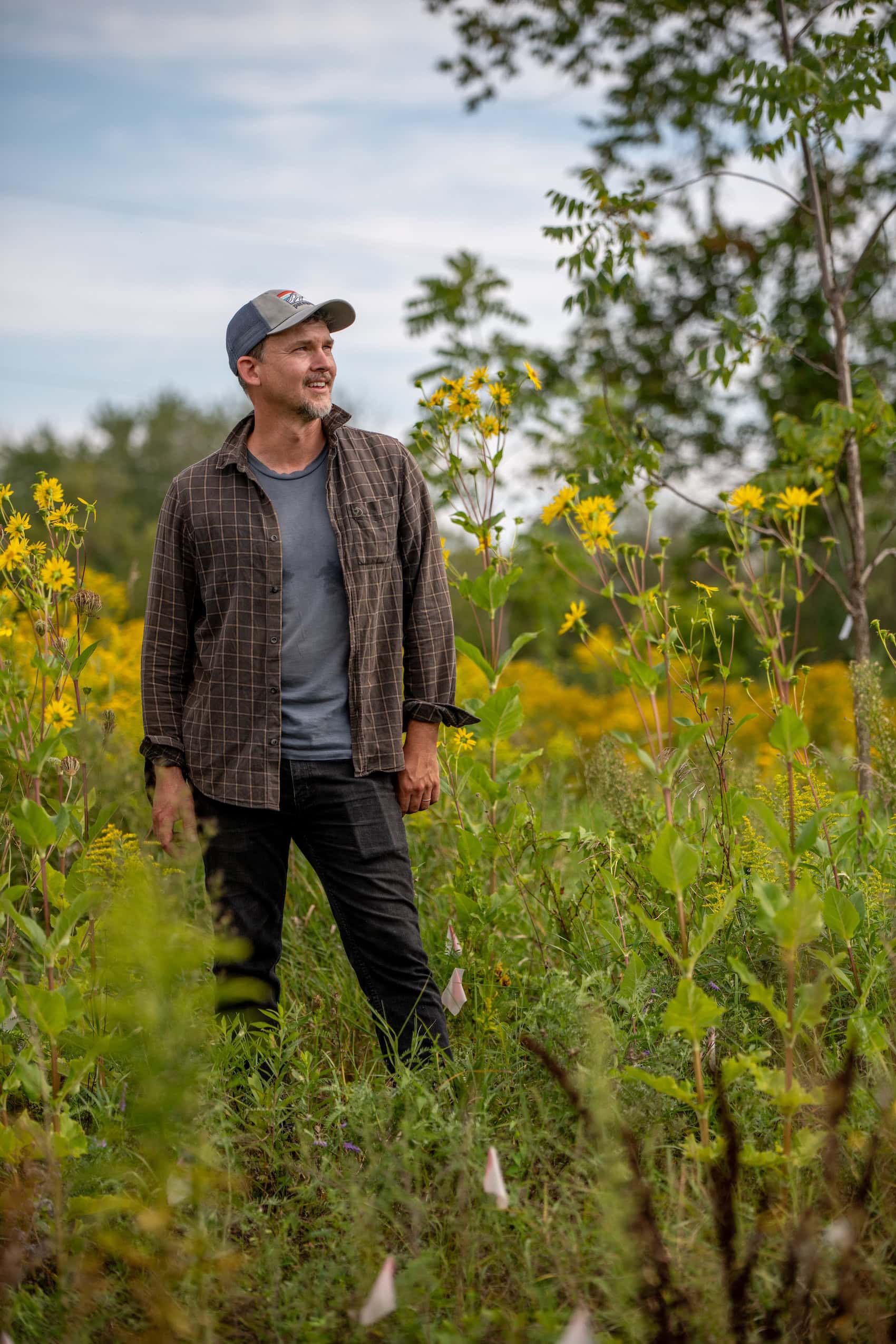
“If you walk through that landscape, it is profoundly messy and complicated and imperfect, but it does have that integrity to it of not having just wiped the slate clean and started over again,” Howie says, adding that one of his favourite plantings is a bright yellow flowering prairie species called a cup plant. Its leaves join together to form a small “cup” that gathers rainwater for birds and insects. “I’ve already been watching pollinators go to drink from these little cups on the plant.”
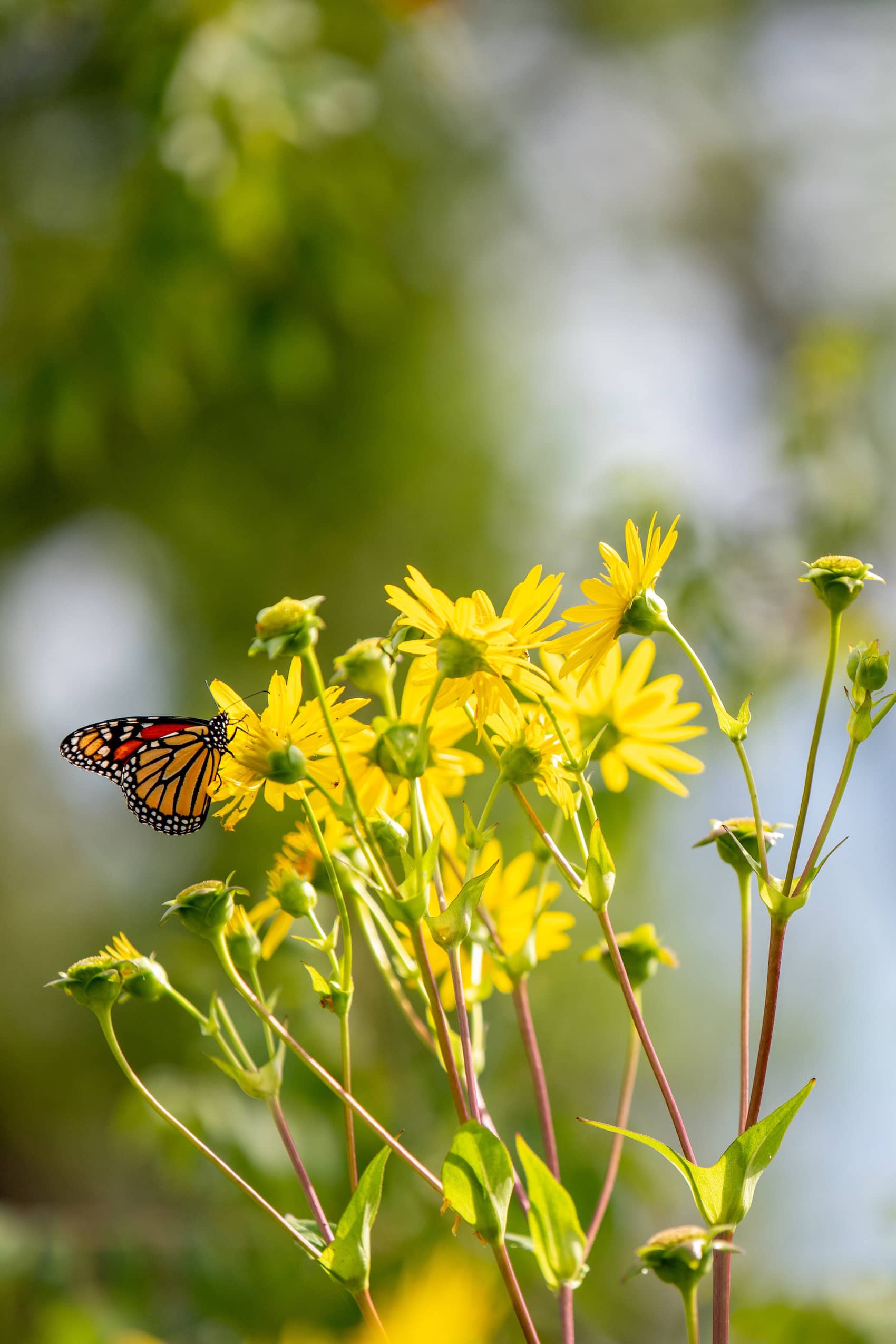
The replanting efforts were, in part, informed by studies from the environment department of the Mohawks of the Bay of Quinte, completed before the land lease and build. One 2022 study focused specifically on milkweed and monarchs, observing 5,499 common milkweed plants and 26 monarch butterflies over the course of two weeks.
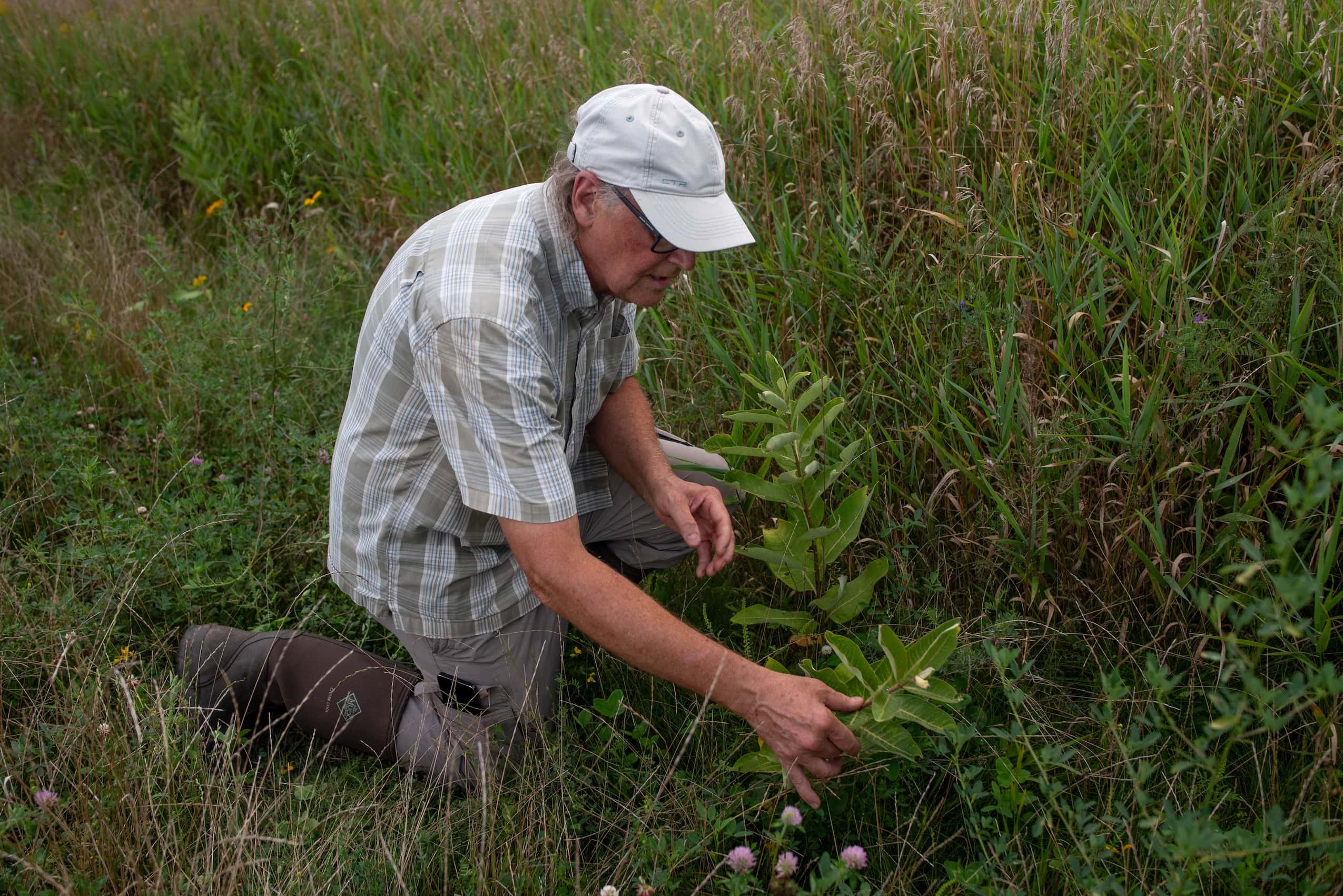
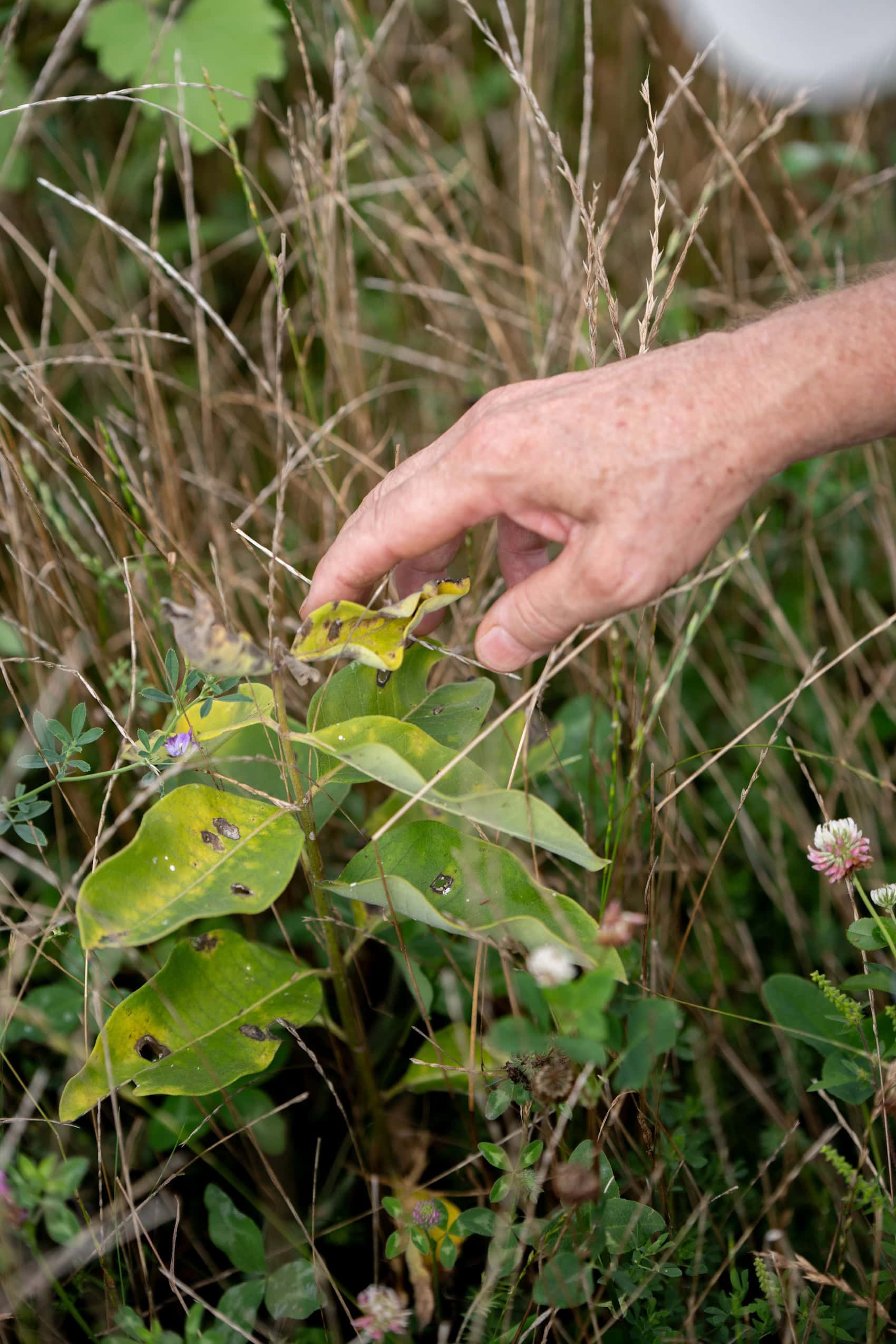
Buist checks milkweed plants for monarch eggs
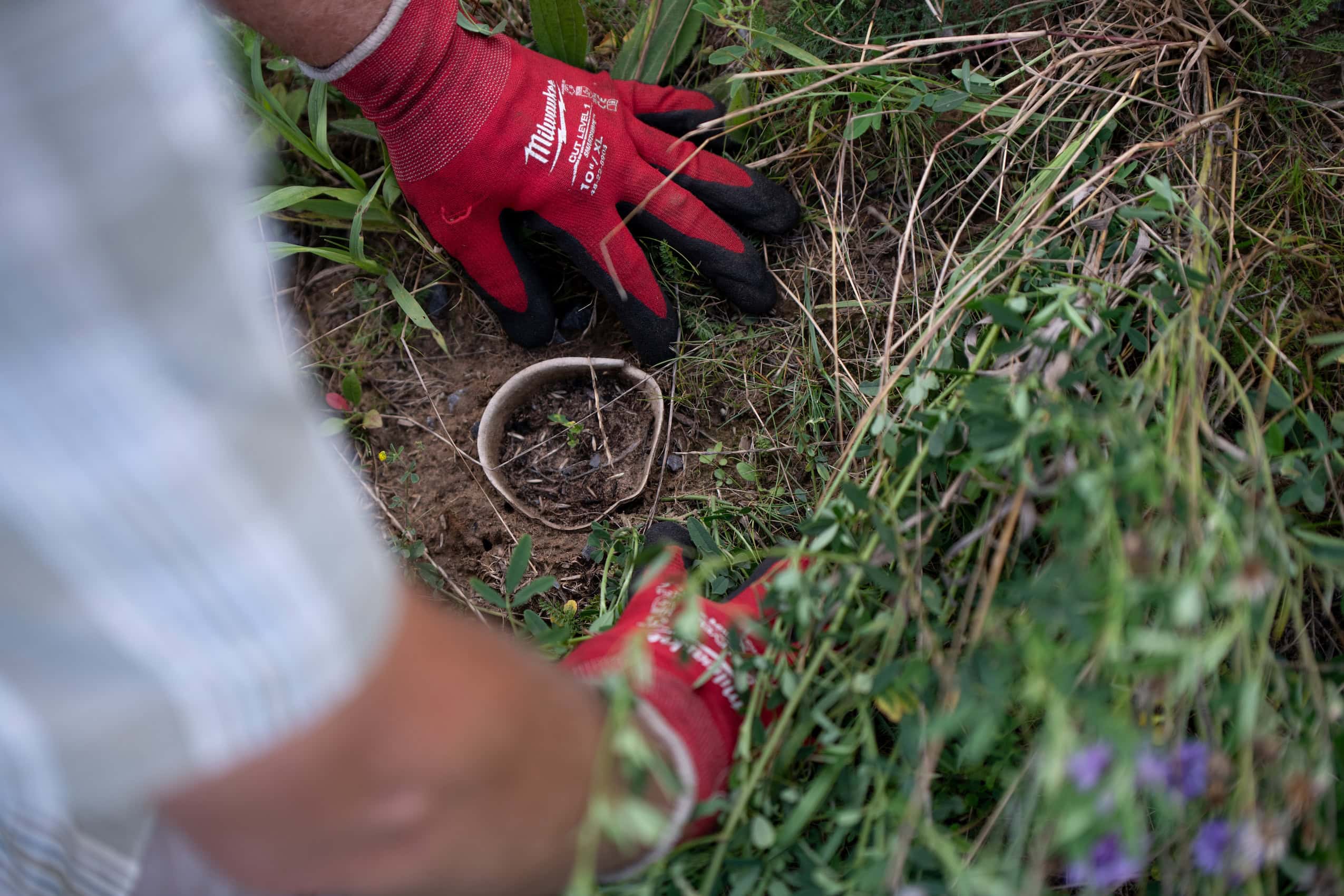
Buist checks on the growth of milkweed plantings.
“My commitment back to the environmental department in the community was, whatever we displace by the footprint of this building, we will replace and make it better,” Konwanonhsiyóhstha says. During the first year of the land restoration process, which ended in April, 605 volunteer participants and staff across various workshops and restoration projects — a significant number of whom were youth — planted more than 2,235 plants, including 141 new species. Some of the species planted include white yarrow, echinacea, service berries, pawpaw and hickory and hazelnut trees, as well as thousands of swamp and common milkweed seeds.
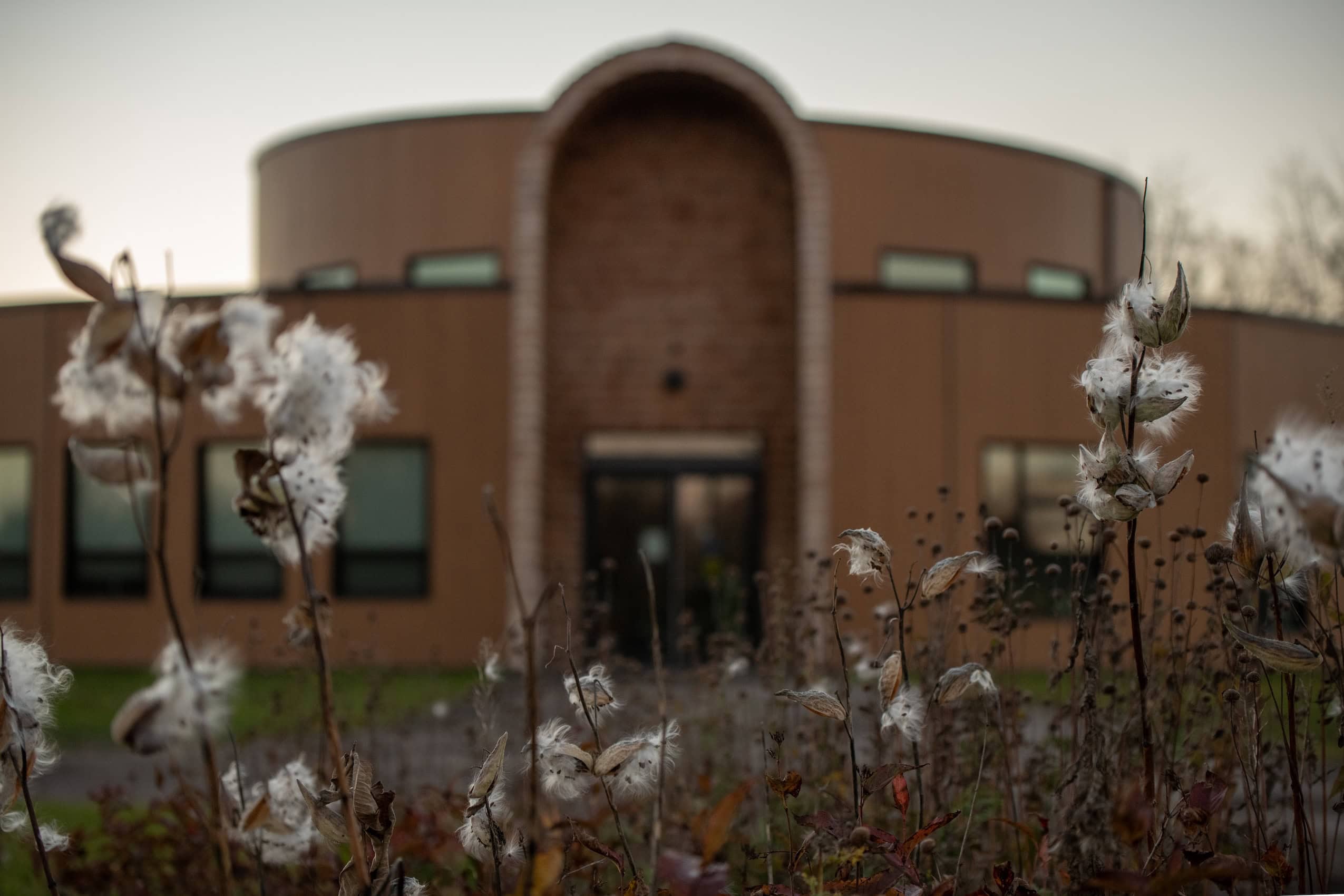
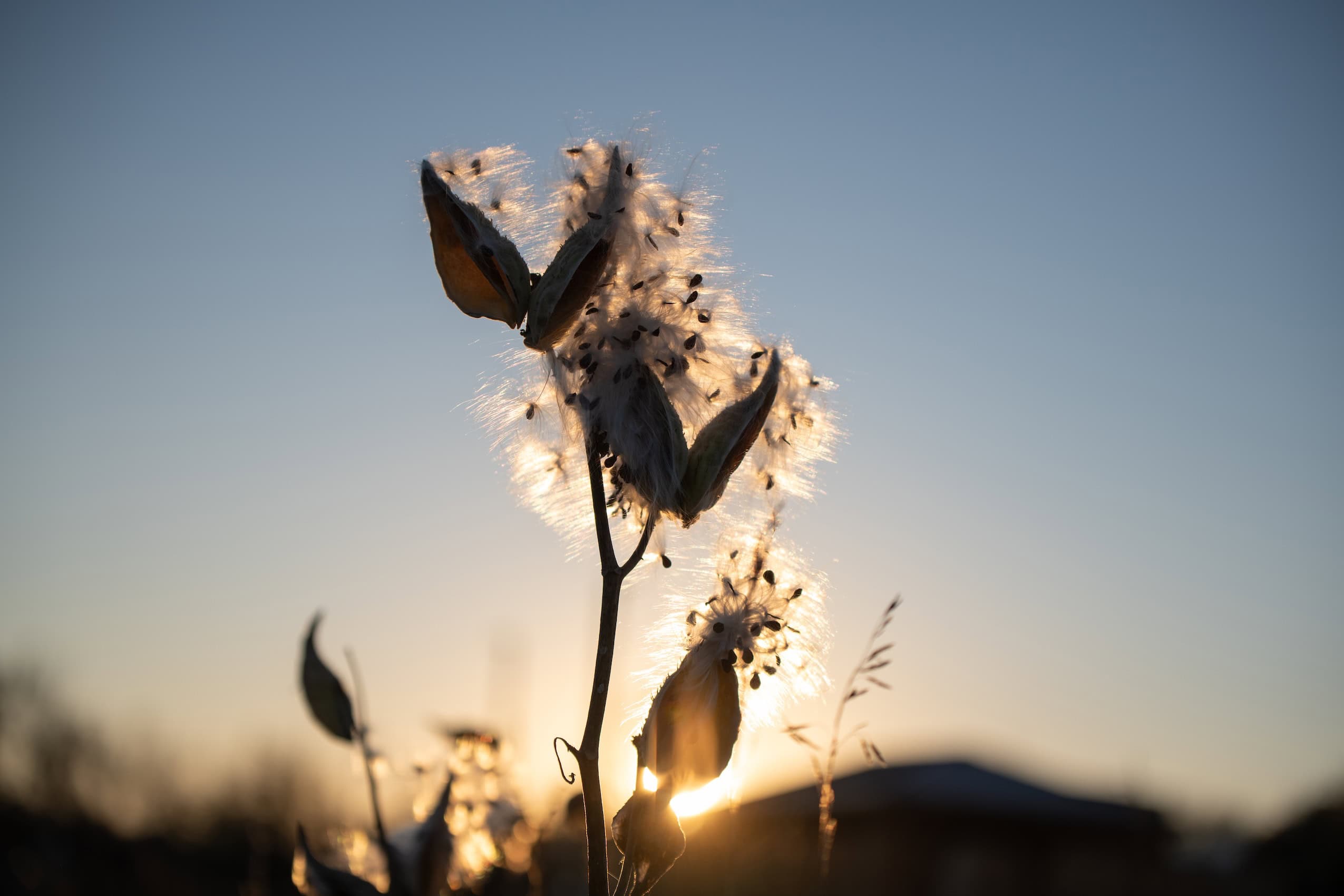
Milkweed plants surrounding the school going to seed in October
Future plans for the site include building a replica longhouse and the development of a food forest. Their goal is to become a hub for eco-tourism and outdoor education, and a place for Indigenous and non-Indigenous people to learn about Rotinonhsyón:ni culture.
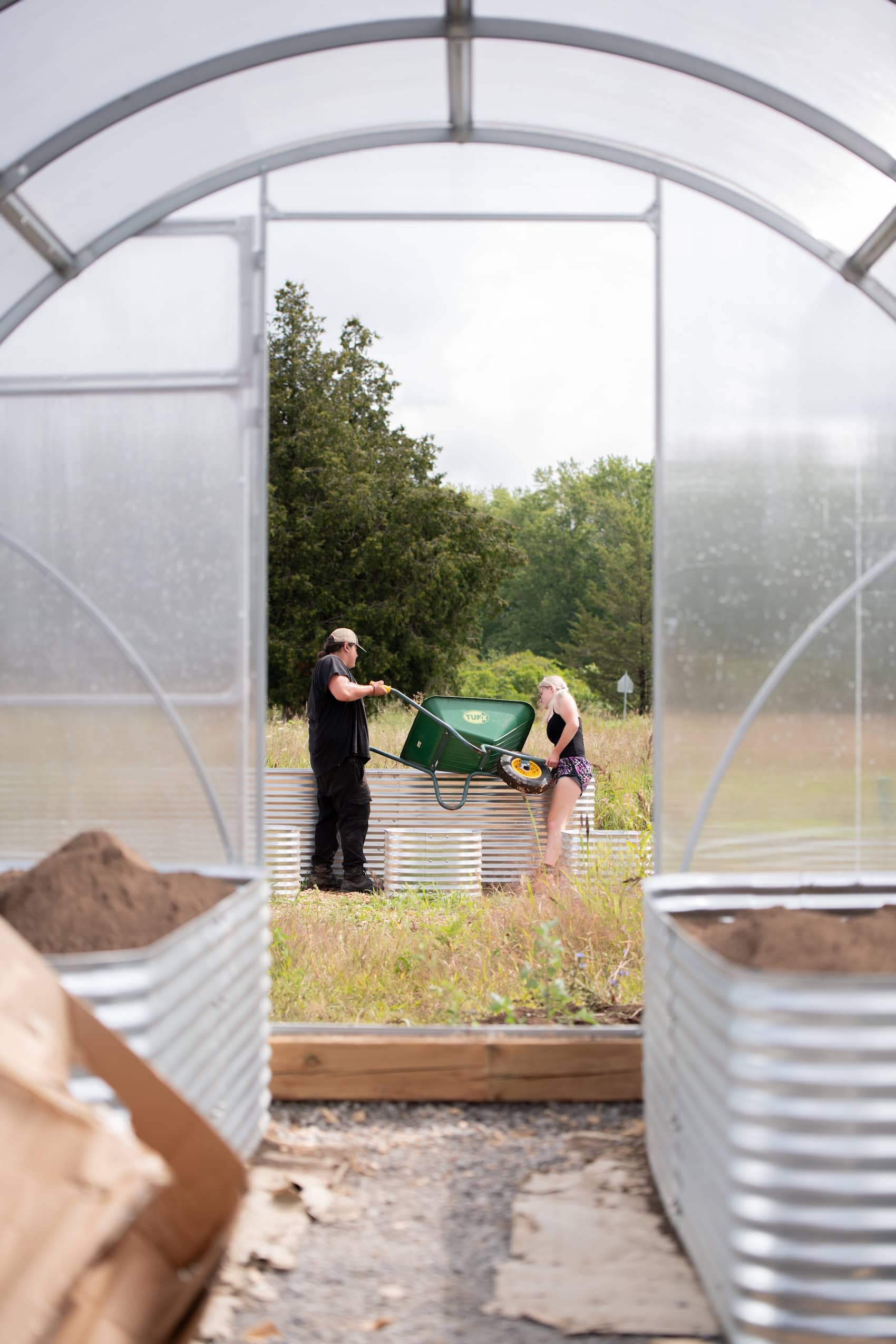
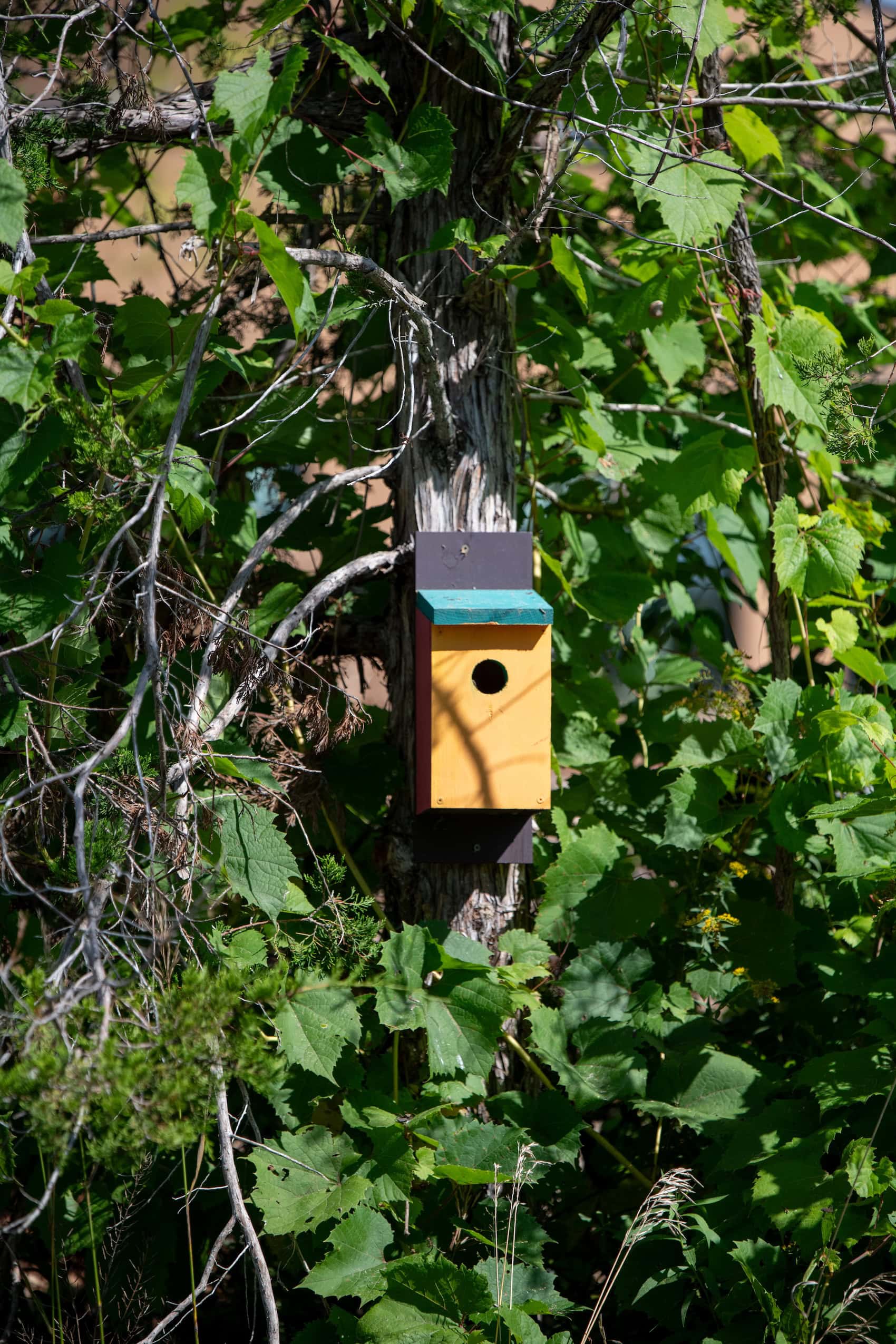
Left: FFIY participants, Tsyowáshes Hunt and Ava Hill fill garden boxes with soil. Right: A nesting box built by FFIY participants.
Young community members were also involved through a partnership with Focus Forward for Indigenous Youth, a national charity focused on employment and skills training. Through the program, they hired 12 youth to work on the land restoration this summer. The group spent three days at Tyónnheht Onkwawén:na and one day at Wintergreen each week participating in stewardship activities such as trail maintenance, mulching, watering, building nesting and garden boxes. As well as infrastructure projects like building a gazebo with local carpenter, Evin Kring. Buist says one of his primary goals working alongside the young people is to foster excitement about nature. “You’re going to protect what you love.”
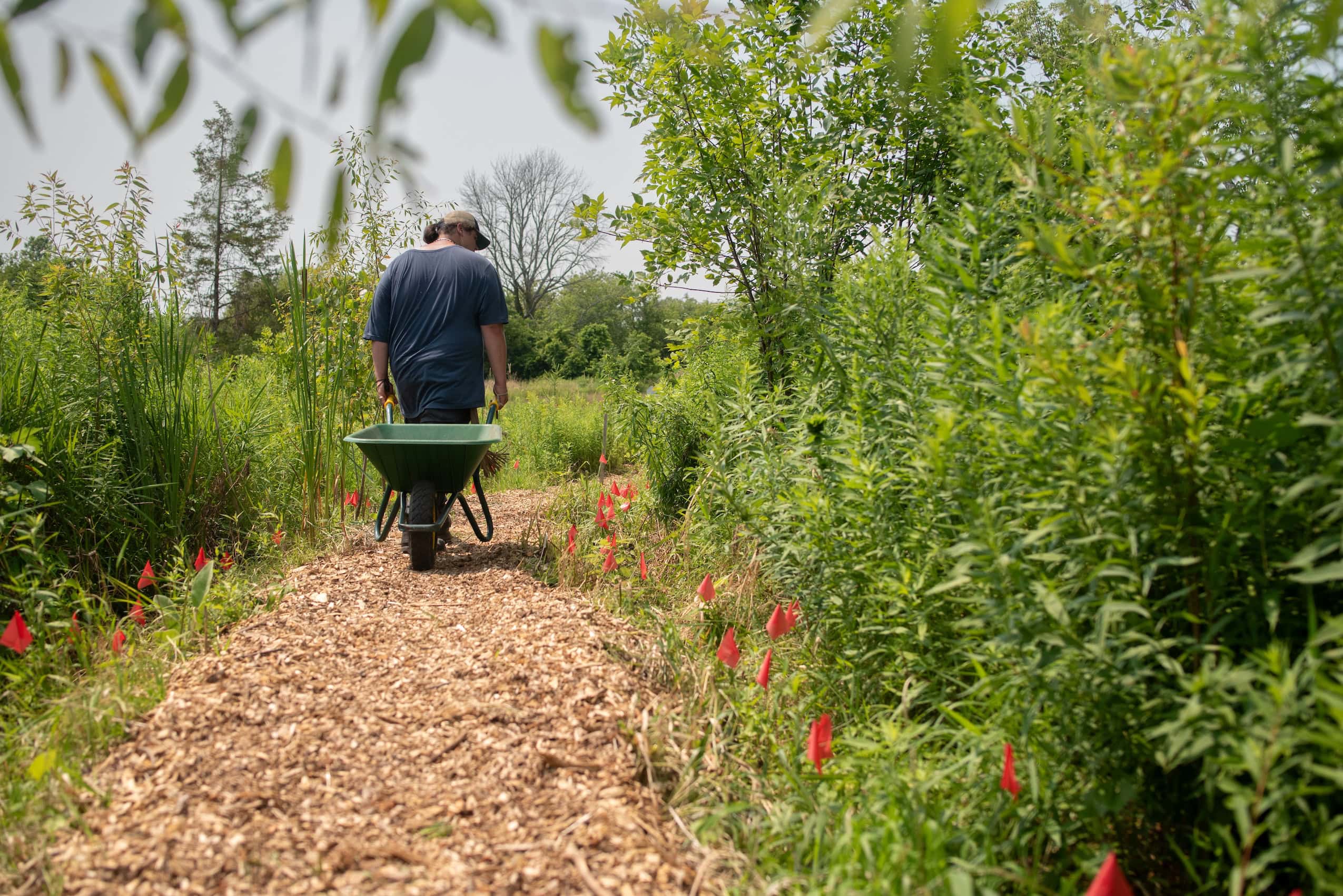
Tsyowáshes Hunt, one of 12 youth hired through the Focus Forward for Indigenous Youth program to work on land restoration. Hunt says that he hopes the spaces they are creating on the land will inspire the students to speak their language: “If they see a turtle, you go ‘a’nó:wara’… a snapping turtle, ‘kanyáhten’. They see a deer, ‘ohskennón:ton’. They can just try and pick out as many things as they can see.”
none
The Narwhal’s reporters are telling environment stories you won’t read about anywhere else. Stay in the loop by signing up for our free weekly dose of independent journalism.
From The Narwhal | News on Climate Change, Environmental Issues in Canada via This RSS Feed.