

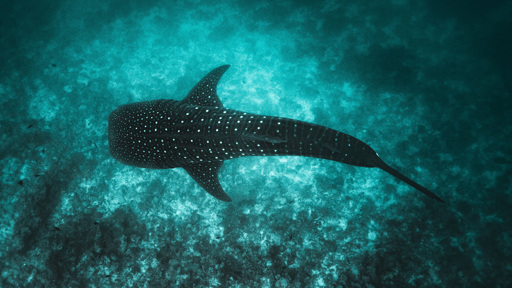
Plans to create a marine protected area for whale sharks in Indonesia’s Saleh Bay would give the world’s largest fish important new protections across several stages of its lifecycle, conservationists say. Besides serving as a migratory route and feeding ground for adults, there is growing evidence that the sheltered bay acts as a safe haven for juvenile whale sharks (Rhincodon typus), allowing them to develop in waters rich in food but free of predators. Sightings of newborns also indicate the bay may be a whale shark pupping ground, which would make it the first-ever to be documented anywhere in the world, although researchers caution this is yet to be confirmed. According to a document from the provincial government, seen by Mongabay, the marine protected area (MPA) would cover 90% of known whale shark hotspots in Saleh Bay, which lies in the shadow of the volcanic Mount Tambora on Sumbawa Island in West Nusa Tenggara province. The species, classified as endangered by the IUCN, has been monitored there since 2015. The MPA has received the support of the West Nusa Tenggara provincial government and local communities, with conservationists now waiting on a final decision from Jakarta. A whale shark in Saleh Bay, 2016. Besides serving as a migratory route and feeding ground for adults, there is growing evidence that the sheltered bay acts as a safe haven for juvenile whale sharks. Image by Egaryan Saadi via Wikimedia Commons (CC BY-SA 4.0). “[The MPA] is important because this bay represents a key…This article was originally published on Mongabay
From Conservation news via This RSS Feed.