

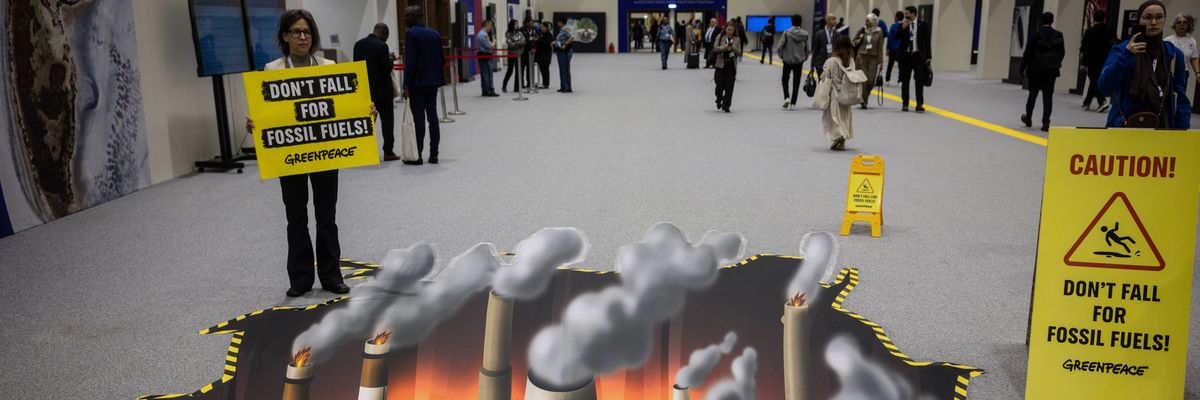
Climate advocates are frustrated as the second week of the 31st United Nations Climate Change Conference begins in Antalya, Türkiye.
They argue that a draft proposal released Monday by the Turkish and Australian presidencies overseeing COP31 is short on concrete commitments for world leaders to phase out fossil fuels as global temperatures rise.
Monday’s draft calls for “accelerated action to phase out fossil fuels, including through the immediate transition away from fossil fuels in energy systems,” acknowledging a roadmap promised at last year’s COP30 in Belém, Brazil. But it provides few specific details, said Andreas Sieber, head of political strategy for the international climate advocacy group 350.org.
“Türkiye and Australia seem to want to keep the transition away from fossil fuels in the diplomatic waiting room but drop any reference to the work going forward in the current draft text,” Sieber said Monday. “Countries have repeatedly called on them to take the roadmaps forward, yet the presidencies have barely lifted a finger.”
The draft follows a first week that Jasper Inventor, Greenpeace’s delegate at COP31, described as “heavy on rhetoric but painfully short on ambition.”
“We are seeing familiar dynamics play out,” Inventor said. “Governments are largely repeating entrenched positions rather than finding ways to bridge their differences. Discussions are getting bogged down in procedural disputes and disagreements over what should even be on the negotiating table, instead of focusing on the urgent decisions needed to confront the climate crisis.”
In a news release Monday, 350.org criticized the draft for continuing to promote “distractions” such as carbon removal technology. While the draft sets an ambitious goal for 35% of energy consumption to come from electricity by 2035, it lacks any requirement for that power to come from renewable sources.
350.org also said the draft’s proposal to provide at least $120 billion annually by 2035 to help developing nations—which have contributed disproportionately little to the climate crisis—adapt to worsening extreme weather events and repair climate damage they’ve already sustained falls far short of what is needed.
The proposal builds on a commitment made at last year’s COP30 summit in Belém to at least triple adaptation finance by 2035. Still, adjusted for inflation, that amount would be less than a third of what the United Nations Environment Program estimates developing countries will need annually.
“Across Africa, people are dying from drought and drowning from floods. Communities badly need the resources to adapt to the reality of a crisis they did little to cause," said Rukiya Khamis, 350.org’s East Africa program manager. "But with debt and stretched public budgets, African governments can’t provide this on their own. Climate finance isn’t an extra at these talks: It’s the condition for everything else.”
According to an analysis published last week by Carbon Brief, public funding pledged to help developing countries fight the climate crisis has fallen by more than 70% in 2026, with President Donald Trump withdrawing the US from international climate efforts and wealthy European nations such as France and Germany slashing their aid budgets.
The negotiations also come amid a global energy crisis fueled by the US-Israeli war with Iran, which climate advocates have said underscores the need to transition away from volatile fossil fuel markets.
While consumers have been saddled with higher costs, oil companies in the US have raked in over $130 billion in profits between April and September 2026—nearly three times what they earned during that period last year, according to a New York Times investigation published in October.
“We have an unprecedented opportunity to secure an outcome at COP31 that can help us hold rich countries accountable to their legal obligations to provide climate finance,” said Laurie van der Burg, public finance lead at Oil Change International. “Rich countries keep gaslighting us, saying we should trust them to put the money on the table, but meanwhile they cut their climate finance as they increase their military spending.”
“By ending fossil fuel subsidies, making polluters pay, and changing unfair financial rules, rich countries can mobilize trillions, and both meet the needs of their own people and their climate finance obligations,” she added. "This way, they can fund a just transition away from fossil fuels toward a more secure and affordable energy future. The money is there. What we need is political will.”
The Climate Action Network said a final draft should aim to deliver $120 billion in adaptation funds well before the 2035 deadline and include long-term funding commitments. It called for this support to come through grants rather than loans that can drive impoverished countries deeper into debt. It also said accountability mechanisms must be put in place to require wealthy nations to fulfill their promises.
“We came to Antalya to turn promises into protection for people. Halfway through, governments are gutting those promises instead,” said Tasneem Essop, executive director of Climate Action Network International. “Workers facing the end of their industries are being offered a website to share their experiences. Families losing their homes to floods and droughts are being offered another workshop. And the countries hit hardest by a crisis they did not cause are being offered declarations instead of the finance they are owed.”
“Australia asked to lead these negotiations, yet it is fighting the very commitment vulnerable countries need most: at least tripling adaptation finance," she added. “You cannot claim to lead a COP while working against the people it exists to protect.”
The conference is set to close on Friday, leaving four more days for negotiators to turn broad ambitions into a substantive agreement.
“After the biggest fossil fuel crisis in history,” Sieber said, “we cannot afford false solutions.”
From Common Dreams via This RSS Feed.