

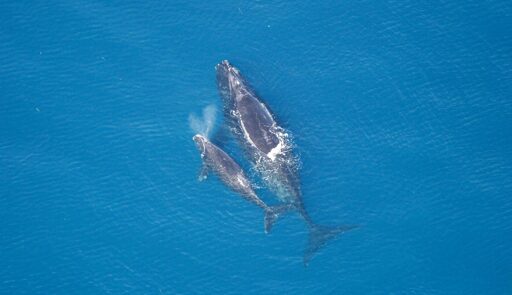
North Atlantic right whales hover near extinction, with perhaps 382 remaining, according to a new census published today. Their numbers dropped from 389 in 2024, a 1.8% decline, though the number of female right whales of reproductive age has remained steady at 73. The survey was conducted and published by scientists at the New England Aquarium’s Anderson Cabot Center for Ocean Life, based in Massachusetts, and the National Oceanic and Atmospheric Administration (NOAA), the U.S. federal regulatory agency. North Atlantic right whales (Eubalaena glacialis) are among the world’s most endangered marine mammals, listed as critically endangered by IUCN, the global conservation authority. These numbers were released at the start of the annual meeting of the North Atlantic Right Whale Consortium, a collaboration that includes researchers, conservationists, shipping and fishing industry representatives, and U.S. and Canadian government agencies. The two-day meeting, is underway in Halifax, Canada, running through Nov. 17. Marine mammal scientist Heather Pettis said “seeing [the decline] is really disappointing.” She chairs this year’s meeting and leads the right whale research program at the Anderson Cabot Center. “There was a pretty significant decline following 2011 that sort of stopped in 2020, and we were starting to see this small, incremental uptick, which was fantastic. What [the latest census] says is the population is really not yet on a clear path to recovery.” North Atlantic right whales feed in the waters off Canada and the northeastern U.S. in the spring, summer and fall. They migrate to the shallow coastal waters…This article was originally published on Mongabay
From Conservation news via This RSS Feed.