

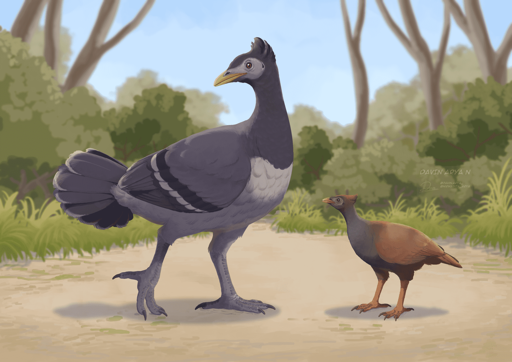
Archaeologists excavating Liang Bua cave on the Indonesian island of Flores have identified a new species of extinct giant bird that roamed the region some 150,000 years ago, according to a recent study. The giant bird was a kind of megapode — large, chicken-like birds that today live in the broader Australasian region. These birds nest in the ground and incubate their eggs using environmental heat rather than body heat. “Megapodes are common across many Indonesian islands, but this is the first fossil megapode from Indonesia,” Hanneke Meijer, the study’s lead author and a paleontologist at the University Museum of Bergen, Norway, told Mongabay by email. “It shows that Indonesia also had large megapodes in the past that were similar in size to large extinct Australian megapodes.” The newly recognized species, named Megapodius rokusi, was identified from a fossilized right foot bone excavated from cave sediment layers dated to between 190,000-120,000 years ago. The researchers named the species in honor of the late Indonesian zooarchaeologist Rokus Due Awe, who played a seminal role in analyzing animal fossil remains at Liang Bua and was the first researcher to identify the hominin fossils later classified as early human species Homo floresiensis. According to the authors, M. rokusi represents the first megapode species named after an Indonesian scientist. Researchers estimated that M. rokusi weighed approximately 3.9 kilograms (8.6 pounds), making it the largest species within the genus Megapodius described to date, according to the paper. There are 12 living species of Megapodius today.…This article was originally published on Mongabay
From Conservation news via This RSS Feed.