

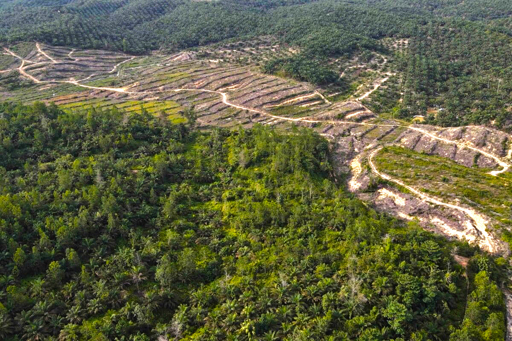
JAKARTA — Indonesia is the world’s biggest producer of palm oil, and the commodity is the most widely used vegetable oil across the globe. That makes all the issues associated with palm oil — from sustainability claims, to allegations of deforestation and labor abuses — the subject of close scrutiny for buyers worldwide, especially in markets with increasingly stringent environmental requirements. Yet this focus on global supply chains overlooks a major source of demand: Indonesia is the biggest consumer of its own palm oil, with more than half of total production going into the domestic market in 2024 — an all-time high driven partly by demand for biodiesel. And because the domestic market doesn’t impose strict sustainability requirements, much of the palm oil produced on deforested land is consumed within the country: For every 1,000 metric tons of crude palm oil consumed locally, 25 hectares (62 acres) of land was deforested, according to a new analysis calculating this “deforestation exposure.” It estimates that domestic consumption in 2024 was associated with 629,000 hectares (1.55 million acres) of deforested land, or two-thirds of all palm oil-related deforestation exposure; that’s nine times greater than the 71,400 hectares (176,400 acres) associated with exports to India, the largest foreign buyer of Indonesian palm oil. These figures from the analysis by Trase, a research initiative that maps commodity supply chains, reflect a 10-year historical attribution period; they don’t represent the area deforested in 2024 alone. “One of the most important issues is the sharp increase in…This article was originally published on Mongabay
From Conservation news via This RSS Feed.