


In the latest round of “tit-for-tat” attacks, Iran claimed it destroyed the US army’s early warning radar system in Bahrain on Friday, November 13, in retaliation to its attack against its telecommunication tower in Sirik earlier.
In the statement, the Islamic Revolutionary Guard Corps (IRGC) also reiterated the warning to the “aggressor enemy to cease its aerial provocations and oil smuggling in the Strait of Hormuz” and other countries aiding in its aggression.
Meanwhile, the Iranian Navy claimed at least two more oil tankers caught fire after they violated its warnings and tried to enter the prohibited area of the Strait of Hormuz on Thursday.
The tankers had switched off their radar system and entered the “unsafe” area when they hit sea mines and caught fire, it claimed.
In recent weeks, scores of tankers and ships have been hit in a similar manner while trying to cross the Strait of Hormuz, bypassing Iranian restrictions. On Wednesday, two super tankers reportedly carrying over 4 million barrels of oil had suffered similar explosions after failing to comply with Iranian warnings.
The regular attacks on oil tankers contradicts US claims of control over the Strait of Hormuz and the normalization of oil shipments in the waterway through which nearly a quarter of global energy trade passes.
Iran’s retaliation will have no geographical boundary
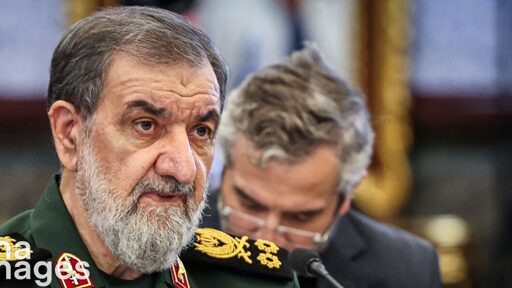
On Thursday, Mohsen Rezaei, chief of Iran’s Supreme National Security Council (SNSC) had warned the US that if it “launches another war against Iran, every military base involved in the aggression – from West Asia to Europe – will be a legitimate target for Iran’s lethal strikes.”
“No safe distance. No safe heaven. No immunity,” he said in a post on X.
During an interview with Al-Mayadeen earlier he explained that unlike in the previous rounds, the Iranian retaliation to any fresh US attack will have no geographical limitation.
He claimed the decision about this has been made on the basis of orders issued by Supreme Leader Ayatollah Mojtaba Khamenei last month.
Iran has already removed the 2,000 mile restrictions on its missile ranges, various Iranian military officials have been reported saying by the Iranian media in recent days. In the previous rounds of the war, Iranian retaliation against US military bases and assets were limited to the region.
US President Donald Trump has given mixed signals about the war on Iran. In his recent statements, he has admitted there was no further need of restarting the war without ruling out limited targeted attacks on its nuclear facilities.
Reacting to a statement issued after the G7 Foreign Ministers meeting on Thursday about their possible involvement in US efforts in the Strait of Hormuz, Esmail Baghaei, official spokesperson of Iran’s Ministry of Foreign Affairs, warned all foreign governments against providing any kind of military or logistical support to the US even on the pretext of protecting “freedom of navigation.”
Any such assistance would be considered an “unlawful act of aggression” against Iran and would invite Iranian retaliation, Baghaei warned.
The ball is in Washington’s court
In an interview with Al-Jazeera on Wednesday, Mohammad Bagher Ghalibaf, speaker of Iran’s Parliament and its chief negotiator, claimed that Iran has conveyed a clear and reasonable response to the US setting out its conditions and now the US has to decide how it would like to take it forward.
“Iran would like to end the no war no peace situation,” he said claiming “we are not warmongers, we are not seeking war, and we do not want war to continue.”
Ghalibaf also dismissed the claims made by Secretary of State Marco Rubio that the Iranian conditions were unreasonable.
How are the lifting of the blockade, removing sanctions, and ending the war on all fronts “unreasonable,” Ghalibaf asked, claiming that these are the basic minimum demands concerning the Iranian people and the US must accept them if it wants further engagement.
Underlining the lack of trust with the US; it has attacked Iran during the ongoing negotiations twice and has violated the June 17 Memorandum of Understanding (MoU), weeks after signing it, Ghalibaf argued that it is natural that Iran is very cautious about any future deal.
Ghalibaf reiterated the Iranian position that the presence of the US military in the region has created insecurity rather than stability and the countries in the region must work together to establish lasting security without outside interference.
During his meeting with the representatives of Saudi Arabia, Turkey, and Pakistan earlier this month, Rezaei had reportedly proposed the formation of an eight-country Gulf Union, including the six Gulf countries and Iran and Iraq.
The three countries have recently formed a collective security group called the Mecca Defense Pact and are seeking to increase its membership.
From BT News via This RSS Feed.