


Yemen Bab al-Mandab conflict escalates as Houthi forces take Kharaz base and pro-Saudi troops withdraw toward Aden’s defenses
Related: Yemen: 103 Saudi Air Raids Strike Civilian Sites in 24 Hours
Yemen Bab al-Mandab Conflict: 2 Key Bases Fall as Houthis Advance
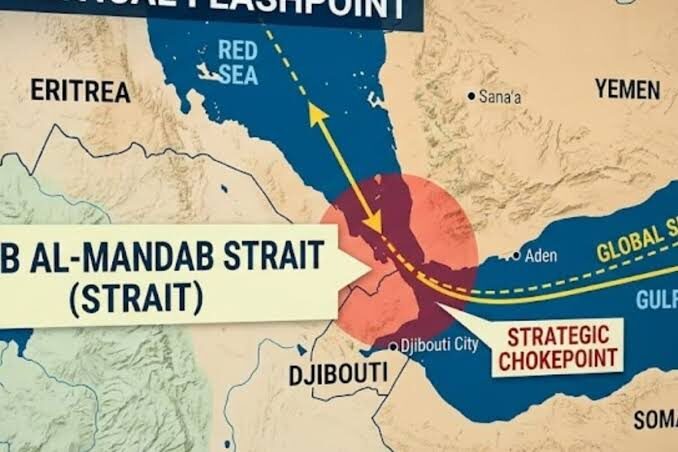
The Yemen Bab al-Mandab conflict has entered a new phase after Houthi forces captured strategic positions near Aden, forcing Saudi-backed troops to withdraw from the Red Sea corridor. The setbacks have raised concerns about the security of one of the world’s most important shipping routes.[telesurtv]
On November 15, the Southern Armed Forces announced a redeployment from the Dhubab airport and the Bab al-Mandab sector in Taiz province. The move was aimed at reinforcing the defensive perimeter around the port city of Aden as Houthi fighters advanced toward the south.[telesurtv]
The withdrawal followed the capture of the Kharaz military base and several surrounding hills in Lahj province during intense fighting overnight. The loss of Kharaz was described by military sources as a major operational setback.[telesurtv]
A Strategic Retreat Toward Aden
The Yemen Bab al-Mandab conflict has forced government-aligned forces to reorganize their lines. The Kharaz base had served as the main defensive shield for western approaches to Aden, the provisional seat of the Saudi-backed Yemeni government.[telesurtv]
Military sources said the base also protected land routes toward the Gulf of Aden and the Red Sea. Its capture gives Houthi forces a stronger position to pressure Aden and threaten supply lines.[telesurtv]
Retreating units are now building new fortifications on the western flank of Aden to prevent their lines from being flanked or cut off. The move reflects the urgency of the situation and the need to stabilize the front.[telesurtv]
Internal Divisions Weaken the Saudi-Backed Bloc
The Yemen Bab al-Mandab conflict has exposed deep fractures within the Saudi-backed bloc. A second military source attributed the retreat to declining operational effectiveness of the Giants Brigades, a powerful armed force previously established around Aden.[telesurtv]
The source also pointed to tensions between Saudi Arabia and the separatist Southern Transitional Council. The council’s military leadership has largely stayed out of the offensive launched by the Saudi-led coalition in October.[telesurtv]
Those divisions have weakened the cohesion of the pro-government side. Analysts warn that weakening southern forces could give Houthi fighters more room to advance.[telesurtv]
A Vital Shipping Corridor at Risk
The deterioration of government positions has raised alarms about navigation security in the Strait of Bab al-Mandab. The corridor connects the Red Sea to the Gulf of Aden and carries a critical share of global trade between Asia and Europe through the Suez Canal.[telesurtv]
The strategic importance of the strait makes the conflict a global concern. Any disruption to shipping could have far-reaching consequences for energy markets and supply chains.[telesurtv]
The situation is further complicated by recent Houthi attacks on military and oil facilities in Saudi territory. Those strikes have added to regional tensions and raised the stakes for all parties involved.[telesurtv]
A War That Shows No Signs of Ending
Yemen has been locked in civil war since late 2014, when Houthi forces took the capital, Sanaa, and much of the north. A Saudi-backed coalition has been fighting in the country since 2015, and Riyadh imposed a blockade on goods, medicine, and other basic products two years later.[telesurtv]
The conflict has created one of the world’s worst humanitarian crises. Millions of people have been displaced, and access to food, water, and medical care remains severely limited.[telesurtv]
The latest developments suggest that the war is entering a more dangerous phase. The capture of Kharaz and the withdrawal from Bab al-Mandab could reshape the military balance in the south.[telesurtv]
Geopolitical Context
The Yemen Bab al-Mandab conflict takes place at a time when the Red Sea is becoming a major flashpoint in global geopolitics. The strait is a critical artery for international trade, and any disruption could affect energy markets and supply chains worldwide.
The conflict also reflects a broader struggle for influence in the Middle East. Saudi Arabia, Iran, and other regional powers are competing to shape the outcome of the war, while global powers watch closely.[telesurtv]
The broader geopolitical meaning is that the Yemen conflict is not just a local war. It is a test of the international order and a reminder of how quickly regional conflicts can escalate into global crises.[telesurtv]
What Comes Next
The immediate next step is to see whether government forces can stabilize the front around Aden. The construction of new fortifications suggests that they are preparing for a prolonged defense.[telesurtv]
The Houthi advance is also likely to continue. The capture of Kharaz and other positions gives them momentum and could open the way for further gains.[telesurtv]
For now, the Yemen Bab al-Mandab conflict represents a significant escalation in the war. The next phase will determine whether the Saudi-backed bloc can regroup or whether the Houthi advance will continue.[telesurtv]
🚨 La tensión marítima en Yemen se eleva de manera significativa tras los recientes acontecimientos geopolíticos en la región.
🔴 El grupo Ansar Allah ha logrado consolidar su posición al tomar el control estratégico de la ciudad. pic.twitter.com/Pf5z1E94HS
— teleSUR TV (@teleSURtv) September 10, 2026
From teleSUR English via This RSS Feed.