

By Misión Verdad – Nov 13, 2026
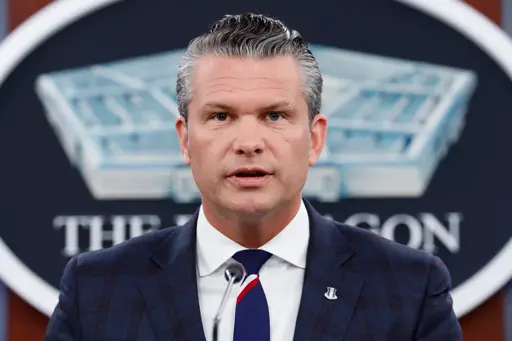
Pete Hegseth could face an impeachment process as Secretary of War of the United States following an initiative led by Republican Congressman Thomas Massie. The impeachment proposal is based on a series of accusations ranging from the conduct of the war against Iran to US military operations in the Caribbean and the Eastern Pacific, including the kidnapping of Venezuelan President Nicolás Maduro, an operation that, as is well known and according to the charges presented, was carried out without Congressional authorization.
The controversy has begun to cause a stir within the Department of War itself. In a report published on November 6, The Intercept revealed that current and former Pentagon officials are already naming possible replacements for Hegseth, including Florida Governor Ron DeSantis and US Ambassador to the United Nations Mike Waltz. The article describes Hegseth as a secretary increasingly questioned for his military management, the decisions made during recent conflicts, and his relationship with the Armed Forces leadership.
The allegations against Hegseth scrutinize some of the most aggressive actions of Donald Trump’s foreign policy. The operations carried out in the Caribbean waters near Venezuela, the use of lethal force against vessels under the pretext of combating drug trafficking, and the war against Iran disrupting lives outside US borders, while fueling a political and institutional dispute in Washington.
Venezuela in the case against Hegseth
The Venezuelan dimension plays a direct role in the accusations against Pete Hegseth. Among the eight articles of impeachment presented by Republican Congressman Thomas Massie is the allegation that the secretary of War directed the kidnapping of President Nicolás Maduro without a declaration of war against Venezuela or Congressional authorization. The inclusion of this episode of aggression in the record introduces a substantive issue: the operation carried out by Washington on Venezuelan territory is also being questioned by US institutions themselves due to the extent of the powers assumed by the president to carry it out.
The case is related to another one of the central accusations of the initiative: the execution of military attacks on vessels in the Caribbean Sea and the eastern Pacific, justified by the Donald Trump administration as part of its campaign against drug trafficking. An article in Naked Capitalism explains in detail the allegations in Massie’s resolution, attributing responsibility to Hegseth for a campaign that may have left at least 243 people dead in 69 incidents. The resolution highlighted that the Pentagon resorted to lethal force against individuals allegedly suspected of criminal activities without subjecting them to judicial procedures or establishing a legal basis that would have allowed them to be considered military targets.
One of the episodes described in the resolution occurred on September 2, 2025, the first attack of this campaign. After the initial impact destroyed the vessel, two survivors clung to the wreckage. Approximately 45 minutes later, a second attack ended their lives. Massie argues that the order to attack people who were already out of combat constitutes an extrajudicial execution. The impeachment resolution also includes other cases in which survivors of the first impacts died before receiving assistance. The number of victims and the description of these episodes are part of the charges brought against Hegseth.
The resolution accuses Hegseth of assuming the roles of “judge, jury, and executioner” by subjecting individuals suspected of crimes to lethal military force without judicial process. With this formulation, the fundamental legal question is exposed, as the US administration used an anti-drug campaign as a cover to carry out military attacks against individuals suspected of committing crimes, without subjecting them to the guarantees of a judicial process.
In the case of Venezuela, President Maduro’s kidnapping by US forces adds to this set of actions. The resolution states that the aggression on Caracas was carried out without legislative authorization and under the pretext of combating activities related to drug trafficking, although, according to the resolution, the action had other objectives, including the control of Venezuela’s oil resources.
The war on Iran and discretional use of US military power
The February 28, 2026 US military offensive on Iran features among the reasons why Republican Congressman Thomas Massie promoted the ousting of Pete Hegseth. The charges allege that the secretary of War involved US forces in hostilities without a declaration of war or specific authorization from Congress, and that he continued operations even after both chambers demanded the withdrawal of troops.
The Naked Capitalism article, which reprinted parts of the initiative, noted that the House of Representatives approved Concurrent Resolution 86 on June 3, 2026, and the Senate did the same on June 23. The measure required the withdrawal of US forces from hostilities against Iran that did not have legislative authorization. Massie’s resolution points out that Hegseth continued directing operations even after that decision, deepening the confrontation between the government and Congress over the powers to conduct a war.
The resolution also questions the White House’s interpretation of the time limits established by the War Powers Act of 1973. This legislation provides a 60-day period for the president to obtain authorization from Congress or end military operations initiated without it, with an additional period of up to 30 days to safely withdraw troops. The Trump administration informed Congress that hostilities had ended and argued that the ceasefire interrupted the counting of that deadline. Massie rejects this interpretation and accuses Hegseth of having maintained operations beyond legal limits. The dispute highlights the extent of the powers that the US government has to initiate and prolong armed conflicts without explicit legislative backing.
Another set of charges focuses on the consequences of the war for the Iranian civilian population. The resolution accuses Hegseth of weakening the Pentagon structures responsible for preventing and reducing civilian casualties. Among the measures mentioned are the reduction of specialized personnel, the dismantling of victim tracking mechanisms, and the weakening of the agencies responsible for assessing the damage caused by military operations. Massie argues that these decisions compromised the safeguards intended to protect the non-combatant population.
One of the most serious episodes mentioned in the resolution is the bombing of a girls’ primary school in Minab, during the first wave of attacks against Iran on February 28, where the impact of a Tomahawk missile caused around 170 deaths, most of them schoolgirls. The resolution attributes responsibility to Hegseth’s decisions for the deterioration of civil protection mechanisms that were supposed to help prevent a tragedy of this magnitude.
The Intercept’s report, published on November 6 under the title “Pentagon Officials Float Names of Hegseth’s Replacement,” adds another dimension to this controversy. Current and former officials of the Department of War mentioned the conduct of the war against Iran among the reasons for discontent with the secretary. The outlet also reports criticism regarding the management of the campaign against Ansarallah in Yemen during 2025, the purging of high-ranking military officials, and the weakening of transparency and accountability mechanisms. The war against Iran thus appears within a broader context of questioning the political and military leadership of the Pentagon.
The controversy has a scope that exceeds the dispute over Hegseth’s position. The prolongation of US hostilities against Iran has committed military and financial resources of great magnitude and has deepened uncertainty about the stability of a region strategic for global energy supply. This is compounded by human consequences, the destruction of infrastructure, and the risks of an escalation that could involve other countries.
The impeachment attempt had an initial parliamentary resolution on November 10. The House of Representatives voted 211-204 in favor of referring the eight articles of impeachment to the Judiciary Committee, a decision that blocked the immediate advancement of the resolution and prevented it from being put to a full vote for removal. Thomas Massie was the only Republican to vote against the referral. The Trump administration had defended Hegseth and urged lawmakers to back this decision, arguing that the secretary had merely been carrying out the president’s orders.
A crisis in the US power structure that goes beyond an impeachment
Hegseth was able to prevent the impeachment articles presented by Massie from advancing in the House of Representatives during the current legislative session. However, this strategy has limited scope, as the mandate of the Republican-dominated Congress will end on January 3, and new legislators will take office, after the Democratic Party gained control of both chambers in the midterm elections.
The Democrats will have the ability to push for investigations into the management of the Pentagon and could introduce a new impeachment initiative when the next legislative session begins. The approval of the charges in the House requires a simple majority, while a conviction in the Senate and the consequent removal from office need the backing of two-thirds of the senators. The outcome of the midterm elections, therefore, alters the political conditions in which the secretary will have to operate and opens the possibility for the procedure to be restarted.
The November 6 report by The Intercept indicated signs of dispute within the Department of War itself. According to current and former officials cited by the outlet, possible replacements for Hegseth were mentioned within the Pentagon, including Florida Governor Ron DeSantis and the US ambassador to the United Nations, Mike Waltz. The names of Joni Ernst, Mike Rogers, and Mike Pompeo also appeared. Although these conversations did not constitute an official succession process, they revealed that the continuity of Hegseth was a topic of discussion even before the change of majority in Congress.
Impeachment Filed Against Pete Hegseth Over Attacks on Venezuela, Iran, and Yemen
The criticisms against Hegseth published by The Intercept cover the conduct of the war against Iran, the military campaign against Ansarallah in Yemen, the attacks on vessels in the Caribbean and the eastern Pacific, the dismissal of high-ranking military officials, and the restrictions on transparency and oversight mechanisms. In addition, there are the eight articles of impeachment reported by Naked Capitalism, which include the kidnapping of Venezuelan President Nicolás Maduro without Congressional authorization and the accusations of weakening measures aimed at protecting the Iranian civilian population. The resolution thus puts together military actions carried out by US forces in various scenarios, but all of them associated with the powers assumed by the US government and the responsibility of those who executed them.
The controversy cannot be reduced to a dispute between Republicans and Democrats over control of the Pentagon either. The operations mentioned involve populations and countries that are opposed to Washington’s military decisions. The eventual departure of Hegseth could modify the leadership of the Department of War, although it would not imply a change in the orientation of the US government as a whole.
For Venezuela, the case has direct importance in the kidnapping of Nicolás Maduro and First Lady Cilia Flores and the military operations in international waters near the country, which are part of the allegations presented against Hegseth. In addition to the precedent it set for the political and geopolitical drift that Venezuela and the Latin Caribbean region in general have taken. For Iran, the case incorporates the consequences of a war that has caused severe human damage and threatens to expand regional instability.
Hegseth’s situation will depend on how the new Democratic majority handles the wear and tear of the current administration at the Pentagon and how far they decide to take the political pulse with the White House. In the US political landscape, the departure of key figures often serves to defuse crises and assign specific responsibilities without altering the structure that supports operations abroad. Thus, although the change in the balance of power may cost Hegseth his position, nothing indicates that the change of names will modify a military conduct that has been constant in Washington’s foreign policy under different administrations.
Translation: Orinoco Tribune
OT/SC/DZ
From Orinoco Tribune via This RSS Feed.