

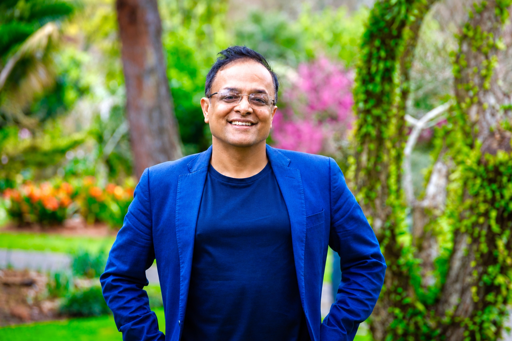

Professor Mohan Dutta: “Te Tiriti was signed by rangatira and representatives of the Crown. So this is for the leader who tells a room full of migrants that Te Tiriti was signed by Pākehā and Māori: ‘You are the Crown.'”
This essay is based on Professor Mohan Dutta’s fieldwork on racism in Aotearoa New Zealand. It is a composite narrative drawn from multiple experiences and conversations, and isn’t intended to point to any one particular organisation or institution. Rather, it reflects an organisational culture in Aotearoa.
The room seats about 60. There is a Filipino nursing lecturer on a fixed-term contract. Two Bangladeshi PhD candidates. A Punjabi student rep. Chinese postgrads from the business school. A Fijian Indian woman whose grandparents came to Aotearoa before our speaker’s family. Sāmoan and Tongan staff from student services. Two Māori colleagues on the side.
Our speaker is a leader from the university, who is Pākehā, and he wants to talk about belonging. This part he is good at. He steps away from the podium. He speaks passionately about the Treaty of Waitangi. He notes it was signed by Pākehā and Māori.
Nobody corrects him. One of the Māori colleagues does the kind of mental calculation that Māori staff make several times a week and decides it’s not the time to put him right.
The rest of us understand something. It’s for the good of the group to let it go, given the person’s seniority, his good intent, and the fact that nearly half of us are on visas. There is polite applause. He is thanked for his work on the Treaty. In the corridor, a colleague catches my eye, and we silently acknowledge what we can’t say out loud.
Rangatira and the Crown signed Te Tiriti. Pākehā were in the country, but they were not a party. William Hobson signed for a sovereign, at the direction of the Colonial Office in London. The settler population of 1840 was about 2,000, mainly whalers, traders, missionaries and speculators, who had no means or right to organise themselves legally and send a representative to sign for them. So the Crown’s obligations apply to the state and all its institutions and agencies.
If we take the Crown out and put Pākehā in, what shifts? Constitutional obligations become a relationship or responsibility between ethnic groups, which, by definition, is unenforceable. The Crown leaves the scene, absenting itself from discussion of its responsibilities. And Pākehā are inserted into the scene, claiming a founding role they never had, and the standing that comes with it. And the claim holds only because it keeps being repeated.
The university leader didn’t invent the claim. He merely repeated it. It’s the standard wording in the sector, and he had reason to believe he was saying the right and progressive thing. When a leader stands up and invokes Te Tiriti, he is speaking for the institution, which makes the mistake about who signed Te Tiriti the institution’s mistake rather than one man’s slip of the tongue. Mistakes of this kind run in one direction. They never end up giving Māori more authority, or the Crown more liability.
Everyone in that room who was neither Māori nor Pākehā had just been told, at an event focusing on belonging, that the founding relationship of this country has no space for them. We are merely guests.
The history that disappears in the same breath was written by that same Crown.
Chinese miners arrived in the 1860s, and a poll tax was levied on them in 1881 for $10 per head, which increased to $100 in 1896. The government formally apologised for this in 2002. The 1899 Immigration Restriction Act employed a reading test in a European language to keep out Indians while leaving the door open for the British. Pacific workers were later recruited to work in the factories and freezing works and were hunted through South Auckland in the Dawn Raids, which the state also formally apologised for in 2021.
All of this was Crown policy, and was written and enforced by the same authority that signed at Waitangi and then set about breaching what it signed.
Keep the Crown in the frame, and both histories stay in view, along with what connects them: a settler state deciding who holds land, who holds labour, who holds citizenship, and who holds the right to be heard.
Replace the Crown with Pākehā, and both disappear at once.
Having made Pākehā a founding party, the Pākehā speaker assumes the role of someone who holds the country, and therefore someone who can extend the welcome and everything that follows.
You are appreciated. We are happy that you have come. Our house is open.
The warmth is real, and it puts him in the role of host, which means he holds the power. He assumes the role of the good one in the room, a role that no one can challenge without being seen as a bad person.
For the Māori in the room, being told they are one of two founding peoples is a compliment that takes something away. Partnership between ethnic groups runs on goodwill, but rangatiratanga guaranteed in a signed document holds whether or not management is feeling generous this quarter. A partnership with Pākehā will last as long as Pākehā want it to, and we all know how long that is. So essentially, Māori just watched an enforceable obligation reclassified as goodwill by the person who approves the budget.
For the rest of us, it converts our presence into a debt. Many of us are here because this country opened itself to us. Generous and multicultural. The proper posture for someone who has received generosity is gratitude. Gratitude is quiet. It doesn’t ask why the brown academics on the faculty are all on fixed-term contracts. The migrant who raises racism is seen as impolite and ungrateful. His complaints are met with disappointment and a “thanks for the feedback”, which is hard to argue with. It’s a silencer. Our anger is harder for them to absorb, but it takes us further than gratitude ever will.
If you look closely, the benevolence takes on a different hue. We have a Filipino nursing lecturer in the programme because the local health system couldn’t staff its wards. It’s also because the settings and pathways of the visa process were manipulated to arrange a supply at the Philippines’ expense. The Chinese postgraduates pay unsubsidised fees that keep programmes going, which domestic enrolments no longer cover.
Behind all this is the empire that moved Indians to Fiji and Malaya and to East Africa to build the plantations and the railways — the same empire that signed at Waitangi. The institution did not give us a place. It recruited us, charged us, employed us on contracts that it can terminate, and counted our fees and labour in its accounts.
There is something demeaning in being thanked for accepting a gift that was in effect a purchase. And there is something especially cruel about being asked to demonstrate this gratitude, and to put a price on it, in front of Māori colleagues whose whenua the entire arrangement sits on.
We are not a third party to the Tiriti, and making that claim would repeat the theft in another direction. We are the people who live under the same Crown that signed and then broke Te Tiriti, that taxed and tested and raided us, and that employs and charges and recruits us now.
That position has its own voice and doesn’t need anyone else’s permission. It’s a position that needs to be held carefully, because others are moving into that space who have a different story to tell us: that Māori claims come at our expense, that whatever Māori win, we lose, and that our future here depends on standing with the Crown against them. That story is already being taken up by many Indian, Chinese, and Pacific people in this country.
The university leader will give the same speech again, and the same warm reception will greet it, and no one will correct him. The next time he comes, perhaps those of us he welcomed should be the ones giving the speech and greeting him warmly, and we can see whether anyone corrects us.
Te Tiriti was signed by rangatira and representatives of the Crown. So this is for the leader who tells a room full of migrants that Te Tiriti was signed by Pākehā and Māori: You are the Crown.
Mohan Dutta is Dean’s Chair in Communication at Massey University and director of the Center for Culture-Centered Approach to Research and Evaluation (CARE). He writes on whiteness, migration, and Te Tiriti in Aotearoa.
The post ‘You are the Crown’ appeared first on E-Tangata.
From E-Tangata via This RSS Feed.