

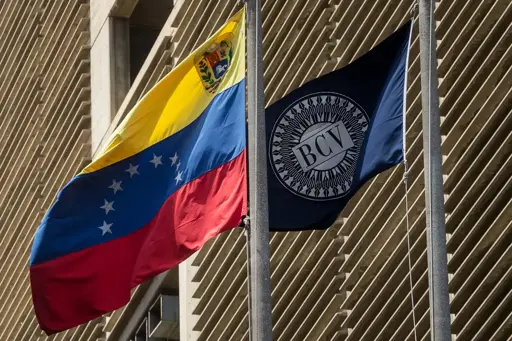
Caracas (orinocotribune.com)—Venezuela’s economy grew 7.42% in the third quarter of 2026 compared with the same period last year, marking 22 consecutive quarters of growth, the Central Bank of Venezuela (BCV) reported on Thursday, November 12.
Non-oil activity grew 6.28%, while financial and insurance services grew 29.29%, agriculture 7.13%, manufacturing 4.32%, and accommodation and food services, including tourism, 8.95%. Construction grew by 35.75%, which the BCV connected to investment in repairing infrastructure damaged by the June 24 earthquakes. The private sector grew 8.02%.
Gross fixed capital formation increased 28.25%, according to the BCV, indicating higher investment in productive capacity. The Central Bank’s report presents the figures as evidence of sustained economic growth.
Rodríguez calls for strengthening production and investment
Acting President Delcy Rodríguez said that the results reflect the dynamism of economic activity and should encourage continued efforts to strengthen the national productive apparatus, promote investment, and create opportunities for the well-being of all Venezuelans.
Growth amid sanctions
The sustained growth is taking place while the Venezuelan economy remains far smaller than it was in 2012. In a recent analysis, Orinoco Tribune compared nominal GDP of $338.7 billion in 2012 and the estimation of $124.2 billion for 2026. Using the current price of the US dollar, the projected economy would be about 63% smaller than that in 2012, or roughly 37% of its former size, despite more than five years of growth.
Most analysts agree that Venezuela’s economic collapse was driven principally by illegal US sanctions, compounded by the collapse in oil prices and economic policy mistakes after President Hugo Chávez’s death. Washington’s restrictions on PDVSA’s access to financing and markets struck at the country’s main source of revenue.
BCV Reports 3rd Straight Month of Single-Digit Inflation in Venezuela
Orinoco Tribune’s review of the impact of the sanctions cited research estimating that oil production losses accelerated after the August 2017 financial sanctions, with the coercive measures accounting for an estimated loss of between 616,000 and 1.23 million barrels per day. The 2019 sanctions targeting PDVSA further deepened the damage.
A UN Special Rapporteur’s report found that US sanctions exacerbated Venezuela’s economic crisis, constrained public spending, and obstructed recovery. It estimated that real GDP fell by about 74% between 2014 and 2022.
The 22 consecutive quarters of growth mark a sustained recovery, but the IMF’s 2026 projection remains below half of the size of the economy in 2012. Venezuelan productive sectors are expanding while the country continues to rebuild from a collapse driven primarily by illegal US sanctions, alongside the oil-price collapse and economic policy errors after Chávez’s death.
Special for Orinoco Tribune by staff
OT/JRE/SC
From Orinoco Tribune via This RSS Feed.