

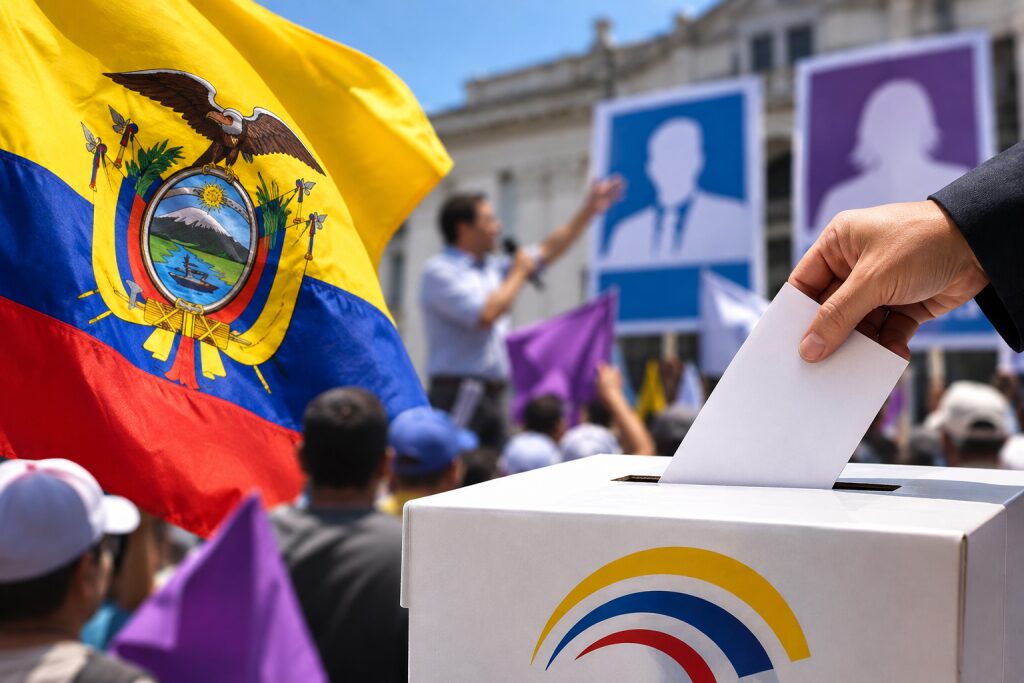
The electoral campaign for Ecuador’s local elections officially began on November 12, with 15 days of campaigning activities leading up to the polls on Sunday, November 29. Candidates will seek public support to fill local government positions and to elect members of the Council for Citizen Participation and Social Control (CPCCS) for the 2027–2031 term.
RELATED:
March in Ecuador Demands Release of Opposition Leader Luisa Gonzalez
The campaign period will run from November 12 to November 26. A “silent period”—during which campaigning is prohibited—will begin on November 27, ahead of the voting day on November 29.
In these elections, voters will choose mayors, prefects, urban and rural councilors, members of rural parish boards, and seven members of the CPCCS.
The electoral authority reported that 51,731 candidacies were confirmed following a review of the applications.
Position Number of Candidacies
Rural parish board members 35,438
Urban councilors 7,508
Rural councilors 4,604
Urban councilors (by electoral district) 2,736
Mayors 1,298
Prefects 144
CPCCS members 65
Campaign Activities and Limits
Nearly 100 people marched through Ecuador’s capital, Quito, on Thursday to protest President Daniel Noboa’s government, sparking a new wave of demonstrations ahead of local elections on Nov. 29.
Organized by the country’s main trade unions and left-wing political parties, the… pic.twitter.com/jta2I6Xuxe
— teleSUR English (@telesurenglish) October 30, 2026
Over the next two weeks, candidates will conduct tours, hold rallies, organize motorcades, and engage in other campaign activities to present their proposals—all while adhering to spending limits and regulations established by electoral law.
The National Electoral Council (CNE) has allocated an Electoral Promotion Fund of $10,239,337 (excluding VAT) to finance advertising in print media, radio, television, billboards, and digital media. During this period, regulations prohibit the distribution of gifts or handouts to voters, participation in inauguration ceremonies or the unveiling of projects funded by public resources, and the use of institutional propaganda, except for cases specifically provided for by law.
The electoral calendar includes 45 debates: 21 for candidates running for provincial prefectures and 24 for those seeking mayoral offices. These forums will allow the candidates to present their work plans to the public.
Voters can review candidate profiles and their proposed platforms via the “Informed Vote” (in spanish Voto Informado) platform, accessible through the National Electoral Council (CNE) website and the “CNE APP” mobile application.
Political Context
The electoral process is unfolding amidst political tensions following the temporary suspension of the Revolución Ciudadana (RC)—the primary opposition force—as ordered by the Electoral Contentious Tribunal (TCE). This development prompted the organization’s leadership to seek alliances with other political movements in order to register their candidates.
Meanwhile, the National Assembly has authorized President Daniel Noboa to take a temporary leave of absence from his duties to participate in campaign events for candidates from his own political movement, Acción Democrática Nacional (ADN). During his absence, Vice President María José Pinto will temporarily assume the presidency.
Against this backdrop, more than 13 million Ecuadorians are called to the polls on November 29. The voting will take place while a state of exception remains in effect across eight provinces, even as opposition groups challenge decisions that they argue limit the participation of certain political organizations and candidates.
#FromTheSouth News Bits | In Ecuador, the Contentious-Electoral Court rejected the latest appeal challenging the disqualification of former presidential candidate Luisa Gonzalez, thereby definitively disqualifying her from the local elections on November 29. pic.twitter.com/1PKHIEt6fB
— teleSUR English (@telesurenglish) September 16, 2026
From teleSUR English via This RSS Feed.