

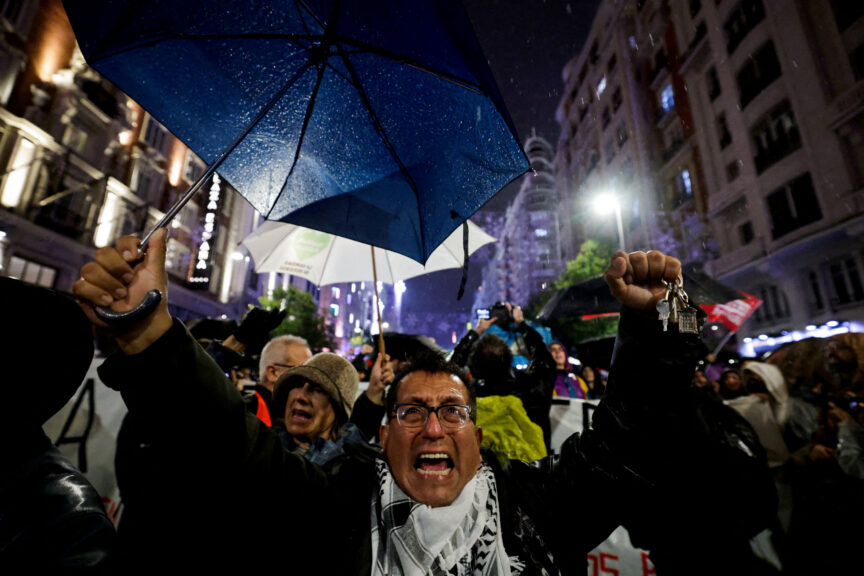
Spain’s parliament has approved a package of reforms aimed at making housing more affordable, a day after four million took part in a nationwide general strike over the country’s housing crisis.
The measures, proposed by prime minister Pedro Sánchez’s government, include extending eviction protections for vulnerable tenants and restricting speculative property purchases by preventing companies from buying homes for less than 70% of their assessed value.
Rent increases will also be capped at 2%, while those already above the government’s neighbourhood reference index will be frozen. A 10% tax on flats rented to tourists will also be introduced.
The conservative Popular Party said it will repeal the reforms if it takes power in the 29 November elections, which were called by Sánchez after his government failed to pass similar housing measures.
“Yesterday, the right to housing won on the street and in workplaces, and I hope it will win again at the ballot box,” said interim housing minister Isabel Rodríguez after the vote on Thursday.
Spain has witnessed weeks of housing protests following the eviction and subsequent death of 87-year-old Maricarmen Abascal, who was forcibly removed from the flat she had lived in for 70 years in September after she couldn’t afford rent increases.
The country has a deficit of 750,000 homes, which is set to grow to over a million by 2028. The average rental price of a home, €1,176, is equivalent to 98.7% of the average young person’s monthly salary, according to the Youth Council of Spain.
“We won’t stop until we transform this country’s housing model from top to bottom,” said Alicia del Rio of the Madrid Tenants’ Union.
Trade unions reported 90% turnouts among dockworkers and carmakers for the 24-hour strike on Wednesday – Spain’s first general strike in 14 years – with “total stoppages” at Volkswagen’s factory in Navarre and SEAT’s in Barcelona, organisers said.
Around 85% of meat industry workers, 82% of waste collection employees and 75% from the energy sector also took part. In healthcare and social services roughly 38% went on strike, while 35% of postal service workers also joined.
From Novara Media via This RSS Feed.