

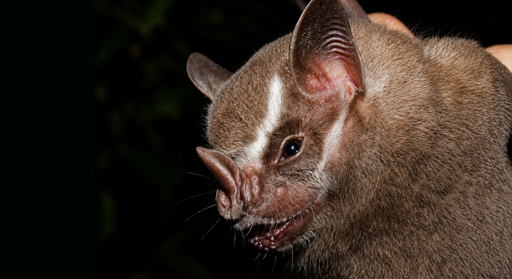
Bats have long occupied a sinister place in Western pop culture. Ever since Bram Stoker published Dracula in 1897, these nocturnal mammals have been associated with vampires. Outside fiction, however, only three of the world’s roughly 1,500 known bat species feed on blood — and only one targets mammals such as cattle and other livestock. Even then, humans are rarely on the menu. Bats represent the second most diverse group of mammals, behind rodents. They also provide essential ecosystem services, including insect pest control, pollination and seed dispersal; around a third of all species feed on fruit or nectar. A fruit-eating bat won over Lays Cherobim Parolin early in her career. As she was about to graduate with a degree in biology, the scientist wanted to work with larger mammals but ended up joining a bat research project instead. The first time she held one, as she removed it from a mist net, she was hooked. “People have no idea that bats are seed dispersers and have the potential to restore [natural] areas. They never remember them, they only remember birds,” Parolin, now a professor at the Pontifical Catholic University of Paraná (PUC), said. Researcher Lays Cherobim Parolin sets up an experimental structure with essential oils to attract bats. Image courtesy of Gledson Vigiano Bianconi. The encounter left such an impression that Parolin got a tattoo on her arm of the great fruit-eating bat (Artibeus lituratus), a species identifiable by two pale stripes across its head. The tattoo serves as…This article was originally published on Mongabay
From Conservation news via This RSS Feed.