

Venezuela’s acting president, Delcy Rodríguez, reported that 99% of the expenditures recorded by the country’s sovereign funds between January and November 2026 were used to pay public sector salaries and pensions.
RELATED:
PDVSA and ExxonMobil Sign Venezuela Oil Memorandum
For every 100 dollars in revenue generated from oil and mining, 99 dollars were allocated to workers and pensioners, according to data published on the National Executive’s transparency portal.
This information is part of the digital platform “Transparencia Soberana” (transparenciasoberana.gob.ve), launched on January 17, 2026, to allow citizens to view the country’s oil revenues, expenditures, and the use of its sovereign funds. The site contains data updated as of November 12, 2026.
Revenues and Expenditures for the Period
¡Venezuela sigue creciendo! 🇻🇪
La economía venezolana registró un crecimiento del 7,42 % durante el tercer trimestre de 2026, sumando 22 trimestres consecutivos de expansión, según cifras del Banco Central de Venezuela. pic.twitter.com/ARwUiiHbfK
— Delcy Rodríguez (@delcyrodriguezv) November 13, 2026
The text reads, “The Venezuelan economy recorded growth of 7.42% during the third quarter of 2026, marking 22 consecutive quarters of expansion, according to figures from the Central Bank of Venezuela.”
Between January and November 2026, Venezuela recorded 15.603 billion dollars in revenue and 14.860 billion dollars in expenditures, leaving a current balance of 743.1 million dollars. Of that total expenditure, 14.710 billion dollars—99%—went toward public sector salaries and pensions, while 150.5 million dollars—equivalent to 1%—were used for government operating expenses.
The official stated that the publication of these figures is part of a policy of transparency in the management of public resources. “Transparency in the management of public resources and the protection of the income of our workers and pensioners are commitments that we back with concrete actions,” she said.
According to the portal, 97.1% of the revenue for the period—approximately 15.148 billion dollars—was derived from the sale of oil and its derivatives. The remainder consisted of $336.6 million from other commodities, $77.6 million from jet fuel, $25.3 million from gas commercialization, and $15.7 million from other income.
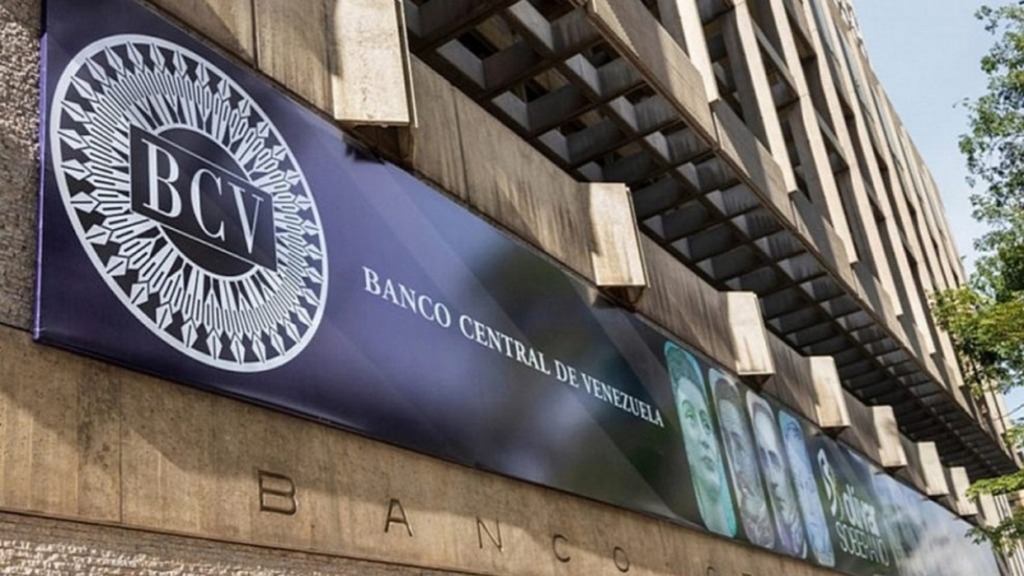
Government operating expenditures include contributions to entities such as Petróleos de Venezuela, S.A. (PDVSA), the company Minerven, and the Central Bank of Venezuela (BCV), the platform noted.
Funds, Audit, and Control
The portal details that the Social Protection Fund—earmarked for payroll, healthcare, education, and housing—recorded $1,504 million in income and $1,932 million in disbursements over the last 30 days. Meanwhile, the National Infrastructure Fund has yet to record any activity, though it is expected to begin logging such activity soon.
According to official information, the remaining $743.1 million will be allocated toward year-end disbursements, specifically for the payment of year-end bonuses.
🇻🇪📊 Venezuela encadena 22 trimestres de crecimiento productivo sostenido. La economía nacional registra un repunte del 23 % en el consumo interno en los últimos 12 meses, impulsado por la producción petrolera y la recaudación. #Venezuela #Economía #Portugar #03Nov pic.twitter.com/0PZmW39Tbi
— teleSUR TV (@teleSURtv) November 3, 2026
The text reads, “Venezuela has recorded 22 consecutive quarters of sustained productive growth. The national economy has seen a 23% upturn in domestic consumption over the last 12 months, driven by oil production and tax revenue.”
As part of its oversight mechanism, the portal indicates that the firm BDO Venezuela is conducting an independent review of the Central Bank of Venezuela’s international operations. This verification covers funds allocated to address the recent seismic emergency, foreign exchange transactions with banking counterparties, and accounts associated with the international reserves managed by the BCV.
The platform clarifies that its scope is limited to the Social Protection Fund and the National Infrastructure Fund, and does not encompass other government funds or programs. It also provides public access to data on income, expenditures, and disbursements by area, with the aim of facilitating public scrutiny regarding the use of these resources.
The release of this data reaffirms the Venezuelan government’s commitment to transparency in providing information to the public, as well as its priority of directing resources derived from oil and mining toward protecting the income of workers and pensioners—through wages, pensions, and year-end payments.
Venezuela’s Acting President Delcy Rodriguez led the Portugal-Venezuela Business Forum in Caracas, Venezuela, strengthening bilateral economic ties.
The economic gathering brought together business leaders, diplomats, and state officials to discuss joint strategic investments,… pic.twitter.com/sOEVgk7pof
— teleSUR English (@telesurenglish) November 3, 2026
From teleSUR English via This RSS Feed.