

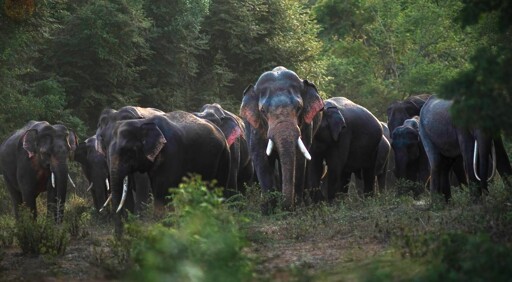
COLOMBO – Following widespread public outrage over the recent death of Kavantissa, one of Sri Lanka’s most celebrated wild tuskers, the government has decided to involve the country’s armed forces to protect vulnerable elephants, including some of the island’s remaining tuskers. The initiative, a coordinated operation involving Sri Lanka’s army, navy, air force and the Department of Wildlife Conservation, will have a dedicated operations center at the military headquarters to coordinate surveillance, information-sharing and responses to threats against elephants. Code named ‘Hasthi Sena’ in Sinhala, loosely translating to ‘an elephant army’ in English, the initiative aims to prevent elephant killings and curb wildlife crimes, strengthen intelligence gathering and support joint operations in areas affected by human-elephant conflict (HEC). The task force began its operations with raids last week across several areas, arresting several individuals involved in illegal activities including setting up trap guns or wire snares and possessing explosive-laden bait. The government took this measure amid renewed concern about the vulnerability of Sri Lanka’s remaining tuskers, particularly following the shooting and subsequent death of Kavantissa last month. While conservationists have welcomed greater institutional support for wildlife protection, they caution that the initiative must translate into a sustained conservation program rather than a temporary response to public pressure and not turn into yet another well-intentioned initiative that lost momentum after public attention faded. Wild Tuskers Srilanka (WTS) used a risk-assessment formula to assign scores relating to threat factors faced by individual tuskers. Image courtesy of WTS. “We have seen many such…This article was originally published on Mongabay
From Conservation news via This RSS Feed.