

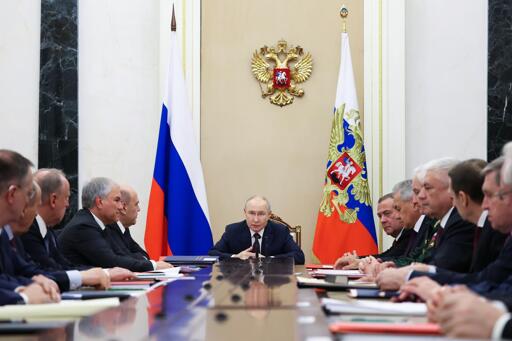
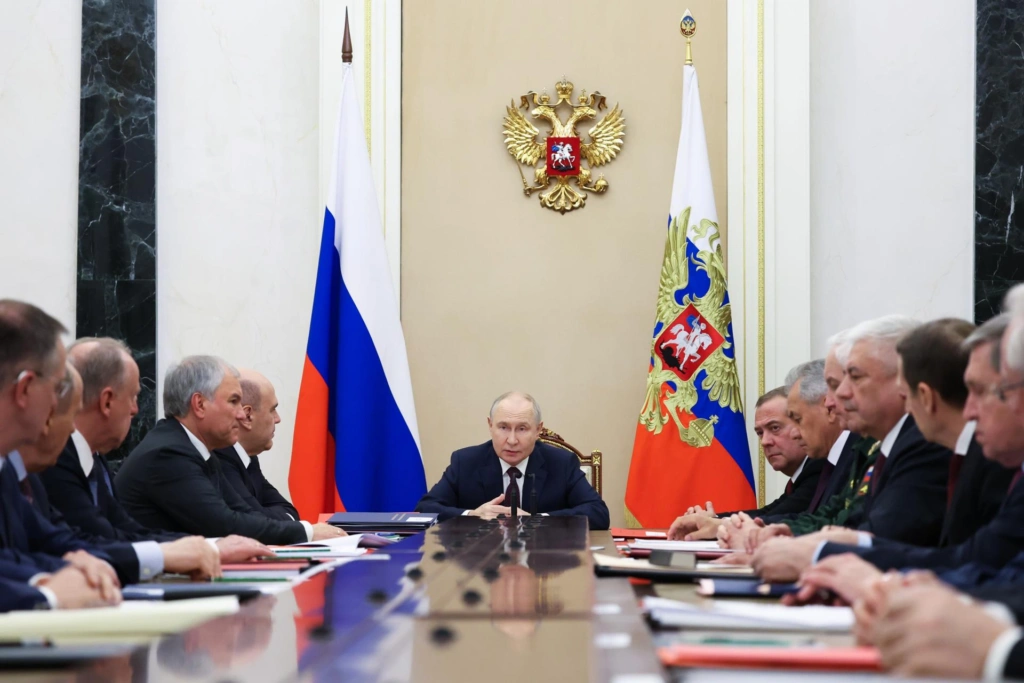
Putin and U.S. envoys reviewed progress in Abu Dhabi as Washington confirmed security consultations with European governments.
Russia and the United States have agreed to continue trilateral negotiations on Ukraine following a Kremlin meeting between President Vladimir Putin and U.S. special envoys Steve Witkoff and Jared Kushner, as diplomatic efforts to reach a settlement move forward.
RELATED: Russia and Ukraine Move Toward a Prisoner Exchange Following Negotiations in Abu Dhabi
The Thursday meeting reviewed progress made during recent trilateral talks in Abu Dhabi and discussed the next steps in the negotiating process. Russian presidential adviser Yuri Ushakov, chief negotiator Vladimir Medinsky and senior official Kirill Dmitriev also attended.
Putin proposed extending humanitarian cooperation carried out in Aleshki to the Donbas town of Konstantinovka, where between 400 and 500 civilians remain.
“I propose doing the same thing we did in Aleshki. I know we have achieved positive results in at least one area: the humanitarian one,” the Russian president said.
⚠️ Rusia y Ucrania cierran negociaciones en Abu Dabi con señales de avance: intercambio de prisioneros y diálogo que continuará por una nueva seguridad mundial. #teleSUR #11Nov pic.twitter.com/HvDy1AUHIz
— teleSUR TV (@teleSURtv) November 12, 2026
Text Reads: ⚠️ Russia and Ukraine wrap up negotiations in Abu Dhabi with signs of progress: a prisoner exchange and continued dialogue on a new global security framework.
The talks also addressed Europe’s role in shaping a future security framework for the continent. Kushner confirmed that Washington had begun discussions with European governments on security arrangements involving Russia, Ukraine and the wider European region.
“We have started a dialogue with them about what the security architecture affecting Russia, Ukraine and the European continent will look like,” he said.
Witkoff clarified that European representatives had been physically present in the United Arab Emirates during the Abu Dhabi negotiations but had not taken part directly in the sessions. He said they had been kept informed of the discussions, received information and been briefed on their outcomes.
Putin rejected the suggestion that Moscow had withdrawn from dialogue with European governments, arguing that it was European countries that had halted those exchanges. “We never interrupted dialogue with Europe. They were the ones who interrupted dialogue with Russia,” he said.
The Russian president also reiterated Moscow’s position on territorial arrangements, insisting that any settlement must establish a definitive line of demarcation. “There is only one line of demarcation: the state border line,” Putin said.
He warned that unresolved so-called grey zones would remain a source of contention and instability, undermining any agreement and preventing a lasting peace.
Putin also reaffirmed Russia’s opposition to the deployment of foreign troops in Ukraine, describing their presence as a threat to Russian national security.
“From the very beginning, we said that the presence of any foreign troops on Ukrainian territory is absolutely unacceptable to us because we consider it a threat to the security of the Russian Federation,” he said.
Despite the disagreements over security and territorial arrangements, Putin said Russia wanted a durable settlement, expressing the hope that peace would be permanent. “As for the duration of peace, its sustainability and strength, we would also like it to be eternal peace,” he said.
Ushakov said Putin and U.S. President Donald Trump are expected to meet in the near future on the sidelines of the Asia-Pacific Economic Cooperation (APEC) summit in Shenzhen, China.
From teleSUR English via This RSS Feed.