

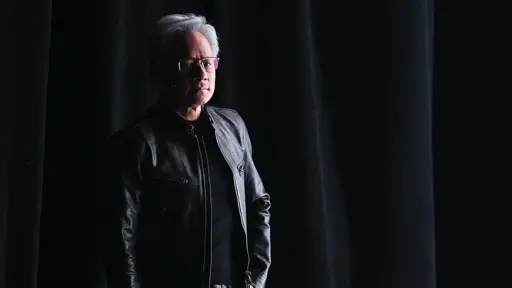
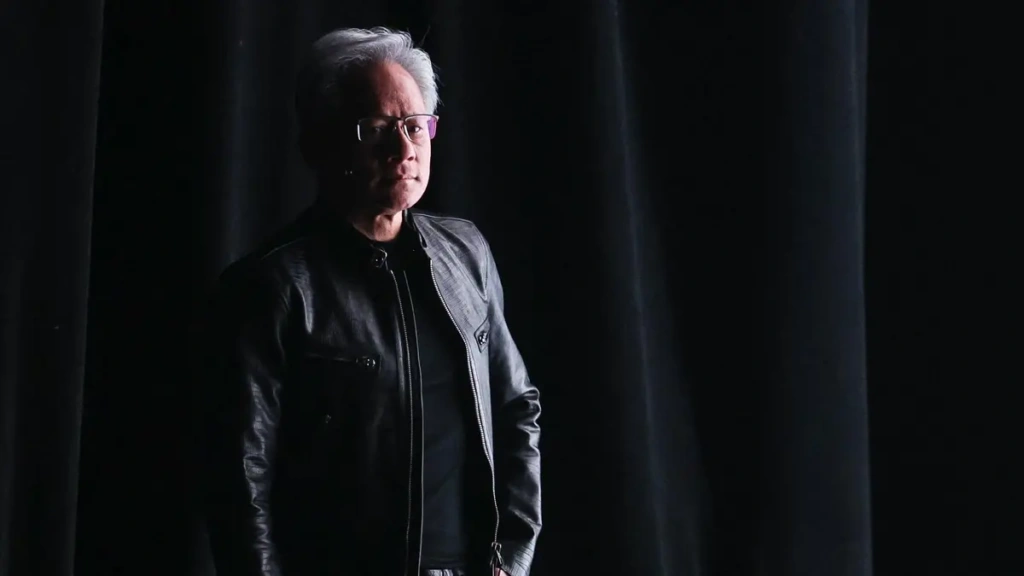
The U.S. technology company Nvidia announced on Thursday the resignation of its co-founder, Jensen Huang, from his roles as president, CEO, and member of the board of directors. This change comes amid a reputational crisis linked to reports of an extramarital affair.
RELATED:
7 Strategic Moves in Nvidia AI Investment to Challenge China
The board of directors has appointed Colette Kress as interim CEO and Harvey C. Jones as chairman of the board—a position established for the first time in Nvidia’s history, according to the statement cited. Kress will retain her responsibilities as executive vice president and chief financial officer, roles she has held since September 2013. Prior to joining Nvidia, she spent nearly 25 years at Cisco and Microsoft.
The board stated that it will immediately begin the search for a permanent CEO and acknowledged the 33-year tenure of 63-year-old Huang at the helm of the company. The statement expressed gratitude for his “immeasurable contributions” since Nvidia’s founding. Jones remarked, “Colette has helped lead Nvidia through a period of extraordinary growth and possesses a deep understanding of our business, customers, operations, and financial position.”
Investigation into the Allegations
On Sunday, November 8, Huang issued a public apology for being unfaithful to his wife. Meanwhile, the board of directors engaged the law firm Wachtell Lipton to investigate the matter. According to information released by the company, the process is being led by a committee of independent directors, supported by legal counsel, to determine whether the executive may have been targeted by a foreign intelligence operation. The executive indicated that, based on data collected thus far, there is no evidence of any breach of Nvidia’s trade secrets, nor any indication that U.S. national security has been compromised.
China firmly opposes the United States overstretching the concept of national security, and unjustifiably suppressing Chinese institutions, Foreign Ministry spokeswoman Mao Ning said at a press briefing in Beijing on November 12.
Mao made the statement in response to a media… pic.twitter.com/dGzk2dfXB6
— CCTV+ (@CCTV_Plus) November 12, 2026
Meanwhile, China’s Ministry of Foreign Affairs rejected the allegations. Spokesperson Mao Ning urged the U.S. government to stop propagating narratives about alleged espionage—narratives used to justify technological restrictions—and maintained that China’s scientific development is rooted in independent innovation and international cooperation.
Furthermore, Chinese Foreign Ministry spokesperson Guo Jiakun stated on Tuesday: “The alleged accusation of Chinese espionage is groundless. It is nothing more than slander against China.” Beijing characterized the claims as baseless accusations intended to curb the Asian nation’s technological and commercial development.
Nvidia holds a central position in the global market for graphics processors and advanced semiconductors, which are used in artificial intelligence and data centers. Its chips and the CUDA platform are significant across various technology sectors. The Chinese market is also strategically important to the company, even though Washington maintains export controls on cutting-edge products.
Following the news of the resignation, Nvidia’s shares fell by 7.45% in early trading on Thursday, according to the provided information. The company, the same source noted, has kept its third-quarter fiscal year 2027 earnings announcement—scheduled for November 17, after the close of the Wall Street markets—on track.
Nvidia is facing a historic leadership shakeup after Jensen Huang resigned as president, CEO, and board member following an independent board probe into governance and national-security concerns. 📉💻🚨
The company’s board appointed CFO Colette Kress as interim CEO and former… pic.twitter.com/hP8PjWra7Y
— teleSUR English (@telesurenglish) November 12, 2026
From teleSUR English via This RSS Feed.