

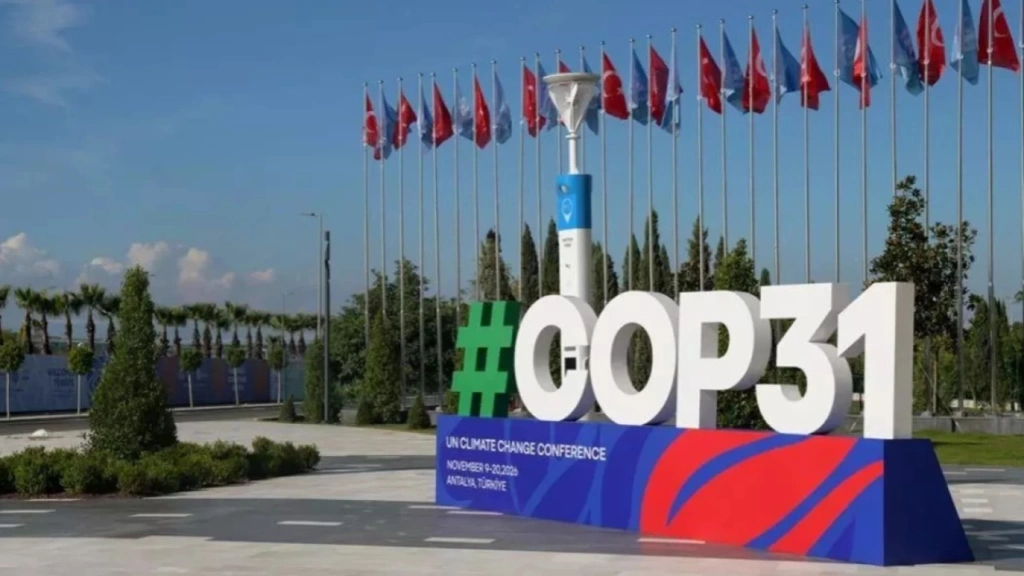
On Thursday, African leaders and high-level representatives demanded that developed nations effectively fulfill their climate finance commitments, facilitate more equitable access to funds, and transform international pledges into verifiable measures.
RELATED:
President of Bolivia Proposes the Environment as an Instrument for Peace
During the high-level segment of COP31, held in Antalya, Turkey, African delegations warned that vulnerable nations cannot shoulder the mounting costs of climate change on their own.
African representatives highlighted the disparity between the continent’s minimal historical contribution to global greenhouse gas emissions and the severity of the impacts affecting its economies, ecosystems, and populations. They agreed that the environmental crisis demands greater international solidarity, reforms to cooperation mechanisms, and a fair valuation of ecosystem services.
The Vice President of Côte d’Ivoire, Tiémoko Meyliet Koné, called for support to enable African nations to address the climate emergency without compromising their economic growth and social well-being. “When the seasons become unpredictable, harvests are jeopardized. Incomes vanish, and the futures of entire families are threatened,” he stated.
RESEARCH ARTICLE
Carbon Accumulation in Tropical Dry Forests and Savannas Despite Widespread Land‐Cover Change, Revealed by Radar Remote Sensing
🔗 https://t.co/E3YiBjf9yF pic.twitter.com/hoh6BmviG1— Global Change Biology (@GlobalChangeBio) November 11, 2026
Koné explained that Côte d’Ivoire’s national climate plan aims to reduce emissions by 33 percent by 2035, but noted that concrete investments are required to balance environmental protection with the right to development.
The Vice President of Seychelles, Alix Sebastien Pillay, argued that climate action is now a matter of national security and survival. Citing the millions of dollars in damage caused by a recent tropical storm in the archipelago, he urged that COP31 serve as a turning point, ensuring that commitments are translated into immediate resources.
For his part, the Vice President of Gabon, Hugues Alexandre Barro Chambrier, questioned the fact that global efforts remain insufficient 11 years after the Paris Agreement. He called for a fair valuation of the ecosystem services provided by the Congo Basin and highlighted an initiative—backed by the UN and launched in partnership with the Republic of the Congo—focused on afforestation and reforestation.
New resources and local development
Climate finance is not charity. Africa needs debt-free reparations from polluters, not loans, to protect livelihoods. #ClimateFinance #ClimateJusticehttps://t.co/0OoWjB21uX
— J A OSARO (@Osaro001) November 12, 2026
The Vice President of Zimbabwe, Constantino Chiwenga, urged that the commitment to mobilize at least $300 billion annually be translated into new, predictable, and timely financial flows, particularly to address loss and damage.
Chiwenga also underscored Zimbabwe’s goal of reducing per capita emissions by 40 percent by 2035. He further advocated for the right of African nations to process their own critical minerals locally, with the aim of creating jobs rather than merely exporting raw materials.
The heads of government of Guinea-Bissau, Rwanda, and Mali focused their remarks on territorial vulnerability and the need to remove financial barriers that drive up the cost of green investments in developing economies.
At the COP31 UN Climate Change Conference in Antalya, Turkiye, delegates and global business leaders rallied behind accelerating the electrification of the global economy to fight climate change and boost energy security.
The presidency of the summit unveiled the “35 by 2035”… pic.twitter.com/i6Cw7rlAz6
— teleSUR English (@telesurenglish) November 10, 2026
From teleSUR English via This RSS Feed.