

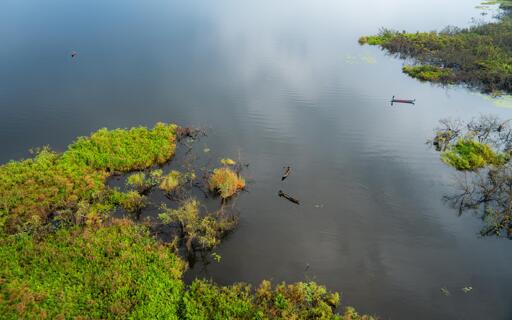
A forest can be many things to the communities that live in and around it. It can serve as farmland, a pharmacy, a food source or a cultural center. The forest can be a lifeline to residents who depend on it for survival. Yet access to that land can be restricted if it lies within a protected area. This is a common scenario in many parts of the world, where areas of high ecological value are also home to ecosystems that local communities depend on for survival. A growing body of research underscores the tensions that can arise when protected areas under conservation overlap with community lands. One case in point is Kisandji, an ethnically diverse village in the southeastern part of the Democratic Republic of Congo about 13 kilometers (8 miles) from Upemba National Park in Haut-Katanga province. The residents of Kisandji use the natural resources found in the park for food, medicine and farming. But since 2015, access to the parkland has become difficult for residents amid national efforts to combat poaching and wildlife crimes. The park’s territory has been a source of livelihood for surrounding communities, including in Kisandji, where around 85% of households depend primarily on farming. Without electricity, piped water or healthcare, Kisandji residents also depend heavily on nature for food, medicine and income. Additionally, in a landscape shaped by war, displacement, poverty, mining and other extractive activities that interfere with people’s subsistence activities and lives, the forests within the park remain their go-to source…This article was originally published on Mongabay
From Conservation news via This RSS Feed.