

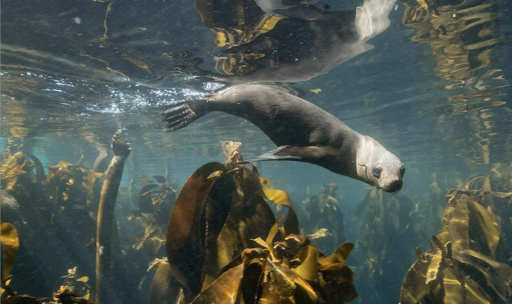
Beneath the coppery fronds of the only floating bamboo kelp forest in the world, a creature shapeshifts across the reef. A tuberculate cuttlefish (Sepia tuberculata) has just escaped a predator using “pseudomorph-ink” — a ‘false body’ strategy of emitting ink clouds that resemble its shape — while the actual animal jets away in the opposite direction. Once hidden under a rock or in a crevice, its superb camouflage and mimicry will protect it from detection. This animal lives in the Great African Seaforest, which stretches for more than 1,300 kilometers (just over 800 miles) from South Africa to Namibia. This ecosystem is just one of many such kelp forests across the world that together house thousands of kinds of creatures all hiding, breeding, sheltering and feeding. However, their homes are in trouble. Proponents say kelp forests like the Great African Seaforest deserve the same attention that other marine ecosystems like coral reefs and mangrove forests receive. Image courtesy of Jannes Landschoff / Sea Change Project. Fringing a third of the world’s coastlines in temperate and polar waters, kelp forests are one of the most biodiverse nearshore ecosystems on our planet and are probably as biologically important as rainforests. Despite this, less than 2% of them are meaningfully protected and warming water could wipe out up to 25 million hectares (almost 62 million acres) of kelp forests by 2050. Then, this August, the global ocean surface hit its highest temperature on record. Kelp forests are biodiversity powerhouses that provide valuable ecosystem…This article was originally published on Mongabay
From Conservation news via This RSS Feed.