

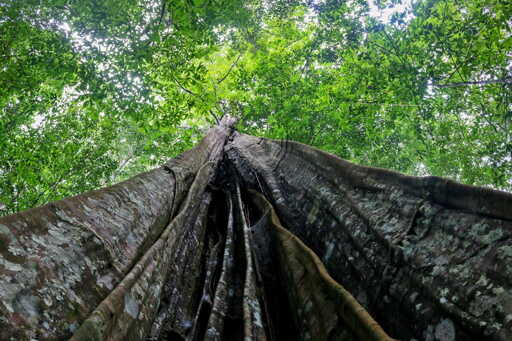
A question hangs in the air while the soil of the planet’s largest tropical rainforest grows increasingly dry: What is the Amazon’s future facing extreme droughts in a warming world? To try to predict the fate of the biome, an ambitious experiment subjected an area of Amazon vegetation in Pará in northern Brazil to severe water stress for two decades. The findings reveal a surprising reshuffle of how the forest survives. The Esecaflor Project (Forest Drought Study Project) is the longest-running and most extensive scientific investigation of its kind ever conducted in a tropical forest. It has been underway for 25 years, during which its creators have sought to understand how the Amazon might respond to a prolonged lack of water in the soil. The experimental drought began in 2001. Covering a one-hectare (2.5-acre) area within the roughly 318,000 hectares (786,000 acres) of Caxiuanã National Forest in Pará, the project installed 6,000 transparent, rectangular plastic panels beneath the tree canopy, between 1 and 4 meters (3.3 and 13 feet) above the ground, to divert about 50% of rainwater away through gutters and channels. An undisturbed plot of equal size serves as a comparison area. In both forest plots, researchers monitor soil moisture, air temperature, tree growth, sap flow and root development, while two 40-m-(131-ft-)tall towers equipped with NASA radar transmit data to the agency’s Jet Propulsion Laboratory in the U.S. state of California for processing. Plastic panels installed beneath the canopy in the Esecaflor Project study area divert rainwater to…This article was originally published on Mongabay
From Conservation news via This RSS Feed.