

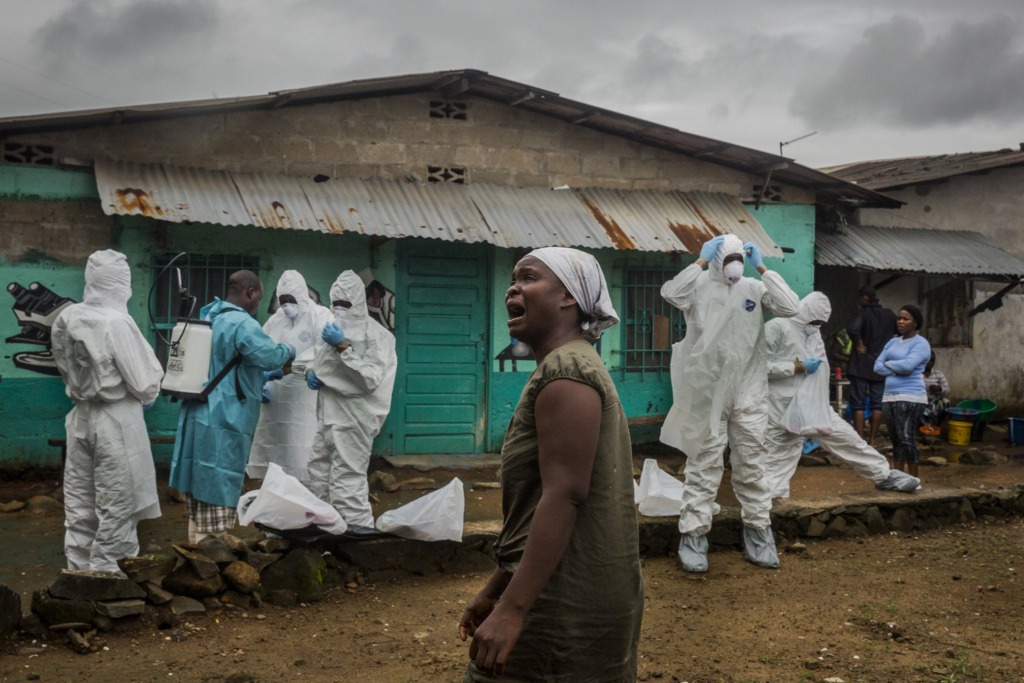
The Ebola epidemic in the Democratic Republic of the Congo (DRC) has reached 11,042 confirmed cases and 5,387 deaths, with a case fatality rate of 48.8%, according to the latest report from the National Institute of Public Health (INSP), based on data collected up to November 9.
RELATED:
W.H.O. Adds Two Ebola Vaccines to Trials as DRC Deaths Top 5,300
The epidemic, declared on May 15, is the seventeenth recorded in the DRC and the second deadliest globally—second only to the 2014–2016 West Africa outbreak, which infected more than 28,600 people and caused over 11,000 deaths.
According to the INSP, in addition to those who have died, 2,990 patients have recovered, and another 651 individuals remain hospitalized or in isolation. Health authorities reported that the contact-tracing rate stands at 79.7%—a key measure for breaking the virus’s chains of transmission.
The outbreak affects 67 health zones across eight of the country’s 26 provinces. In addition to Ituri and North Kivu, the virus has reached Tshopo, Bas-Uélé, Haut-Uélé, South Kivu, South Ubangui, and North Ubangui.
The eastern provinces of Ituri—the epicenter of the outbreak—and North Kivu account for the majority of new infections. On November 9, Ituri recorded 57.7% of the reported cases, while North Kivu accounted for 32.7%. The spread of the virus has been faster than in previous outbreaks due to the late detection of cases, armed conflict, and the overburdening of health services. Many deaths have occurred outside of treatment centers, which complicates epidemiological containment.
❗Ebola Bundibugyo in DR Congo 🇨🇩 has now passed 10,000 confirmed cases, with over 5,300 deaths.
It’s 2nd-largest Ebola outbreak ever recorded. Half of everyone infected has died.
There’s no licensed vaccine and no specific treatment.
This should be front-page news everywhere pic.twitter.com/7U0UR407Iu
— Neil Stone (@DrNeilStone) November 10, 2026
With cases reported in East, Central, and West Africa, this epidemic covers the widest geographical area ever recorded for an Ebola outbreak on the continent.
The disease spread to Uganda, where the World Health Organization (WHO) declared the end of the outbreak on August 26, following 20 confirmed cases—15 of which were imported from the DRC—and two deaths. Linked cases were also detected in Kenya, with nine infections and two deaths, and in Nigeria, with one case.
Outside the African continent, one linked case was reported in France. Additionally, four individuals infected in the DRC were evacuated: one to the Netherlands, two to Germany, and one to the United Kingdom.
The Bundibugyo strain, which is responsible for the current epidemic, lacks specific treatments. The WHO is working on two vaccines that have entered phase 1 human trials and have shown a good safety profile, though their full development could take several months.
🌍 GLOBAL HEALTH ALERT
The Ebola outbreak in the Democratic Republic of Congo has surpassed 11,000 reported cases, according to an Associated Press report.
The situation highlights the importance of public-health preparedness, medical support and international cooperation.… pic.twitter.com/72q8pFs1P3
— Theepan15789 (@Theepan15789) November 11, 2026
In late August, the DRC began an immunization campaign using Ervebo, the only vaccine available on a large scale. Although this vaccine was designed for the Zaire variant, it has shown promising signs of efficacy against the Bundibugyo strain in animal studies.
The Ebola virus is transmitted through direct contact with the bodily fluids of infected people or animals. The disease can cause severe hemorrhagic fever, vomiting, diarrhea, and internal bleeding.
The progression of the outbreak keeps Congolese health authorities and international organizations on high alert, as efforts continue regarding surveillance, contact tracing, patient care, and the prevention of further infections.
From teleSUR English via This RSS Feed.