

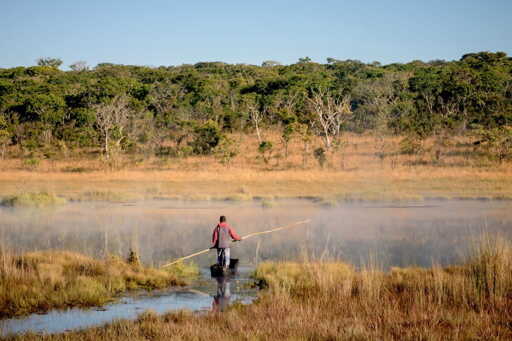
Four years ago, elders from several different communities in Angola’s southeastern highlands approached environmental anthropologist Kerllen Costa, saying they’d noticed an influx of people from outside the highlands coming there to hunt for bushmeat without obtaining permission from local chiefs. Sometimes the outsiders recruited locals to hunt on their behalf. These hunting parties were disregarding local hunting rules, the elders told Costa. They weren’t following traditional leaders’ prescriptions on where and when to hunt, how many animals to kill, or how much of their haul to share with villagers. “They asked for help to reinforce the traditional ways,” said Costa, who is Angola director of the National Geographic Okavango Wilderness Project (NGOWP) and co-founder of Fundação Lisima, a conservation group. Months of discussions ensued, at the end of which each village across the landscape nominated one Watcher. Their job is to keep watch over their woodlands, monitor popular hunting trails, and ensure that the animals are hunted in line with traditional rules. “They have a concept that every single person in the landscape is a watcher,” Costa said. “The farmer, the fisherman, the beekeeper — they’re always watching what’s happening, whether it be what a person is doing or a change in the ecosystem.” The source lake of the Cuito river, in Moxico province. The Cuito is one of two major rivers feeding the Okavango river and Botswana’s giant Okavango delta. Image courtesy of Kostadin Luchansky/AIB/NGOWP. The landscape they’re watching over is the Lisima Lya Mwono, or “the source of…This article was originally published on Mongabay
From Conservation news via This RSS Feed.