

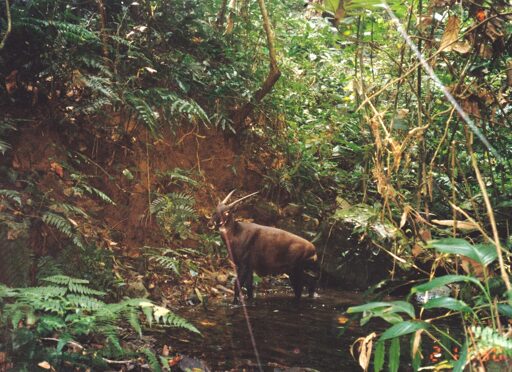
The ongoing search for the saola, a critically endangered tropical bovid that hasn’t been recorded by scientists since 2013, faces an uncertain future in Laos due to severe funding shortfalls, reports Mongabay’s Jeremy Hance. Scientists first described the saola (Pseudoryx nghetinhensis) in 1992 in the Annamite Mountains that run along the eastern border of Laos and Vietnam. Often called the “Asian unicorn,” it’s the sole member of its genus and is believed to have remained largely unchanged for 15 million years. However, the animal hasn’t been officially recorded since a camera-trap photograph in 2013, leaving fewer than 50 individuals estimated to survive in the wild. There are none in captivity. In 2025, the nonprofit Saola Foundation launched a search for the species across 300 square kilometers (116 square miles) of remote forest in Laos’s Bolikhamxay province. It deployed expert local trackers, sniffer dogs, and rapid field DNA testing kits. The saola is vulnerable to wire snares set in forests to trap other animals, according to Mongabay’s previous coverage. The saola search initiative is now operating on a month-to-month basis. “The team comes out of the forest each July for the wet season. This year a sharp contraction in our funding meant we could not confirm they would go back in October,” said Lorraine Scotson, CEO of the Saola Foundation for Annamite Mountains Conservation. While emergency donations from several zoos secured field operations for October, long-term funding remains unresolved. Conservationists are divided over whether the saola still survives. Barney Long, senior…This article was originally published on Mongabay
From Conservation news via This RSS Feed.